



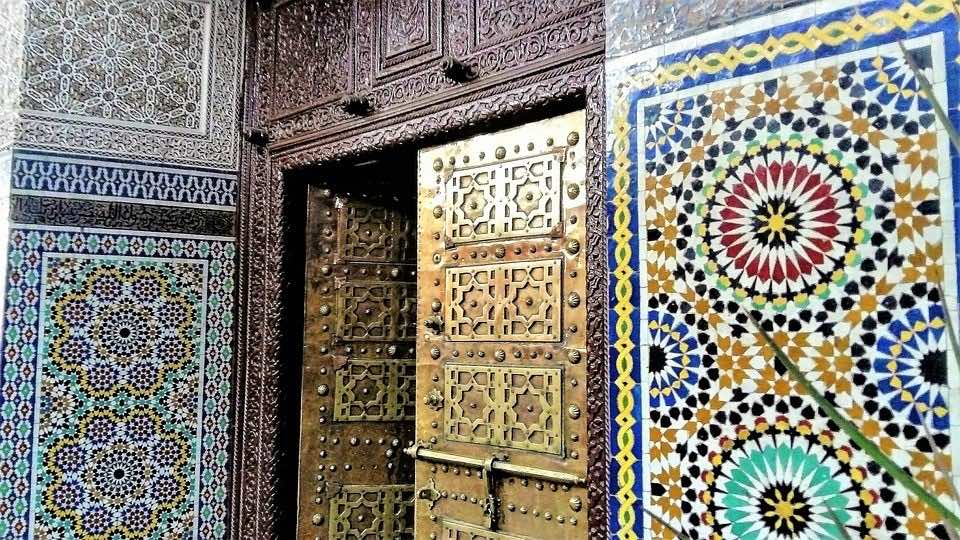

The Ministry of Youth, Culture, and Communication officially launched on Friday in Salé the project aimed at inscribing the art of zellige from Fez and Tetouan on UNESCO’s Representative List of the Intangible Cultural Heritage of Humanity.
Presented during a study day, the project reflects Morocco’s commitment to preserving this ancestral art form, highlighting its role in the national heritage and ensuring its transmission to future generations in order to strengthen its influence both nationally and internationally.
In a speech delivered on his behalf, Minister Mohamed Mehdi Bensaid emphasized that this initiative marks a decisive step toward international recognition of an art that has adorned many of the Kingdom’s architectural masterpieces for centuries and illustrates Morocco’s contribution to universal heritage.
This candidacy crowns the efforts undertaken to safeguard this know-how, notably through its inventory, documentation, and legal protection under the heritage label. The minister recalled that zellige is not merely a decorative motif, but a symbol of identity passed down from master to apprentice, marked by a constant pursuit of perfection.
Combining architecture, calligraphy, and creativity, zellige bears witness to a legacy of innovation and refinement characteristic of Moroccan craftsmanship. It is currently experiencing renewed interest both in Morocco and abroad, reinforcing its place at the heart of the national cultural identity.
Referring to its presence in numerous historic monuments, the minister stressed its living and evolving nature, praising the efforts of artisans, training centers, and researchers to ensure its preservation and transmission.
Othmane El Absi, Director of the Tetouan Heritage Center, recalled that efforts to inscribe Moroccan zellige on UNESCO’s list date back more than thirty years. He explained that the earliest forms of this art predate the Almoravid period, with remains discovered in Aghmat. He also highlighted the uniqueness of Tetouan’s zellige, inspired by the Moroccan-Arab-Andalusian tradition, whose compositions are based on 27 main geometric forms.
For his part, Mouhcine El Idrissi El Omari, a lecturer and researcher at Hassan II University of Casablanca, underscored the historical importance of zellige in Moroccan architecture, citing among the oldest examples those in Fez dating back to the 13th century, notably on the minaret of the Seffarine Madrasa and in the Great Mosque of Fez Jdid.
On the sidelines of the launch of the inscription project, an exhibition entitled “Moroccan Zellige: A Historical Heritage and a Living Tradition” was inaugurated, showcasing works by Moroccan artisans and tracing the evolution of this art from its origins to its contemporary forms.