
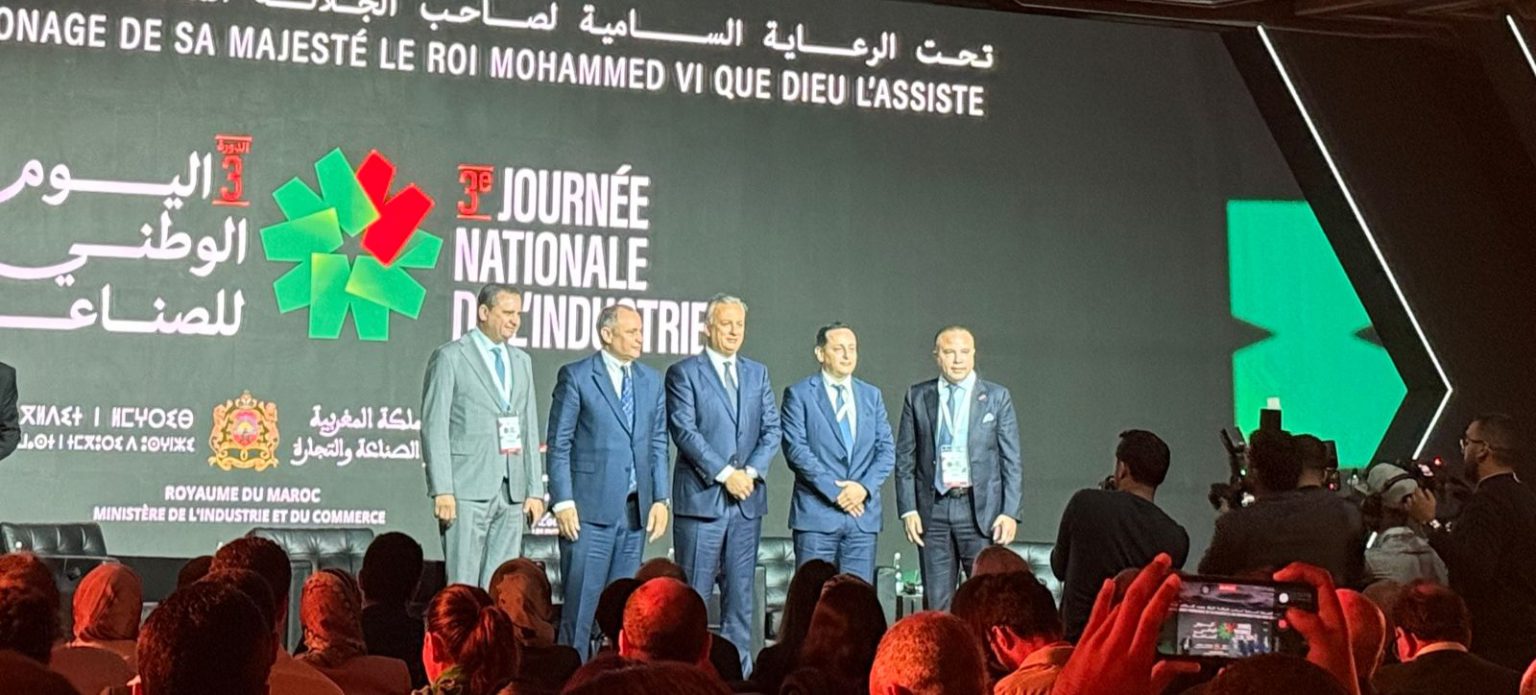
The first panel of Morocco’s National Industry Day brought together four key figures of the country’s economic landscape: Karim Zidane, Minister Delegate in charge of Investment; Mohammed Bachiri, CEO of Renault Morocco; Mehdi Bouamrani, CEO of Dislog Group; and Anwar Radi, CEO of Enosis Group.
Together, they outlined a vision of Made in Morocco as not only a label of national pride but also a strategic lever for international competitiveness.
For Karim Zidane, the new investment charter is a cornerstone of this momentum. It promotes innovation, job creation, and regional equity through tailored incentives. The minister emphasized Morocco’s reliability in the eyes of foreign investors, supported by the country’s political and economic stability, modern infrastructure, and the seriousness of its commitments.
Mohammed Bachiri highlighted Morocco’s position as Africa’s leading automotive platform and the continent’s second-largest vehicle producer. Renault Morocco now exports cars to 70 countries, mainly in Europe, reflecting the success of the Made in Morocco label. He stressed the importance of strong partnerships between the state and industry, as well as investing in training and sustainability to support the sector’s move upmarket. The future, he said, depends on electrification, research and development, and mastering the local supply chain.
Mehdi Bouamrani focused on the growing role of national champions in the “economy of life,” including hygiene, food, and health sectors. Dislog Group now produces over one-third of its output locally. However, he called for easier access to African and European markets, criticizing non-tariff barriers that still hinder Moroccan exports. According to him, Made in Morocco must now expand internationally, particularly in West Africa.
Anwar Radi shared the inspiring story of the Mio brand, born from a desire to assert independence from multinationals. His journey, marked by boldness and confidence in Moroccan capabilities, demonstrates how frustration can be transformed into industrial success. He advocated for better governance and the sustainability of family businesses while emphasizing the central role of human capital and innovation.
In conclusion, the panelists agreed on one point: Made in Morocco is no longer just a slogan, but a tangible industrial reality that drives sovereignty, employment, and national pride. Through synergy between the state, major groups, and SMEs, the Kingdom aims to make the Moroccan label a global benchmark, akin to Made in Germany or Made in Japan.