
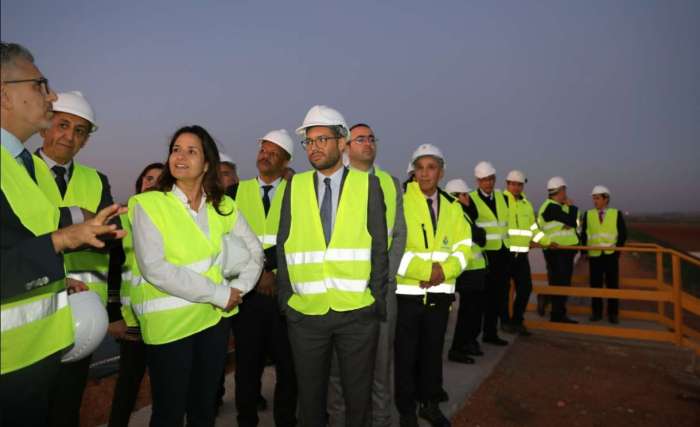
Morocco’s energy dependency, which fell from 98% in 2008 to 87.5% in 2024, illustrates the progress already achieved. But the ambition goes far beyond this: to turn the energy transition into a pillar of industrial sovereignty. With 120 billion dirhams of planned investments, the expansion of renewable energies, and a bet on green hydrogen, the Kingdom aims to secure its supply while building a competitive, resilient, and forward-looking industrial ecosystem. In this exclusive interview, Ms. Leïla Benali, Minister of Energy Transition and Sustainable Development, outlines the pillars of this strategy and the levers mobilized to position Morocco as a regional energy and industrial hub.
How does the Ministry of Energy Transition define industrial sovereignty through the energy lens, and what are the strategic pillars for Morocco?
Based on the valorization of local energy resources, the development of energy efficiency, and strengthened regional integration, the national energy strategy, launched in 2009, aims to reduce dependence on fossil fuel imports while ensuring a sustainable and competitive energy supply. By enhancing the Kingdom’s energy independence and stimulating industrialization around local renewable energy sectors, this strategy lays the foundations for sustainable industrial sovereignty, capable of supporting the competitiveness and resilience of the national economy.
In this context, the MTEDD views industrial sovereignty as the country’s ability to control the entire energy value chain—from production to industrial processing and technological innovation. This involves developing a strong national industrial base, promoting research and development in energy technologies, and fostering a network of competitive local SMEs, while limiting the country’s vulnerability to global energy market fluctuations.
The strategic pillars of this industrial sovereignty rely on the expansion of renewable energy, the development of local skills in industrial decarbonization, support for local industrial investment, and the establishment of an attractive regulatory and incentive framework that strengthens Morocco’s position as a reference industrial and energy actor in the region. At the same time, energy efficiency is a strategic pillar: optimizing energy consumption in the public and private sectors, improving equipment performance, and promoting energy-efficient technologies contribute to reducing overall demand, thereby reinforcing the country’s energy autonomy.
Regarding natural gas, a key pillar of the energy transition, Morocco has adopted an ambitious and integrated strategic vision to develop an integrated gas infrastructure that ensures the country’s energy sovereignty, contributes to decarbonizing the national electricity system, fosters a competitive domestic industry, and provides a flexible infrastructure that, in the long term, could be used to transport green hydrogen.
To accelerate the development of the national gas market, a roadmap has been developed to establish LNG terminals and a network of pipelines progressively connecting the Kingdom’s consumption areas to import ports and domestic fields.
In the short term (2025–2027), the program plans the construction of a first LNG terminal at Nador West Med and a pipeline network to connect it to the Maghreb–Europe Gas Pipeline and supply ONEE power plants as well as the industrial zones of Nador, Kenitra, and Mohammedia. Within this framework, the Ministry launched, on April 23, 2025, a Call for Expression of Interest (CEI) to involve public and private actors before proceeding to the tender phase.
What are today’s main energy vulnerabilities that could hinder the Kingdom’s industrial sovereignty, and what concrete measures are being implemented to address them?
Despite the progress made since the launch of the national energy strategy—which reduced energy dependency from nearly 98% in 2008 to 87.5% in 2024—Morocco remains exposed to certain vulnerabilities that could limit its industrial sovereignty. These include dependence on fossil fuel imports, which still account for a large share of national primary consumption and expose the economy to international price fluctuations caused by crises and geopolitical tensions; and technological dependency for certain strategic industrial components, which slows the development of a competitive local industrial base and limits the added value of national production.
To address these vulnerabilities, the MTEDD has implemented concrete measures, including the large-scale use of renewable energies to gradually replace fossil fuel imports with clean, competitive local resources, thereby reducing energy dependency; and the strengthening of local capacities through training programs to support the development of a competitive national industry, particularly in the photovoltaic and wind energy sectors.
To what extent can the development of renewable energy, including solar, wind, and green hydrogen, strengthen industrial autonomy and reduce external dependency?
By gradually replacing fossil fuel imports with local renewable resources, particularly solar and wind, Morocco has a strategic opportunity to secure the energy supply for its national industry and sustainably stabilize production costs.
However, realizing this potential primarily depends on establishing a clear, stable, and attractive regulatory framework capable of reassuring investors, reducing perceived risks, and simplifying administrative procedures. Such a regulatory environment is the first prerequisite for improving investment conditions in renewables and increasing the share of green energy in the national industrial mix, thereby strengthening the country’s energy autonomy and long-term industrial sovereignty.
In this context, Morocco published in February 2023 the new Law No. 82-21 on self-production of electricity, which will attract new investments by providing fair access to decarbonized and competitive energy under the best security conditions. By allowing industrialists, SMEs, and local authorities to reduce energy bills and dependence on centralized infrastructures and imported fuels, this reform enhances competitiveness and supports the reshoring of certain value chains.
This new law will directly contribute to building local energy autonomy, an essential pillar of sustainable and inclusive industrial sovereignty for Morocco, by securing electricity supply for industrial sites, reducing risks related to price fluctuations and grid availability; improving enterprise competitiveness through cheaper and more stable energy; and stimulating industrial investment in remote areas where the grid is fragile by ensuring reliable local supply.
Moreover, the development of green hydrogen represents a major opportunity to strengthen Morocco’s industrial autonomy and reduce external energy dependence. As an emerging sector, it enables the creation of new local value chains—from production to storage and energy transformation—thus promoting horizontal and vertical industrial integration.
With an appropriate legislative and regulatory framework and the evaluation of investor offers based on industrial integration criteria, the Kingdom can mobilize universities, research centers, startups, and SMEs to develop local technologies and specialized skills. This development also contributes to the creation of skilled jobs and the training of human resources capable of supporting a competitive national industry in the low-carbon energy sector.
By consolidating the national ecosystem around green hydrogen, Morocco positions itself as a regional energy hub while ensuring sustainable industrial sovereignty and strengthening its ability to meet national and international clean energy needs.
What levers does the Ministry use to promote local integration and encourage the emergence of a competitive Moroccan industry in energy production and transformation?
To exceed the strategic target of 52% renewable energy in the national electricity mix by 2030 and meet the continuously growing electricity demand (7.2% for 2025–2030), Morocco has implemented the 2025–2030 electricity infrastructure plan, which considers not only demographic and economic growth but also the additional energy needs induced by the development of new high-energy-intensity “gigafactories,” particularly in batteries, green hydrogen, and photovoltaic components. Through this framework, the MTEDD aims to structure local value chains, encourage national equipment production, and create a competitive industrial fabric capable of meeting the needs of a rapidly expanding energy sector while stimulating employment and technological innovation.
At the same time, Morocco has taken concrete measures to accelerate the energy transition: enhancing investment attractiveness through improved legislative and regulatory frameworks for the electricity sector (Law No. 40-19 amending Law No. 13-09 on renewable energy, and Law No. 82-21 on self-production of electricity); enabling product sustainability justification via certificates of origin verifying that industrially produced electricity comes from renewable sources; using natural gas as a transitional energy due to its potential to decarbonize all greenhouse gas-emitting sectors and provide system flexibility for large-scale renewable integration; and developing green hydrogen to further enhance energy system flexibility and decarbonize hard-to-abate sectors.
Regarding green hydrogen under the Morocco Offer, project evaluation is based on a set of criteria, particularly those related to project vision in Morocco and positive externalities for the Kingdom in terms of horizontal and vertical industrial integration.
Thus, the government authority in charge of Industry and Trade is responsible for assessing the potential for local industrial integration around green hydrogen (identifying integrable segments, prospects, human resource needs, energy needs, etc.) and, consequently, identifying necessary industrial zones (sizing, location, required services, management model, labor pools, etc.).
Additionally, energy efficiency is an essential complementary lever. The Ministry promotes the development and adoption of energy-efficient technologies, encourages local manufacturing of high-performance equipment, and supports Moroccan companies in implementing consumption optimization solutions. These actions enhance the competitiveness of local industries, optimize operational costs, and support the transition to a more sustainable and resilient economy.
Strengthening research, innovation, and human capital training further complements these levers, ensuring that Moroccan industry can meet international standards and actively contribute to the energy transition.
Industrial sovereignty cannot be built without innovation and research. What initiatives are planned to involve universities, research centers, and Moroccan startups in this dynamic?
Research, development, innovation, and industrialization are major pillars for successfully achieving the energy transition, strengthening national industrial sovereignty, and positioning Morocco as a regional and international actor in green technologies. Priorities include building energy efficiency, context-adapted construction solutions, integration of sustainable energy into grids, valorization of local materials, and the development of smart grids.
Created as a central lever, IRESEN acts as an interface between academia, research centers, startups, and industry, promoting local integration and the emergence of a competitive industry in energy production and transformation. Its main actions include launching competitive calls for projects that systematically involve an academic partner and an industrial partner to transform research results into industrializable prototypes; directly involving Moroccan industrialists via co-financing projects aimed at commercializing innovations or reducing process carbon footprints; supporting the mobility of PhD and postdoctoral researchers; integrating Moroccan researchers and startups into international consortia; and establishing targeted funding to accelerate industrialization of innovations and develop high-impact strategic projects, particularly in green hydrogen, to achieve high technology readiness levels (TRLs) and strengthen the Kingdom’s industrial sovereignty.
Morocco has also deployed internationally recognized research infrastructures: MASEN’s platform in Ouarzazate, the Green Energy Park in Benguerir, the Green Building Park, as well as new platforms under development in green hydrogen (GREEN H2A), biomass, and energy-agriculture nexus (Agro Energy) and energy-water nexus (Water Energy Nexus), representing an investment of $50 million by 2030.
Finally, a strategic R&D vision for 2030 aims to consolidate Morocco’s role in green technologies, stimulating applied research, reinforcing local industrial integration, and supporting SMEs and startups in accessing national and international markets.
How does Morocco plan to reconcile the imperatives of the energy transition with the need for sustainable industrial sovereignty, given current economic and climate pressures?
Morocco’s energy transition takes place in a context marked by major imperatives such as fossil fuel dependence, continuously growing electricity demand, particularly related to major infrastructure and industrial development projects for upcoming international events. Morocco must also meet its international climate commitments, accelerating renewable deployment and reducing its carbon footprint.
To address these structural challenges, Morocco has implemented the 2025–2030 electricity infrastructure plan, aiming to secure national electricity supply while supporting the energy transition. This plan is considered “green” as it foresees massive development of renewable energy, quadrupling annual investments compared to 2009–2024, with natural gas providing flexible integration for large-scale renewables.
The plan targets 15.6 GW of capacity with a total investment of approximately 120 billion dirhams, including 12.4 GW of renewable sources (~80%) at an investment of around 100.3 billion dirhams, with the remaining 3.2 GW developed via natural gas.
Notably, Morocco does not plan any coal-based electricity generation, honoring its international climate commitments while ensuring electricity supply security.
What role does international cooperation and strategic partnerships play in supporting Morocco’s energy sovereignty and, by extension, its industrial sovereignty?
International cooperation is essential in Morocco’s energy transition strategy. It is not merely a complementary lever but a strategic choice embedded in institutional frameworks and reinforced by the New Model of Development (NMD), which identifies cooperation as a key transformation lever toward shared prosperity and inclusive, resilient sustainable development. Morocco pursues a proactive approach, centered on multilateral, bilateral, and South-South win-win partnerships. Cooperation is thus a strategic lever supporting energy sovereignty.
Partnerships with countries such as Germany, Spain, the Netherlands, Denmark, France, Japan, Korea, the United Kingdom, the United States, the European Union, and the International Energy Agency have strengthened technical capacities and facilitated access to advanced energy technologies. These agreements go beyond financing: they promote knowledge transfer, training, and skills development in institutions and among young talents. This openness has enabled Morocco to strengthen its role as a regional leader and energy hub between Europe and Africa. Morocco is currently the only North African country directly connected to the European electricity grid, consolidating its geostrategic position internationally.
Furthermore, following the Royal directives promoting active solidarity with Africa, Morocco supports enhanced South-South cooperation. It advances African energy integration through major projects such as the Atlantic African Gas Pipeline (Nigeria–Morocco), linking West African gas resources to European markets through several African countries. Beyond project implementation, Morocco acts as a regional catalyst through continental initiatives such as the Coalition for Sustainable Energy Access in Least Developed Countries (CSEA).
Thus, international cooperation and strategic partnerships play a central role in strengthening Morocco’s energy sovereignty by mobilizing financial capital, transferring technology, and sharing expertise—all indispensable levers for consolidating energy and industrial sovereignty. By leveraging these partnerships, Morocco gradually enhances its capacity to locally produce the equipment and technologies needed for its energy transition, thereby reducing external dependency and grounding its industrial sovereignty on solid, sustainable foundations.
If you want, I can also create a concise, polished English summary version suitable for press or media publication while keeping the technical depth. This can make it much easier to read while retaining all key points. Do you want me to do that?
How does the Ministry of Energy Transition define industrial sovereignty through the energy lens, and what are the strategic pillars for Morocco?
Based on the valorization of local energy resources, the development of energy efficiency, and strengthened regional integration, the national energy strategy, launched in 2009, aims to reduce dependence on fossil fuel imports while ensuring a sustainable and competitive energy supply. By enhancing the Kingdom’s energy independence and stimulating industrialization around local renewable energy sectors, this strategy lays the foundations for sustainable industrial sovereignty, capable of supporting the competitiveness and resilience of the national economy.
In this context, the MTEDD views industrial sovereignty as the country’s ability to control the entire energy value chain—from production to industrial processing and technological innovation. This involves developing a strong national industrial base, promoting research and development in energy technologies, and fostering a network of competitive local SMEs, while limiting the country’s vulnerability to global energy market fluctuations.
The strategic pillars of this industrial sovereignty rely on the expansion of renewable energy, the development of local skills in industrial decarbonization, support for local industrial investment, and the establishment of an attractive regulatory and incentive framework that strengthens Morocco’s position as a reference industrial and energy actor in the region. At the same time, energy efficiency is a strategic pillar: optimizing energy consumption in the public and private sectors, improving equipment performance, and promoting energy-efficient technologies contribute to reducing overall demand, thereby reinforcing the country’s energy autonomy.
Regarding natural gas, a key pillar of the energy transition, Morocco has adopted an ambitious and integrated strategic vision to develop an integrated gas infrastructure that ensures the country’s energy sovereignty, contributes to decarbonizing the national electricity system, fosters a competitive domestic industry, and provides a flexible infrastructure that, in the long term, could be used to transport green hydrogen.
To accelerate the development of the national gas market, a roadmap has been developed to establish LNG terminals and a network of pipelines progressively connecting the Kingdom’s consumption areas to import ports and domestic fields.
In the short term (2025–2027), the program plans the construction of a first LNG terminal at Nador West Med and a pipeline network to connect it to the Maghreb–Europe Gas Pipeline and supply ONEE power plants as well as the industrial zones of Nador, Kenitra, and Mohammedia. Within this framework, the Ministry launched, on April 23, 2025, a Call for Expression of Interest (CEI) to involve public and private actors before proceeding to the tender phase.
What are today’s main energy vulnerabilities that could hinder the Kingdom’s industrial sovereignty, and what concrete measures are being implemented to address them?
Despite the progress made since the launch of the national energy strategy—which reduced energy dependency from nearly 98% in 2008 to 87.5% in 2024—Morocco remains exposed to certain vulnerabilities that could limit its industrial sovereignty. These include dependence on fossil fuel imports, which still account for a large share of national primary consumption and expose the economy to international price fluctuations caused by crises and geopolitical tensions; and technological dependency for certain strategic industrial components, which slows the development of a competitive local industrial base and limits the added value of national production.
To address these vulnerabilities, the MTEDD has implemented concrete measures, including the large-scale use of renewable energies to gradually replace fossil fuel imports with clean, competitive local resources, thereby reducing energy dependency; and the strengthening of local capacities through training programs to support the development of a competitive national industry, particularly in the photovoltaic and wind energy sectors.
To what extent can the development of renewable energy, including solar, wind, and green hydrogen, strengthen industrial autonomy and reduce external dependency?
By gradually replacing fossil fuel imports with local renewable resources, particularly solar and wind, Morocco has a strategic opportunity to secure the energy supply for its national industry and sustainably stabilize production costs.
However, realizing this potential primarily depends on establishing a clear, stable, and attractive regulatory framework capable of reassuring investors, reducing perceived risks, and simplifying administrative procedures. Such a regulatory environment is the first prerequisite for improving investment conditions in renewables and increasing the share of green energy in the national industrial mix, thereby strengthening the country’s energy autonomy and long-term industrial sovereignty.
In this context, Morocco published in February 2023 the new Law No. 82-21 on self-production of electricity, which will attract new investments by providing fair access to decarbonized and competitive energy under the best security conditions. By allowing industrialists, SMEs, and local authorities to reduce energy bills and dependence on centralized infrastructures and imported fuels, this reform enhances competitiveness and supports the reshoring of certain value chains.
This new law will directly contribute to building local energy autonomy, an essential pillar of sustainable and inclusive industrial sovereignty for Morocco, by securing electricity supply for industrial sites, reducing risks related to price fluctuations and grid availability; improving enterprise competitiveness through cheaper and more stable energy; and stimulating industrial investment in remote areas where the grid is fragile by ensuring reliable local supply.
Moreover, the development of green hydrogen represents a major opportunity to strengthen Morocco’s industrial autonomy and reduce external energy dependence. As an emerging sector, it enables the creation of new local value chains—from production to storage and energy transformation—thus promoting horizontal and vertical industrial integration.
With an appropriate legislative and regulatory framework and the evaluation of investor offers based on industrial integration criteria, the Kingdom can mobilize universities, research centers, startups, and SMEs to develop local technologies and specialized skills. This development also contributes to the creation of skilled jobs and the training of human resources capable of supporting a competitive national industry in the low-carbon energy sector.
By consolidating the national ecosystem around green hydrogen, Morocco positions itself as a regional energy hub while ensuring sustainable industrial sovereignty and strengthening its ability to meet national and international clean energy needs.
What levers does the Ministry use to promote local integration and encourage the emergence of a competitive Moroccan industry in energy production and transformation?
To exceed the strategic target of 52% renewable energy in the national electricity mix by 2030 and meet the continuously growing electricity demand (7.2% for 2025–2030), Morocco has implemented the 2025–2030 electricity infrastructure plan, which considers not only demographic and economic growth but also the additional energy needs induced by the development of new high-energy-intensity “gigafactories,” particularly in batteries, green hydrogen, and photovoltaic components. Through this framework, the MTEDD aims to structure local value chains, encourage national equipment production, and create a competitive industrial fabric capable of meeting the needs of a rapidly expanding energy sector while stimulating employment and technological innovation.
At the same time, Morocco has taken concrete measures to accelerate the energy transition: enhancing investment attractiveness through improved legislative and regulatory frameworks for the electricity sector (Law No. 40-19 amending Law No. 13-09 on renewable energy, and Law No. 82-21 on self-production of electricity); enabling product sustainability justification via certificates of origin verifying that industrially produced electricity comes from renewable sources; using natural gas as a transitional energy due to its potential to decarbonize all greenhouse gas-emitting sectors and provide system flexibility for large-scale renewable integration; and developing green hydrogen to further enhance energy system flexibility and decarbonize hard-to-abate sectors.
Regarding green hydrogen under the Morocco Offer, project evaluation is based on a set of criteria, particularly those related to project vision in Morocco and positive externalities for the Kingdom in terms of horizontal and vertical industrial integration.
Thus, the government authority in charge of Industry and Trade is responsible for assessing the potential for local industrial integration around green hydrogen (identifying integrable segments, prospects, human resource needs, energy needs, etc.) and, consequently, identifying necessary industrial zones (sizing, location, required services, management model, labor pools, etc.).
Additionally, energy efficiency is an essential complementary lever. The Ministry promotes the development and adoption of energy-efficient technologies, encourages local manufacturing of high-performance equipment, and supports Moroccan companies in implementing consumption optimization solutions. These actions enhance the competitiveness of local industries, optimize operational costs, and support the transition to a more sustainable and resilient economy.
Strengthening research, innovation, and human capital training further complements these levers, ensuring that Moroccan industry can meet international standards and actively contribute to the energy transition.
Industrial sovereignty cannot be built without innovation and research. What initiatives are planned to involve universities, research centers, and Moroccan startups in this dynamic?
Research, development, innovation, and industrialization are major pillars for successfully achieving the energy transition, strengthening national industrial sovereignty, and positioning Morocco as a regional and international actor in green technologies. Priorities include building energy efficiency, context-adapted construction solutions, integration of sustainable energy into grids, valorization of local materials, and the development of smart grids.
Created as a central lever, IRESEN acts as an interface between academia, research centers, startups, and industry, promoting local integration and the emergence of a competitive industry in energy production and transformation. Its main actions include launching competitive calls for projects that systematically involve an academic partner and an industrial partner to transform research results into industrializable prototypes; directly involving Moroccan industrialists via co-financing projects aimed at commercializing innovations or reducing process carbon footprints; supporting the mobility of PhD and postdoctoral researchers; integrating Moroccan researchers and startups into international consortia; and establishing targeted funding to accelerate industrialization of innovations and develop high-impact strategic projects, particularly in green hydrogen, to achieve high technology readiness levels (TRLs) and strengthen the Kingdom’s industrial sovereignty.
Morocco has also deployed internationally recognized research infrastructures: MASEN’s platform in Ouarzazate, the Green Energy Park in Benguerir, the Green Building Park, as well as new platforms under development in green hydrogen (GREEN H2A), biomass, and energy-agriculture nexus (Agro Energy) and energy-water nexus (Water Energy Nexus), representing an investment of $50 million by 2030.
Finally, a strategic R&D vision for 2030 aims to consolidate Morocco’s role in green technologies, stimulating applied research, reinforcing local industrial integration, and supporting SMEs and startups in accessing national and international markets.
How does Morocco plan to reconcile the imperatives of the energy transition with the need for sustainable industrial sovereignty, given current economic and climate pressures?
Morocco’s energy transition takes place in a context marked by major imperatives such as fossil fuel dependence, continuously growing electricity demand, particularly related to major infrastructure and industrial development projects for upcoming international events. Morocco must also meet its international climate commitments, accelerating renewable deployment and reducing its carbon footprint.
To address these structural challenges, Morocco has implemented the 2025–2030 electricity infrastructure plan, aiming to secure national electricity supply while supporting the energy transition. This plan is considered “green” as it foresees massive development of renewable energy, quadrupling annual investments compared to 2009–2024, with natural gas providing flexible integration for large-scale renewables.
The plan targets 15.6 GW of capacity with a total investment of approximately 120 billion dirhams, including 12.4 GW of renewable sources (~80%) at an investment of around 100.3 billion dirhams, with the remaining 3.2 GW developed via natural gas.
Notably, Morocco does not plan any coal-based electricity generation, honoring its international climate commitments while ensuring electricity supply security.
What role does international cooperation and strategic partnerships play in supporting Morocco’s energy sovereignty and, by extension, its industrial sovereignty?
International cooperation is essential in Morocco’s energy transition strategy. It is not merely a complementary lever but a strategic choice embedded in institutional frameworks and reinforced by the New Model of Development (NMD), which identifies cooperation as a key transformation lever toward shared prosperity and inclusive, resilient sustainable development. Morocco pursues a proactive approach, centered on multilateral, bilateral, and South-South win-win partnerships. Cooperation is thus a strategic lever supporting energy sovereignty.
Partnerships with countries such as Germany, Spain, the Netherlands, Denmark, France, Japan, Korea, the United Kingdom, the United States, the European Union, and the International Energy Agency have strengthened technical capacities and facilitated access to advanced energy technologies. These agreements go beyond financing: they promote knowledge transfer, training, and skills development in institutions and among young talents. This openness has enabled Morocco to strengthen its role as a regional leader and energy hub between Europe and Africa. Morocco is currently the only North African country directly connected to the European electricity grid, consolidating its geostrategic position internationally.
Furthermore, following the Royal directives promoting active solidarity with Africa, Morocco supports enhanced South-South cooperation. It advances African energy integration through major projects such as the Atlantic African Gas Pipeline (Nigeria–Morocco), linking West African gas resources to European markets through several African countries. Beyond project implementation, Morocco acts as a regional catalyst through continental initiatives such as the Coalition for Sustainable Energy Access in Least Developed Countries (CSEA).
Thus, international cooperation and strategic partnerships play a central role in strengthening Morocco’s energy sovereignty by mobilizing financial capital, transferring technology, and sharing expertise—all indispensable levers for consolidating energy and industrial sovereignty. By leveraging these partnerships, Morocco gradually enhances its capacity to locally produce the equipment and technologies needed for its energy transition, thereby reducing external dependency and grounding its industrial sovereignty on solid, sustainable foundations.