




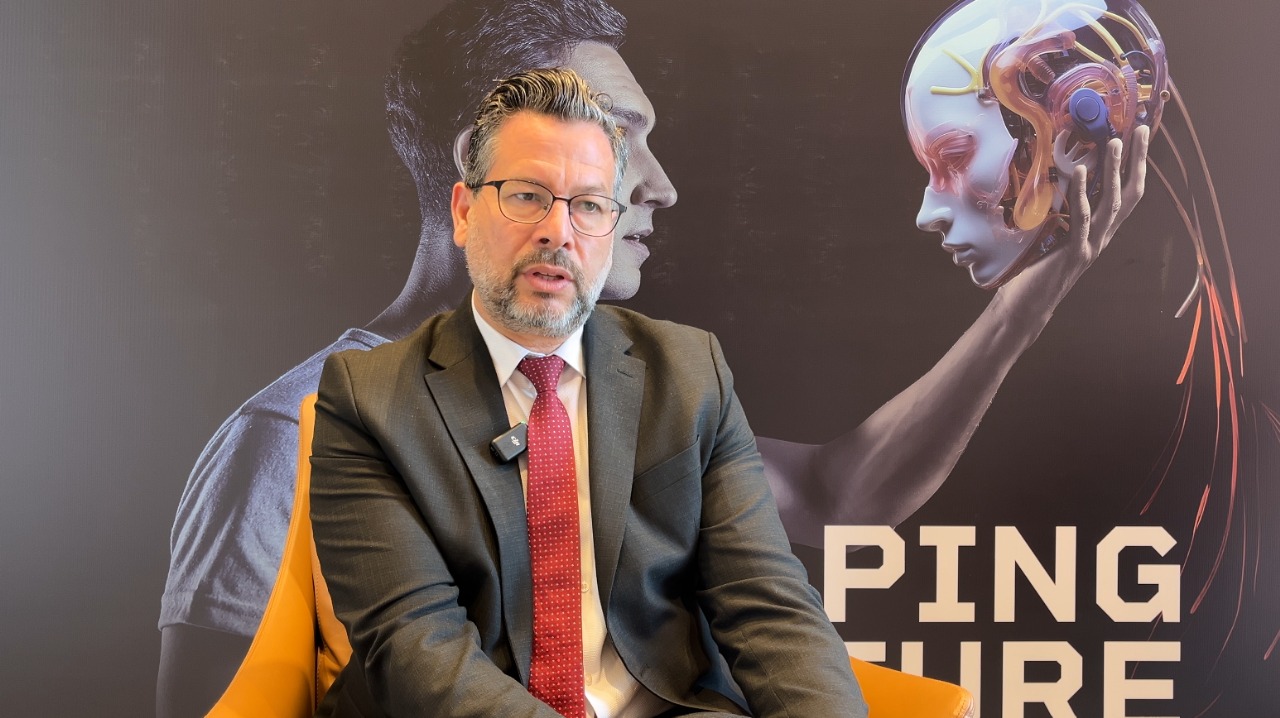
Under the leadership of Jones Alami, Director of Research, Mohammed VI Polytechnic University (UM6P) has established itself as a central player in bridging science and industry, focusing on impact-driven research co-designed with companies and deeply rooted in local realities.
At a time when Moroccan companies face major challenges in competitiveness, energy transition, and technological sovereignty, UM6P has developed a unique research and development model. Far from an academic approach disconnected from the economic fabric, UM6P involves industrial partners from the very conception of scientific projects. This strategy, detailed by Jones Alami, prioritizes tangible impact, local value creation, and endogenous innovation at the heart of the university’s mission.
Research Designed with Industry from the Start
At UM6P, the connection between academic research and industry is not limited to technology transfer at the end of a project. It follows a far more structuring logic: co-design. Companies are engaged from the earliest stages of research projects, from identifying challenges to selecting technologies and testing phases.
“At UM6P, research is impact-oriented from its conception. Companies are not consulted afterwards; they are involved from the start in defining needs and solutions,” emphasizes Jones Alami.
This approach reconciles scientific rigor with industrial applicability. Results do not remain confined to laboratories; they are directly usable by partner companies, whether for process optimization, reducing energy or water costs, or upskilling teams.
Tangible Impact for Local Companies
The benefits of this model are already evident across key sectors of the Moroccan economy. In agriculture, energy, chemistry, and manufacturing, companies gain access to high-level R&D infrastructure that is difficult to mobilize internally.
“We are seeing shorter innovation cycles and a greater capacity for companies to integrate locally developed solutions,” explains UM6P’s Research Director.
Beyond performance gains, this close partnership fosters local ownership of technologies. Research becomes a lever for sustainable competitiveness rather than a temporary technical improvement.
Creating Value from Local Constraints
Unlike traditional models based on adapting imported technologies, UM6P’s R&D hubs are true co-creation spaces. Research systematically starts from local constraints: water stress, climatic conditions, economic realities, or social challenges.
“The value created is endogenous. It relies on knowledge produced at UM6P by teams rooted in Morocco and Africa,” states Jones Alami.
This approach relies on strong interdisciplinarity and proximity to experimental sites—pilot farms, industrial platforms, university hospitals—allowing rapid testing, adjustment, and large-scale deployment, even before considering international expansion.
Proven R&D Cooperation Models
Facing both multinationals and national champions, UM6P has developed effective and sustainable cooperation models. The first is the creation of joint laboratories and platforms where researchers and industrial engineers work together long-term, sharing objectives.
A second model relies on long-term partnership research programs. Companies commit not only financially but also by providing expertise, data, and experimental capabilities. This involvement builds trust and goes beyond one-off projects.
Finally, UM6P increasingly acts as a trusted intermediary, bringing together multinationals, national actors, and local ecosystems around complex challenges, particularly in water, energy, and sustainable agriculture.
“In these consortia, the university ensures scientific rigor, balances interests, and creates shared value,” insists Jones Alami.
Towards Scientific and Industrial Sovereignty
By structuring these partnerships, UM6P contributes to strengthening Morocco’s scientific and technological sovereignty. Research is no longer just an academic support—it becomes a driver of industrial transformation, capable of meeting companies’ immediate needs while preparing solutions for tomorrow.
This vision positions the university as a key actor in economic development and as a laboratory of innovations exportable across Africa and globally. It is an ambition grounded in a strong conviction: global solutions are built from local realities.