



Only days after the passage of storm “Leonardo,” Morocco is once again facing a new Atlantic weather system named “Marta.” While the rainfall brings much-needed water resources, it also raises concerns about localized flooding. Climate and sustainable development expert Mohammed Benabboo provides a scientific reading of the storm, its real intensity, and the regions most exposed to risk.
A brief lull before a new Atlantic depression
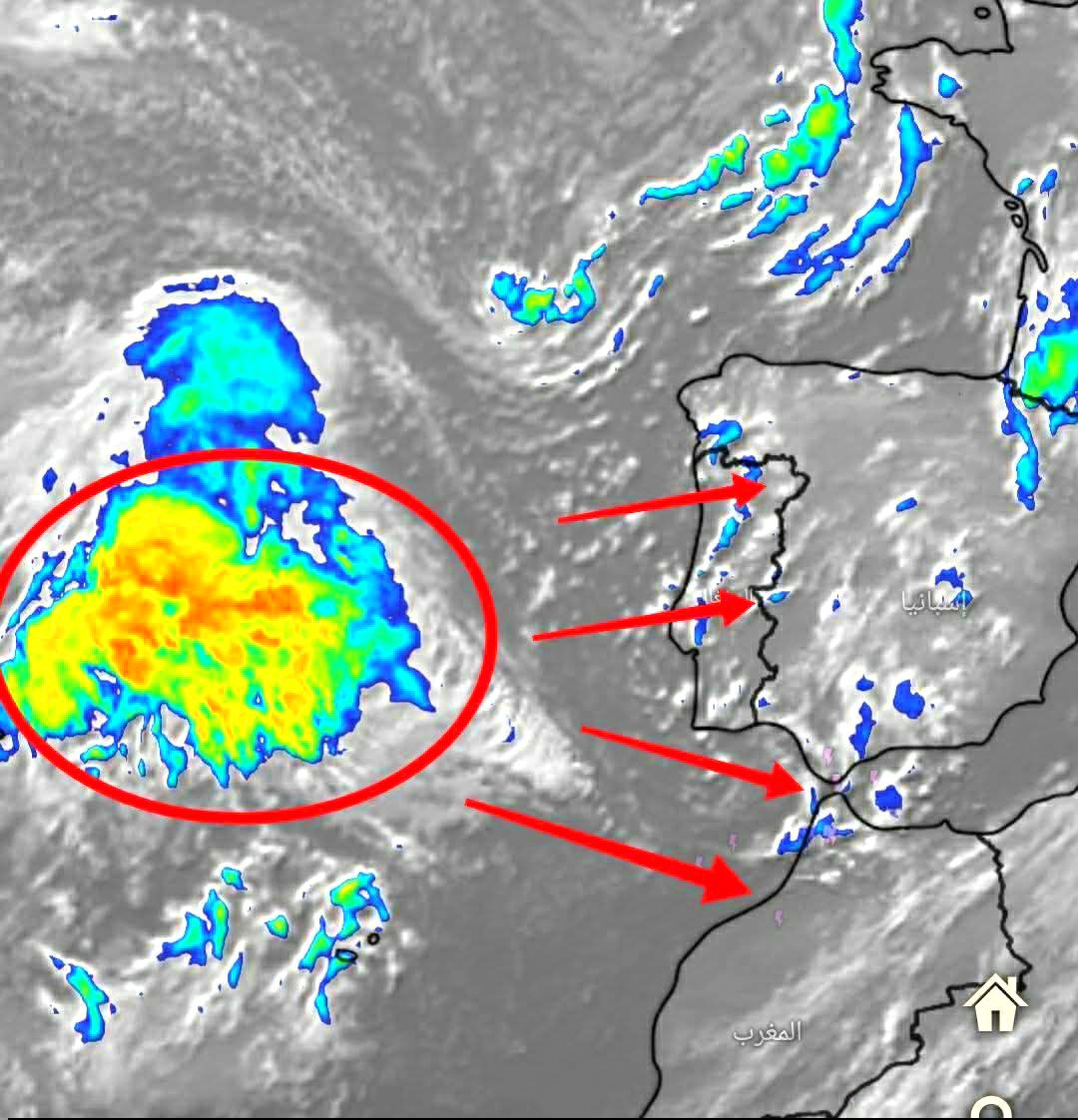
Following storm “Leonardo,” Morocco experienced a short period of relative weather stability on Friday and the following morning, marked by light and scattered rainfall. This calm, however, is temporary. Meteorological data indicate the arrival of a new deep Atlantic depression, “Marta,” currently positioned over the open Atlantic and driven by strong north-westerly flows.
According to Mohammed Benabboo, this system is part of the North Atlantic winter circulation and is expected to mainly affect northern and north-western regions of the country over the coming hours and days.
Significant rainfall with complex management challenges
Morocco has already recorded substantial rainfall, particularly in northern areas and the Rif Mountains. These precipitation events have contributed positively to inflows into several dams, helping improve national water reserves.
However, Benabboo stresses that managing these inflows remains a delicate technical challenge. Rainfall distribution is uneven across the country, with marked contrasts between the north-west and interior regions such as Taounate and Chefchaouen. This spatial variability requires localized and adaptive water-management strategies.
High alert in sensitive river basins
The highest levels of vigilance concern certain river basins, especially downstream of the Al Wahda Dam, where rising water levels have been observed in several rural communities. These areas play a crucial role in protecting nearby urban centers from flooding.
As a preventive measure, controlled water releases are being carried out in accordance with strict technical protocols. The objective is to strike a balance between maintaining dam storage capacity and ensuring the safety of people and infrastructure, while remaining prepared for additional inflows.
Al Wahda Dam under close monitoring
At the Al Wahda Dam, water levels have increased noticeably in recent days due to sustained rainfall in the north-west and surrounding provinces. This situation raises the possibility of localized flooding, particularly where soils are already saturated and river flows are intensifying.
Such conditions, Benabboo explains, are typical during successive storm events and require constant monitoring to mitigate downstream impacts.
Is “Marta” more severe than “Leonardo”?
Initial forecasts suggested the possibility of heavy rainfall reaching up to 50 mm, accompanied by thunderstorms and strong winds. Updated data, however, indicate that storm “Marta” is unlikely to be more intense than “Leonardo.”
According to current indicators, expected rainfall totals and wind speeds are lower than initially feared. Nevertheless, localized impacts remain possible, particularly in flood-prone areas.
Why do storms have names like “Marta”?
Benabboo explains that storm naming follows a coordinated European system involving several countries, including Spain, Portugal, France and Luxembourg. Atlantic storms likely to affect lives or property are assigned names to improve communication, public awareness and early warning across borders.
Focus on the Loukkos and Sebou basins
Attention is particularly focused on north-western regions, known for their vulnerability to flooding, especially the Loukkos and Sebou river basins. These areas have experienced similar events in the past.
Despite the associated risks, the replenishment of these river systems contributes positively to Morocco’s overall water situation, especially after prolonged periods of drought.
Preventive mobilization and continuous monitoring
Thanks to ongoing coordination between local authorities, civil protection services and the Royal Armed Forces, preventive measures have been implemented to protect populations and infrastructure.
The situation remains under close observation as Morocco awaits further developments in the coming week—within a broader climate context marked by increasingly frequent and intense extreme weather events.