





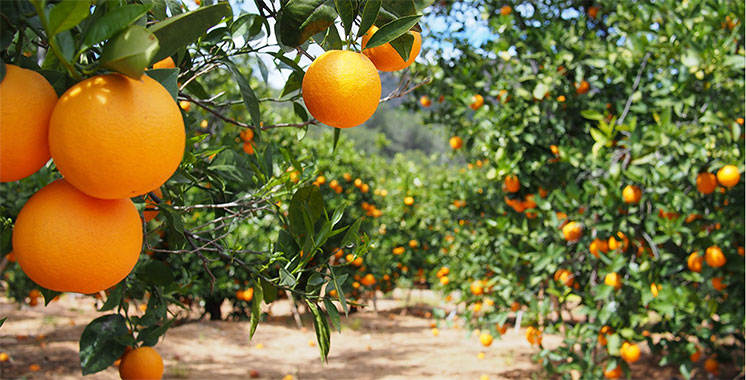
The citrus sector in the Béni Mellal-Khénifra region has recorded a significant increase in production for the current agricultural season, following several years of decline due to recurring droughts. This recovery opens promising prospects for revitalizing this vital sector.
According to forecasts, citrus production for the 2025-2026 season is expected to reach nearly 307,000 tons, compared to only 187,000 tons in the 2024-2025 season, representing a significant increase of about 64%.
In a statement to MAP, the Head of Agricultural Development at the Regional Office for Agricultural Development of Tadla (ORMVAT), Assem Khalid, explained that this improvement is mainly due to better climatic conditions after seven consecutive years of water stress, which had directly affected planted areas and regional production levels.
He noted that the citrus sector is a cornerstone of regional agriculture, given its socio-economic importance. It contributes approximately 20% of national production and nearly 10% of the Kingdom’s exports, while generating more than 2.5 million workdays annually.
The sector has received particular attention within the framework of the Regional Agricultural Plan, derived from the “Green Morocco Plan” and “Generation Green” strategies, aiming to strengthen competitiveness, improve yields, and ensure sustainability.
Currently, the citrus orchards cover over 17,480 hectares, of which 16,443 hectares are productive, representing 94% of the total planted area. The region cultivates 36 varieties, including “Clementine,” “Washington Navel,” “Maroc Late,” “Sidi Aissa,” and the “Nadorcott,” locally known as “Afourar.”
Regarding water management, Mr. Khalid emphasized that the region has made significant progress in expanding localized irrigation (drip irrigation), with around 94% of the citrus area now equipped with water-saving systems through support and incentive programs.
For production marketing, Béni Mellal-Khénifra has five packaging and processing units with a total capacity of 210,000 tons per year, which help increase added value and improve access to domestic and international markets.
These indicators reflect the positive momentum in the region’s citrus sector, thanks to improved climatic conditions and continued support programs, strengthening farmers’ resilience and consolidating the region’s position as a strategic agricultural hub nationally.