


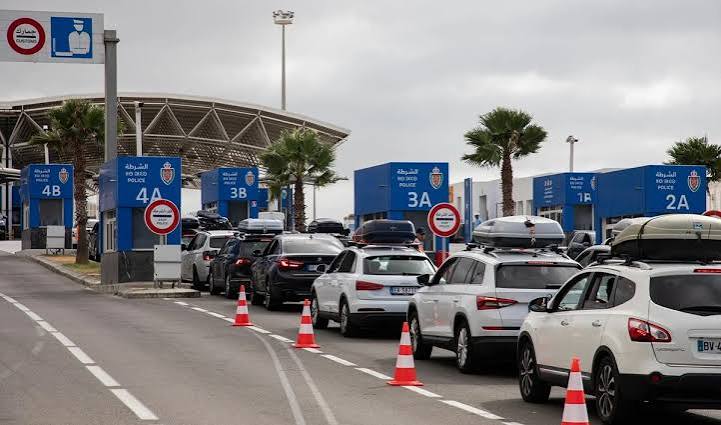

The Tanger Med port complex is at the heart of the second phase of Operation Marhaba 2026, dedicated to the return of Moroccans residing abroad, with strengthened port, logistics and administrative capacity as traffic is expected to reach its peak at the end of August.
The Tanger Med port is currently experiencing a sharp increase in traffic involving Moroccans residing abroad as part of the second phase of Marhaba 2026. This period traditionally represents one of the main annual tests for Morocco’s port infrastructure. The complex is now Morocco’s main maritime gateway to Europe and one of the Mediterranean’s leading port hubs, with an annual passenger-handling capacity of around 7 million people and a nominal capacity of 700,000 trucks per year. Its “Export Access” platform can process up to 2,100 units per day, with an average transit time of around two hours.
In 2024, Tanger Med received 3,047,387 passengers during Operation Marhaba, an increase of 13% year-on-year, confirming the growing importance of the complex in flows between Morocco and Europe. Its connections with several European ports, particularly in Spain, France and Italy, provide a strategic advantage for Moroccan residents abroad, exporters and industrial operators integrated into European value chains.
A strategic platform for the Moroccan economy
Tanger Med has moved well beyond its role as a passenger and freight transport platform. The complex has become a critical infrastructure hub for industrial supply chains, particularly in automotive, agribusiness, textiles, industrial equipment and exports. The Tanger Med Group, which encompasses the port complex and its various logistics and industrial platforms, handles significant volumes, with approximately 187 million tonnes of traffic and 11.44 million TEUs.
This concentration of capacity reinforces Morocco’s position as a production, transit and redistribution platform linking Europe, Africa and Atlantic markets. Tanger Med’s performance during Marhaba 2026 is therefore an indicator of the Kingdom’s ability to simultaneously absorb large flows of passengers, vehicles and goods. The expected peak at the end of August goes far beyond a seasonal phenomenon: it highlights the logistics strength of an infrastructure that has become a strategic asset for Morocco’s economic competitiveness.