





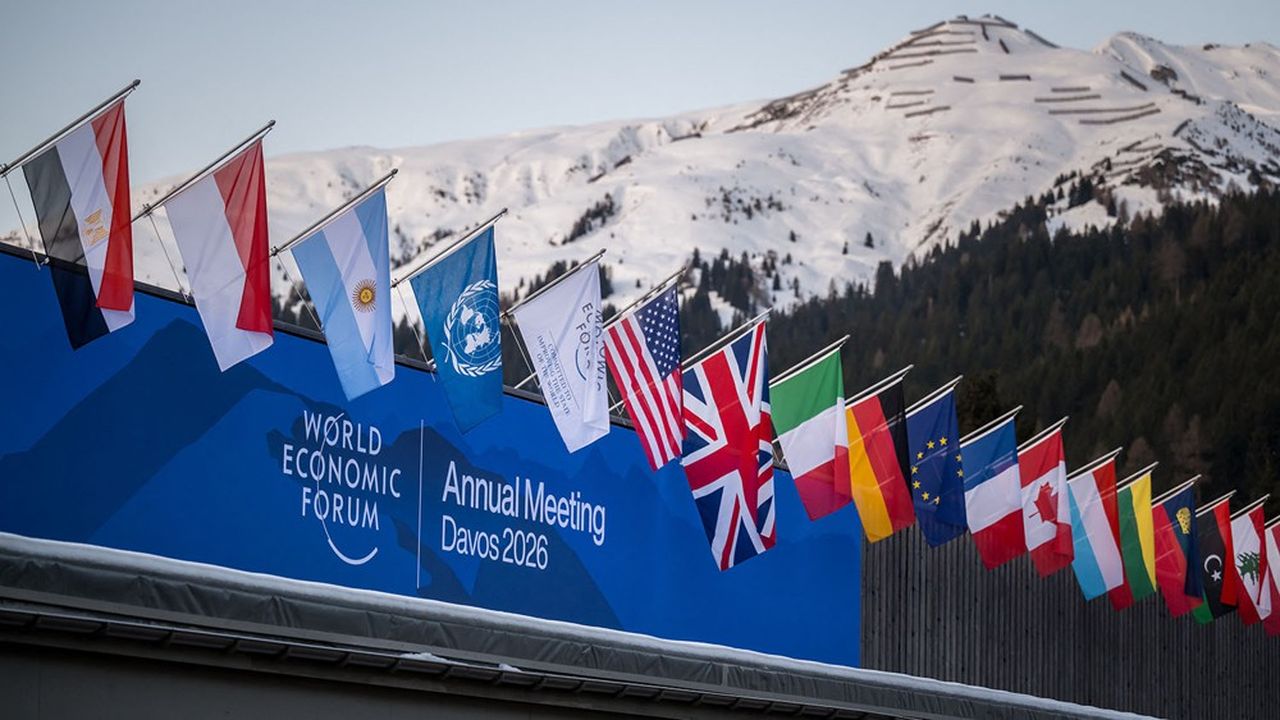

Every year, the small Swiss ski resort of Davos-Klosters is transformed into a diplomatic and economic crossroads, bringing together heads of state, CEOs, intellectuals and opinion leaders to debate the major challenges of our time. The 56th edition of the World Economic Forum (WEF), held from January 19 to 23, 2026, is no exception—except that it unfolds in an atmosphere far more tense and uncertain than in previous years.
The chosen theme, “A Spirit of Dialogue,” feels almost ironic given the scale of the contradictions and challenges facing the world today: on the one hand, repeated calls for multilateral cooperation; on the other, exacerbated geopolitical tensions, deep divisions over the energy transition, and growing concerns about the future of work and the global economy.
A summit under intense geopolitical pressure
Davos 2026 is marked by the highly publicized return of Donald Trump, making this forum his first major international appearance since 2020. Far from easing tensions, his presence often fueled them. From the opening sessions, Trump sparked controversy with provocative statements—sharp criticism of wind energy, attacks on certain European partners, and the defense of an Arctic security plan centered on Greenland, which he framed as a major strategic issue.
The question of Greenland’s sovereignty, already sensitive prior to the forum, has become a major point of friction between the United States and the European Union, the latter firmly reaffirming the non-negotiable nature of Danish territorial integrity.
Against this backdrop, the atmosphere oscillates between discreet diplomatic exchanges, direct confrontations and strategic discussions on the future of global security. Reactions ranging from cautious support to sharp criticism reveal a broader reality: Davos is no longer merely a venue for economic agreements, but a stage on which an uncertain world order is being reshaped.
Beyond politics: economy, technology and society
While geopolitics dominates many conversations, economic and technological debates are no less prominent. Artificial intelligence, in particular, occupies a central place. Business leaders have voiced concerns about its impact on employment, warning that automation could disrupt labor markets faster than societies are able to adapt.
In the quiet lounges of Alpine hotels and during formal sessions, the issue of responsible innovation repeatedly resurfaces: how can technology—however promising—be deployed in ways that strengthen economic resilience without widening inequalities? Lively discussions focus on the need to invest in skills, rethink governance mechanisms and strengthen cooperation between the public and private sectors.
Climate, energy and paradoxes
Debates on the energy transition reveal a striking dichotomy. On the one hand, there is growing recognition—even among some conservative participants—of the need to drastically reduce fossil fuel dependence and develop sustainable solutions. On the other, there is fierce criticism of certain climate policies, accused of creating strategic dependencies rather than fostering locally grounded solutions.
This tension permeates the overall atmosphere: technical sessions on renewable energy and the role of water in global stability—the so-called “Blue Davos” theme—coexist with political discussions on industrial competitiveness and technological rivalries among major powers.
A global stage, in the spotlight… and behind the scenes
Davos 2026 draws dozens of heads of state and government, hundreds of CEOs, thousands of participants from more than a hundred countries, along with media outlets from around the world.
Yet behind the plenary sessions and official speeches lies a less visible but equally influential atmosphere: that of private lounges, exclusive dinners and bilateral meetings where the economic and political relationships of tomorrow are quietly shaped. Alliances, financing decisions and strategic positions are forged there—often far from the headlines, but crucial in shaping national and corporate strategies.
For many participants, the mood is therefore ambivalent: both a space for intense networking and high-level debate, and a place of frustration, where the urgency of global challenges coexists with sometimes divergent interests.
Criticism, skepticism and reflection
As every year, critical voices are heard. Protest movements denounce the elitist nature of the forum and the gap between promises of global solutions and the persistence of inequality. Some observers view Davos as a closed club, more concerned with asserting positions than delivering concrete change on social or climate issues.
These criticisms also surface in informal conversations, raising questions about the real effectiveness of such gatherings in a world where tangible decisions are often made elsewhere—in parliaments, regional organizations, local businesses and communities.
Davos 2026: a mirror of global turmoil
Ultimately, the atmosphere of the 2026 World Economic Forum in Davos reflects a global crossroads in transformation: a place where divergent strategic visions, critical technological challenges and pressing geopolitical priorities collide. It is a stage that reflects—more than it resolves—the tensions of a rapidly changing world, one in which dialogue appears both an obvious necessity and a delicate undertaking, in the face of challenges that defy simple borders.