






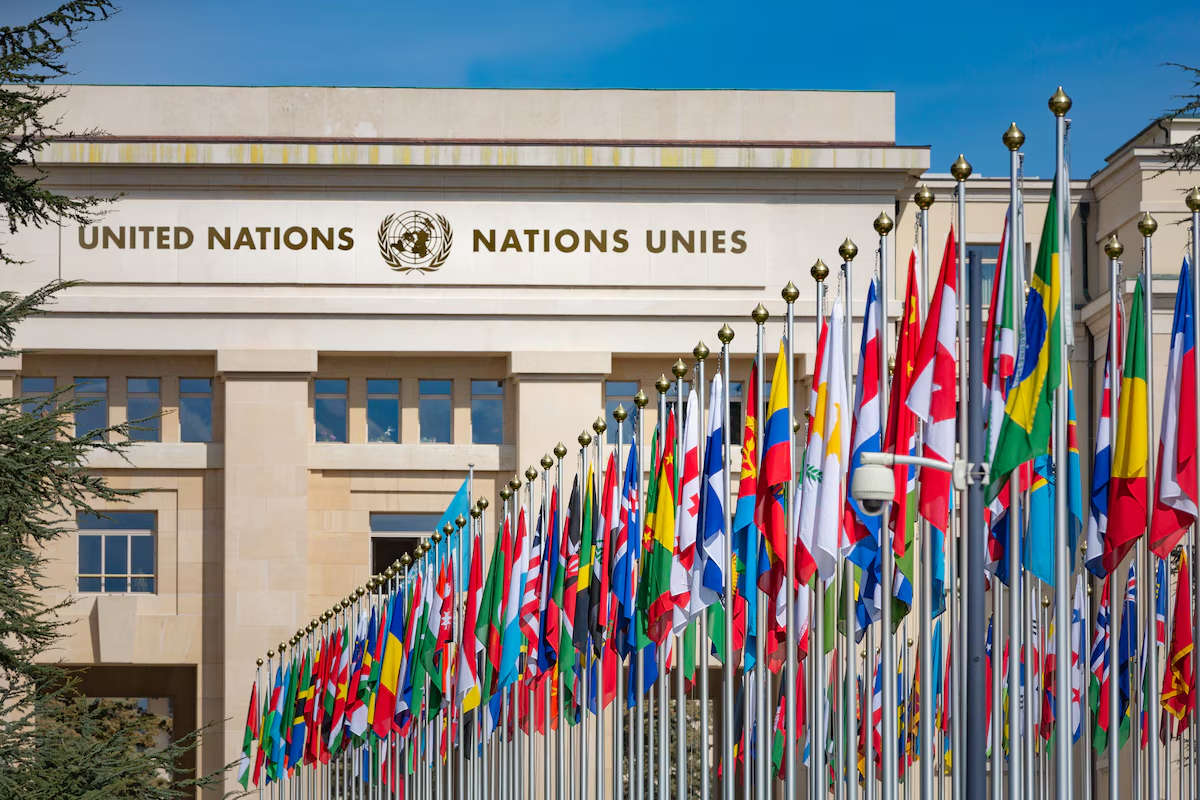

The National Human Rights Council of Morocco (CNDH) reaffirmed on Wednesday in Geneva that human rights and peace are two inseparable pillars that reinforce one another, stressing that sustainable peace cannot be achieved without the effective respect of human rights.
Speaking during the 61st session of the United Nations Human Rights Council, the Moroccan institution highlighted its commitment to strengthening a culture of human rights and peace through training programs, advocacy efforts, and awareness campaigns.
According to the Council, these initiatives target several groups, including students, youth, children, human rights defenders, law enforcement officials, and the general public. The aim is to promote the values of tolerance, dialogue, non-violence, citizenship, and respect for fundamental rights.
The CNDH noted that hundreds of initiatives have been implemented to anchor these principles within society and to encourage peaceful coexistence and civic engagement.
The Council also recalled Morocco’s experience in transitional justice, noting that the recommendations of the Equity and Reconciliation Commission were incorporated into the Moroccan Constitution of 2011, notably through guarantees aimed at preventing the recurrence of serious human rights violations and the criminalization of attacks on fundamental rights.
Furthermore, the CNDH shared this experience with the African Union, as well as with national human rights institutions and NGOs across Africa and the MENA region within the framework of bilateral and multilateral cooperation.
The institution also contributes to the Moussalaha Program, an initiative designed for individuals accused of terrorism-related offenses. The program aims to combat radicalization, promote tolerance and dialogue, and support the rehabilitation and reintegration of detainees.
According to the Council, establishing a genuine culture of peace requires a rights-based approach built on the principles of participation, accountability, empowerment, and non-discrimination, involving both state and non-state actors.
The CNDH concluded that only collective mobilization grounded in shared responsibility, dialogue, and the rule of law will ensure the lasting consolidation of peace and the protection of rights for all.