





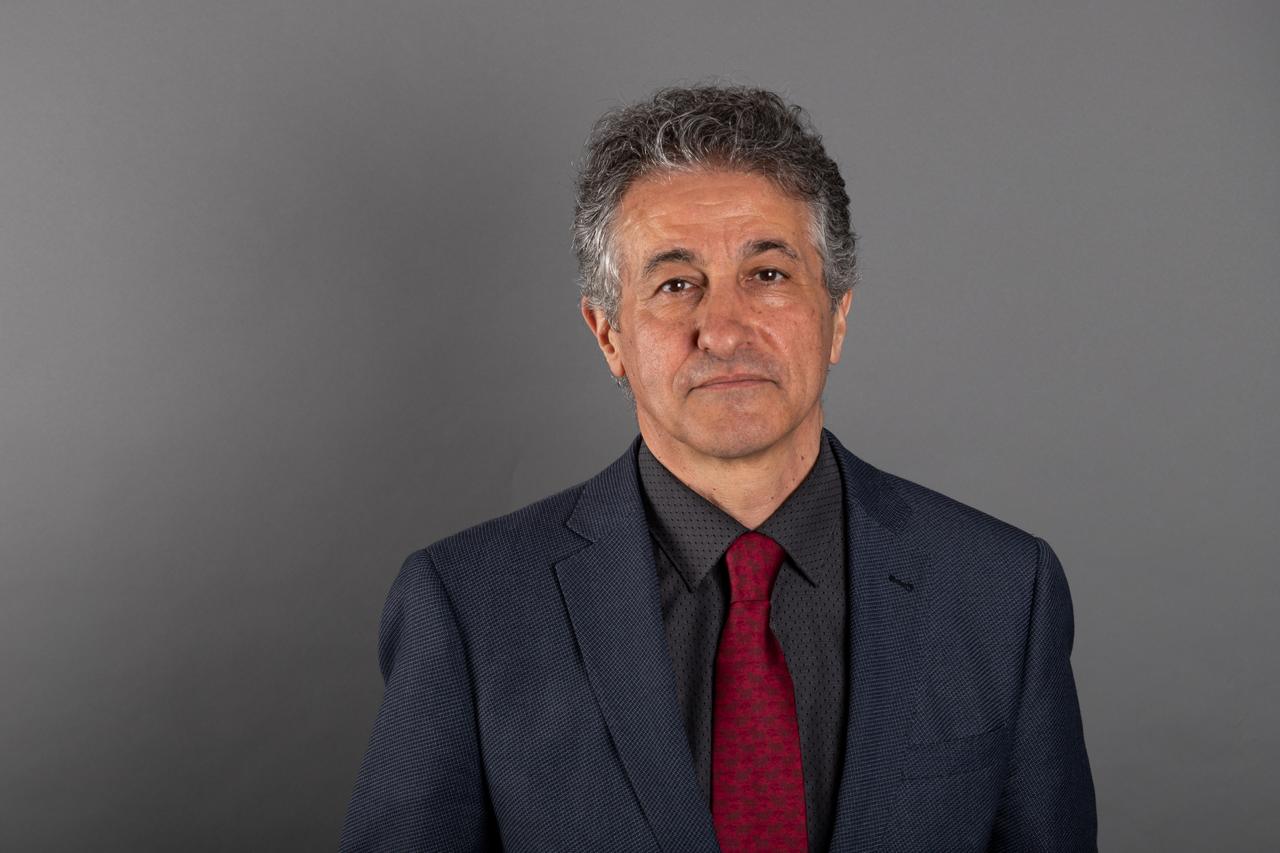
World-renowned scientist and a leading figure in ultrafast spectroscopy, Professor Majed Chergui embodies the excellence of contemporary Arab research. Winner of the Great Arab Minds 2025 Award in Natural Sciences, he shares in an exclusive interview with Industrie du Maroc Magazine his international career, pioneering contributions to the study of matter at the atomic scale, and the potential impact of his work on industrial innovation and renewable energy. An enlightening discussion on the fertile bridges between cutting-edge science, Arab intellectual heritage, and technological development.
Professor Chergui, how would you describe your scientific journey and your connection with the École Polytechnique Fédérale de Lausanne (EPFL) as Emeritus Professor?
I have had a fairly international scientific trajectory. After completing my university studies in London and earning my PhD in Paris, I settled in Berlin, where I worked for six years before taking a full professorship in Physics at the University of Lausanne in 1993. I then moved to EPFL in 2003, this time as a professor of Chemistry and Physics. In 2022, I retired and was named Emeritus Professor. I maintain close ties with EPFL, partly because I am now leading a European project based in Trieste, Italy, but much of my work is still connected to EPFL.
What does winning the “Great Arab Minds 2025” award in Natural Sciences mean to you?
It is not only an exceptional recognition of my achievements, given its international prestige, but also particularly meaningful because the award comes from an Arab country.
Your work has allowed the observation of ultrafast motion at the atomic scale. What were the main scientific challenges to achieving femtosecond precision?
Femtosecond precision had already been achieved in the 1980s for lasers operating in the ultraviolet-visible-infrared spectrum. Our challenge was to push this precision into the X-ray domain. We were not alone in this, and major technological developments on large instruments, especially synchrotrons and free-electron lasers, have been deployed over the past 20 years. We were the first to exploit these technological possibilities.
How have the ultrafast X-ray techniques you developed transformed the understanding of light-matter interactions?
Ultraviolet-visible-infrared light allows you to see molecules, proteins, and solids in a “global” way. X-rays are unique because they let you distinguish individual atoms. This makes it possible to track what each atom does in a physical system and to understand in detail its response to interactions with light.
You pioneered tools like two-dimensional ultraviolet spectroscopy and ultrafast circular dichroism. What new perspectives do these methods open for chemistry and materials science?
Two-dimensional UV spectroscopy was initially developed to study biological systems but quickly proved to be an excellent tool for studying materials, typically metal oxides used in solar energy conversion. As for circular dichroism, this measurement method is crucial for chemistry, catalysis, biology, and pharmacology. It is increasingly vital to differentiate enantiomers of chiral molecules.
Among your many innovations, why is the ultrafast X-ray spectrometer a decisive advance for studying transition metal oxides?
For the first time, it is possible to see what electric charges (positive and negative) are doing in these materials and on which atoms they are located. This is a crucial aspect for developing new materials for solar energy conversion.
You are currently focusing on using nonlinear X-rays for solar materials. What practical impacts could this research have on renewable energy?
Nonlinear X-ray techniques are entirely new, so it is premature to predict their specific impacts. However, we can already see that these methods can provide information on energy and charge transport at the nanometric scale in solid materials. One should keep in mind that the laser revolution of the 1960s was essentially one of nonlinear optics in the ultraviolet-visible-infrared domain, and we are now experiencing a similar revolution with X-rays over the past ten years.
Your career illustrates contemporary Arab scientific excellence. What message would you like to give to young researchers in the Arab world?
I am certainly not an exception. Our countries have enormous human potential, material resources, and historical foundations to excel in science. I encourage young researchers to build on this potential locally, but this also requires real commitment from national authorities.
Finally, how could Moroccan universities draw on your international experience to strengthen scientific research, innovation, and global visibility?
My experience can serve as an example, but I remain convinced that the emergence of scientific research in our countries must be an endogenous phenomenon. Certainly, there will be a phase where young researchers train abroad, but there should be incentives and encouragements for them to return home. There are many smaller countries than most Arab nations that have achieved international competitiveness in fundamental research—Taiwan, Singapore, South Korea. We can do the same. It just requires the will and investment in our youth.