






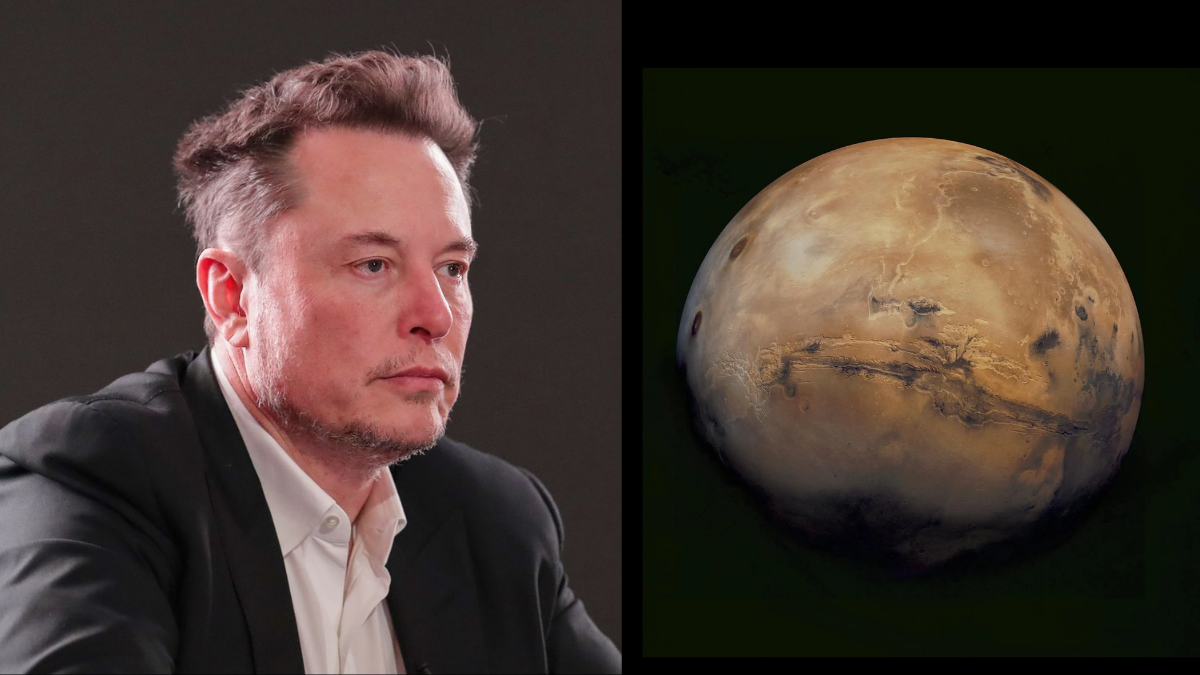

Elon Musk has announced a major shift in SpaceX’s priorities, moving the company’s near-term focus from Mars to the Moon.
Speaking publicly in February 2026, Musk explained that the company will now work toward building a “self-growing city” on the Moon, a settlement designed to expand autonomously over time with the help of automation, robotics, and artificial intelligence. He emphasized that lunar missions are far more practical in the short term: launch windows occur every ten days, with transit taking only about two days, whereas trips to Mars only open every 26 months, with a journey of around six months.
Despite the shift, Musk stressed that Mars remains a long-term goal, with colonization efforts expected to begin 5–7 years later than previously projected. This move reflects a more cautious and step-by-step approach to human space exploration, allowing SpaceX to test technologies, spacecraft systems, and life-support infrastructure closer to Earth before attempting the more challenging Martian missions.
In parallel, SpaceX is preparing for future Starship test launches, with the next launch tentatively scheduled for March 2026. These tests are critical for validating the systems needed both for lunar settlements and eventual Martian colonies.
This strategic pivot highlights SpaceX’s ambition to accelerate human expansion in space while mitigating risks, and positions the Moon as a proving ground for sustainable off-Earth settlements.