




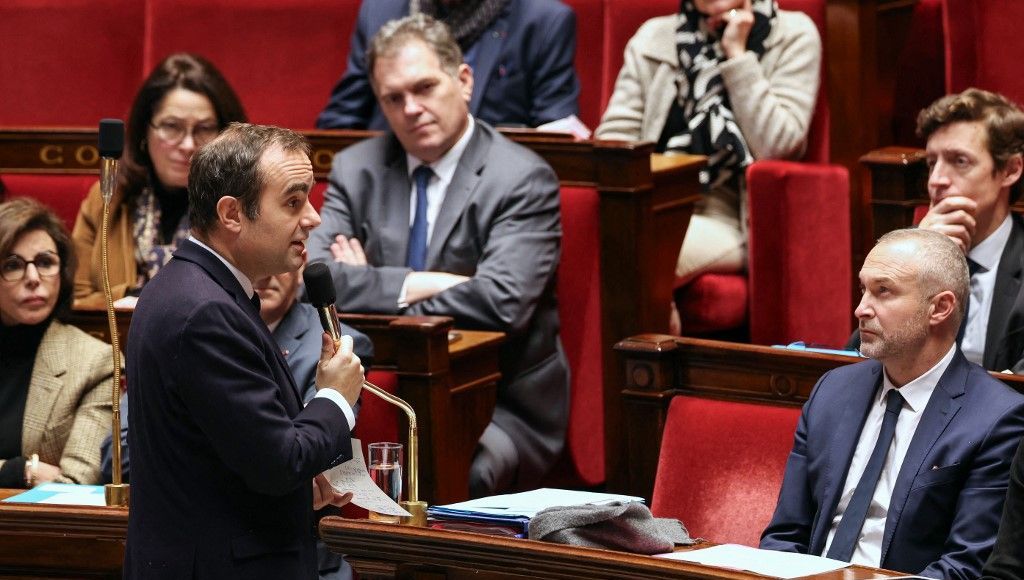
On Tuesday evening, the French Parliament adopted a special law to ensure the continuity of public spending in the absence of a budget for 2026, pending the resumption of budget discussions scheduled for January.
The law was introduced by the government after a joint committee of deputies and senators failed to reach a consensus on the 2026 Finance Bill. It was unanimously approved by both the National Assembly and the Senate.
This special law temporarily extends the 2025 budget to guarantee the normal functioning of the state at the beginning of 2026, preventing a shutdown of public services from January 1. It authorizes the government to continue collecting existing taxes, ensuring the necessary resources for the state, local authorities, and public institutions.
Speaking on the occasion, French Prime Minister Sébastien Lecornu emphasized that “taking the time to build a solid budget is not a weakness.”
He stressed the need to adopt a budget in January, while aiming to reduce the public deficit to below 5% of GDP in 2026.
“I remain convinced this is possible if political calculations are set aside and both Parliament and the government take responsibility,” he added.
To achieve this, Lecornu said he would seek a political agreement around five priority areas: agriculture, local authorities, housing, overseas territories, and issues related to the future and youth.
The Prime Minister also reminded that recent dialogue with political leaders had enabled the adoption of the 2026 Social Security budget, which includes measures such as reducing work stoppages and suspending the pension reform.
French lawmakers are expected to reconvene in early 2026 to continue discussions on the 2026 Finance Bill.