



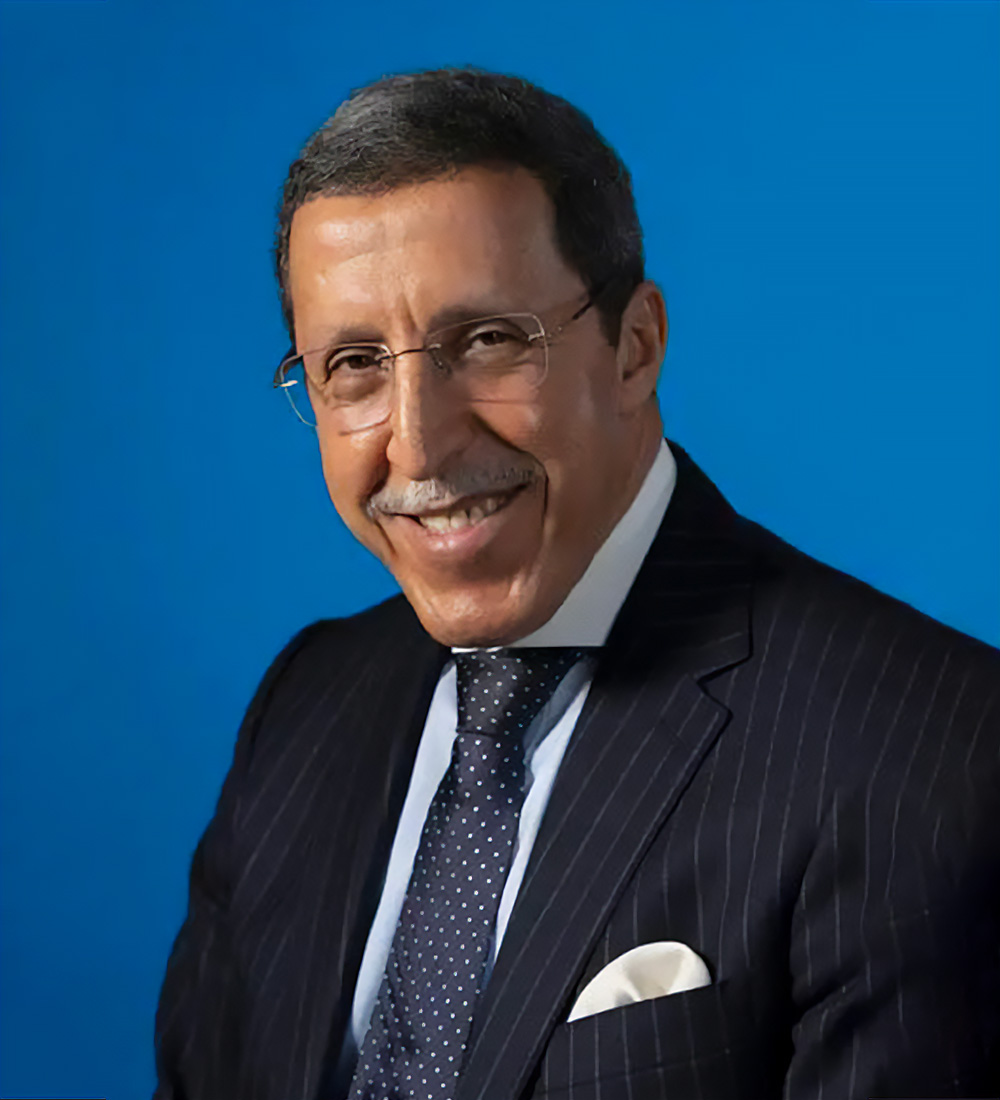

Morocco denounced, before the United Nations Security Council, any instrumentalization of straits and major maritime routes for political pressure or coercion, through a statement delivered by its Permanent Representative to the UN, Omar Hilale.
Speaking at a high-level debate on maritime security, chaired by Bahrain’s Minister of Foreign Affairs, Abdullatif bin Rashid Al-Zayani, the Moroccan diplomat strongly criticized implicit threats to close key strategic passages, particularly the Strait of Hormuz, which he described as a vital artery for global energy supply.
In what he described as a deeply concerning context, Omar Hilale stressed that no country has the right to hold the international community hostage by exploiting its geographical position. He recalled that seas are a shared heritage of humanity and must not be used as tools of coercion by states that have long adopted hostile postures.
The Moroccan representative also strongly condemned attacks targeting commercial vessels in the Arabian Sea, the Gulf of Aden and the Red Sea. He attributed these acts to armed groups backed by certain states, denouncing serious violations of international law and the principles of the United Nations Charter.
In this regard, Morocco calls on the international community to fully assume its responsibilities in the face of such actions. For Rabat, it is unacceptable that ideological considerations turn maritime routes into instruments of destabilization, in disregard of international rules and collective security.
The diplomat underlined that maritime security is now a fundamental pillar of global stability, recalling that more than 90 percent of international trade is carried by sea. Any disruption to freedom of navigation therefore represents a direct threat to economies and livelihoods.
Referring to Morocco’s strategic position, at the crossroads of Africa and Europe and bordering the Strait of Gibraltar, he stressed the vital importance of maritime freedom of movement for the Kingdom, describing it as an obligation dictated by geography and history.
Morocco reaffirms its commitment to the international law of the sea and highlights its concrete contribution to maritime security, notably through regional cooperation and efforts to combat illicit trafficking along its coasts.
In the same vein, Omar Hilale highlighted the Atlantic Initiative launched by HM the King Mohammed VI, aimed at providing Sahel countries with access to the Atlantic Ocean. According to him, this initiative reflects a spirit of solidarity and shared development, turning geographical constraints into opportunities.
He also referred to the Process of Atlantic African States, which brings together more than twenty coastal countries and seeks to strengthen cooperation in maritime security, the fight against transnational crime networks and the protection of shared marine resources.
According to him, this dynamic helps transform the African Atlantic into a space of cooperation and collective security, offering prospects for stability for the continent and beyond.
In conclusion, the Moroccan representative reaffirmed the Kingdom’s commitment to defending freedom of navigation and protecting strategic maritime routes, calling on the Security Council to adopt firm positions in response to current threats. He warned that risks affecting seas today could ultimately undermine global stability.