




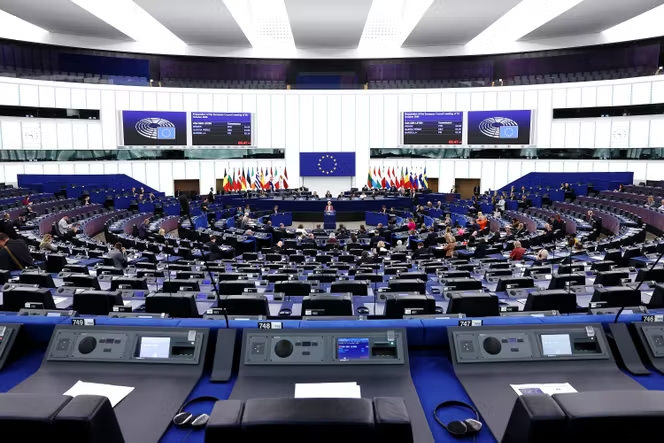

Debate is intensifying over the European Union’s next long-term budget for 2028–2034, with the European Parliament calling for a significant increase in overall spending. Lawmakers are advocating for a total envelope of €2.01 trillion to better address the growing challenges facing the bloc.
This proposed figure exceeds earlier projections and reflects the Parliament’s ambition to strengthen the EU’s capacity in key areas such as economic resilience, strategic autonomy, and global competitiveness.
Members of the European Parliament argue that the current budget framework is insufficient to meet expanding priorities, including the green transition, digital transformation, defense, and security. In a context marked by geopolitical tensions and economic uncertainty, they stress the need for a more robust and flexible financial strategy.
The Parliament also highlights the importance of maintaining strong support for traditional policies such as agriculture and regional cohesion, which remain central to the EU’s economic and social stability. At the same time, concerns have been raised about potential structural reforms that could reduce transparency or weaken democratic oversight.
Another key issue under discussion is the financing of the budget itself. The EU is exploring new “own resources” to reduce reliance on direct contributions from member states, while also ensuring the repayment of debts linked to the post-pandemic recovery plan.
The proposal will require unanimous approval from EU member states, followed by endorsement from the European Parliament. Negotiations are expected to continue until 2027 and are likely to be complex, reflecting differing national interests.
Ultimately, the debate over the 2028–2034 budget highlights a broader question about the EU’s future: whether to maintain a cautious financial approach or to invest more ambitiously in order to strengthen its global role and internal cohesion.