



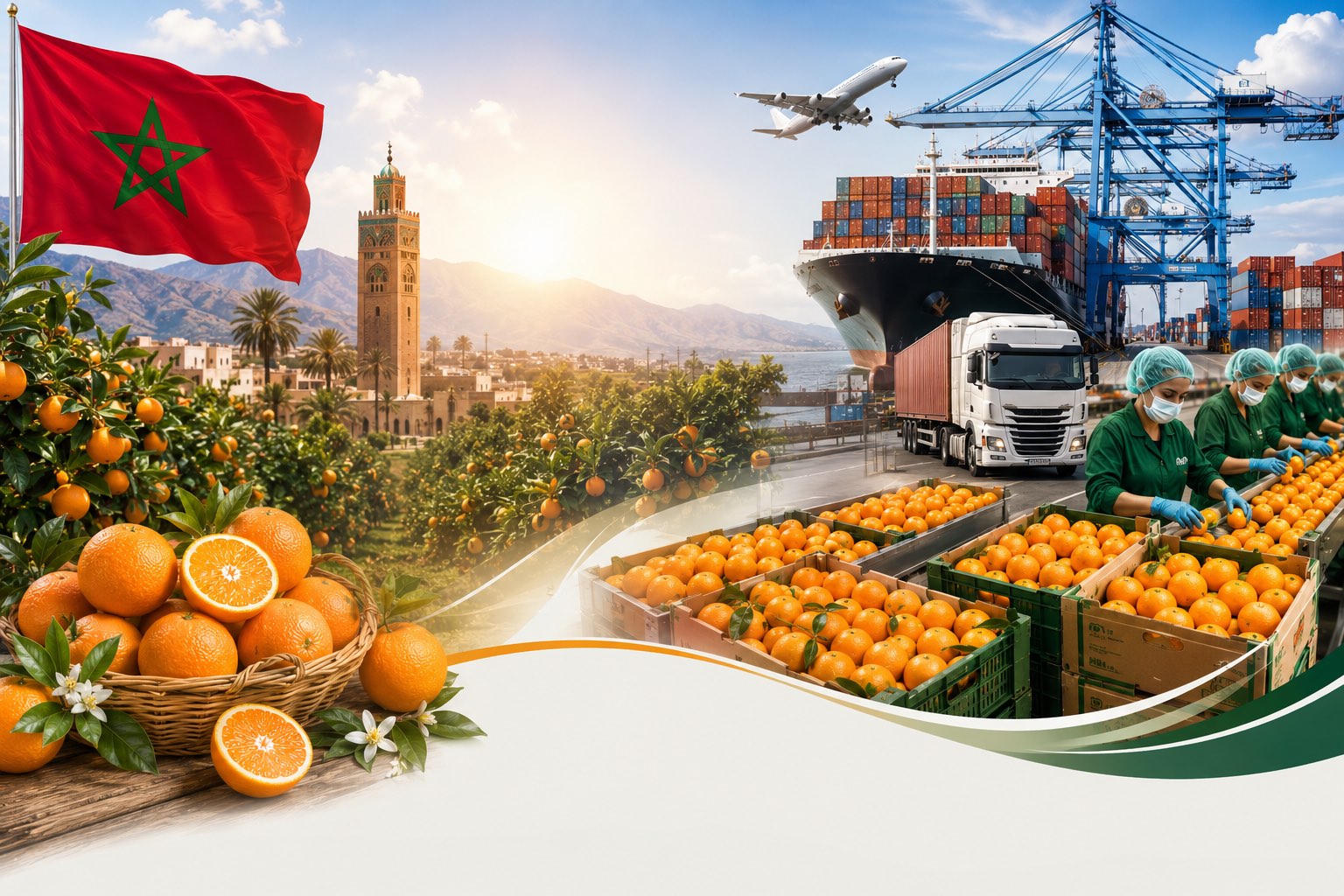
Morocco’s citrus industry confirmed its strong recovery during the first half of 2026, supported by improved weather conditions, better water availability in several production areas and continued investment in the modernization of the sector. According to official figures released by the Ministry of Agriculture, Maritime Fisheries, Rural Development and Water and Forests, Morocco’s 2025/2026 citrus season is expected to reach 1.9 million tonnes, representing a consolidated 25% increase compared with the previous campaign. The recovery is being driven primarily by the strong performance of soft citrus varieties—including mandarins, clementines and Nadorcott—as well as improved production of oranges and lemons.
Exports remain the main engine of the industry. Shipments of mandarins and clementines are projected to reach nearly 550,000 tonnes, confirming the strong competitiveness of Moroccan citrus products in international markets. The European Union remains Morocco’s largest export destination, followed by the United Kingdom, Russia, Canada, the United States and several West African countries. Orange exports are expected to remain stable at around 85,000 tonnes, despite intense competition from Egypt and Türkiye, whose production costs continue to be more competitive.
The first half of 2026 was also marked by outstanding performances in several European markets. Between October 2025 and April 2026, Morocco became the leading supplier of mandarins to the United Kingdom, exporting more than 71,600 tonnes, an increase of nearly 20% compared with the previous year, gradually overtaking Spain in this strategic market segment. At the same time, Moroccan orange exports to Germany reached a historic 8,800 tonnes, more than four times the volume recorded during the same period a year earlier, strengthening Morocco’s position among Germany’s leading citrus suppliers.
This momentum is supported by several competitive advantages, including continuous improvements in fruit quality, the growing success of premium varieties such as Nadorcott, modernization of packing stations, expanded logistics infrastructure around the ports of Tangier Med and Agadir, and significant investments in traceability, sanitary certification and water-efficient irrigation technologies. These efforts have enabled Moroccan exporters to meet increasingly demanding international standards for quality, food safety and sustainability.
Nevertheless, the sector continues to face significant structural challenges. Water scarcity remains the principal constraint in the major citrus-growing regions of Souss-Massa, Gharb, Berkane and Haouz. Producers must also cope with rising costs for agricultural inputs, energy, maritime transport and packaging, while facing growing competition from Egypt, Türkiye, South Africa and Spain in key export markets. In addition, increasingly stringent environmental and phytosanitary regulations imposed by European buyers require continuous adaptation and investment.
Looking ahead, the industry’s outlook remains positive. Market diversification towards Africa, the Middle East and Asia, increased value addition through citrus processing, particularly juice production, and new business opportunities created by the African Continental Free Trade Area (AfCFTA) are expected to support long-term growth. With production recovering strongly, export quality continuing to improve and international market presence expanding, Morocco’s citrus industry remains one of the country’s flagship agricultural export sectors, making a significant contribution to foreign exchange earnings, employment creation and the global reputation of the Made in Morocco brand.