

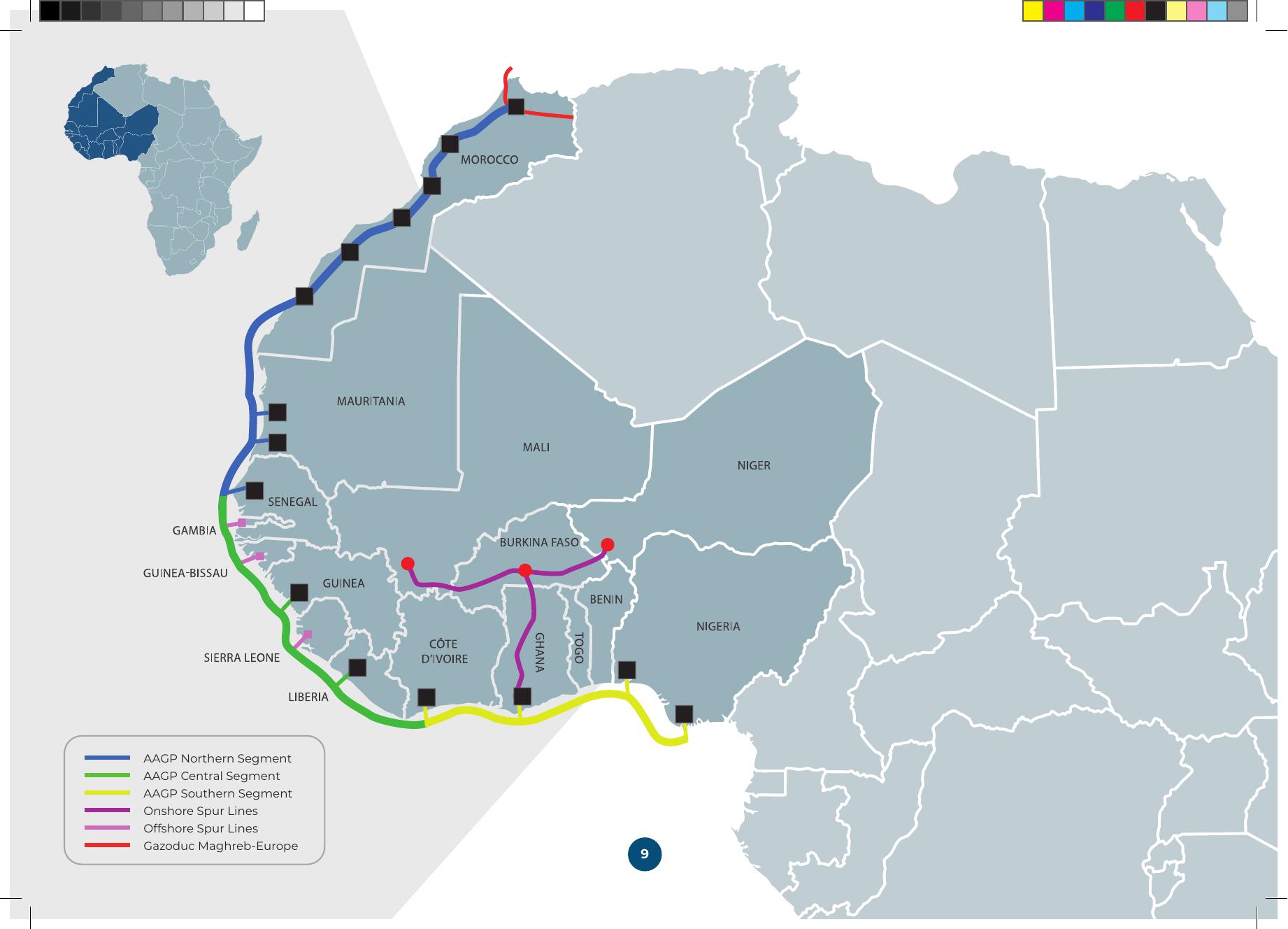
Long regarded as a visionary initiative, the Nigeria–Morocco Atlantic Gas Pipeline (AAGP) has reached a decisive new milestone. At the latest ECOWAS Summit held in Freetown, Sierra Leone, Heads of State and Government reaffirmed their commitment to this strategic infrastructure, paving the way for the acceleration of its technical, legal and financial phases. More than a simple energy project, the pipeline is set to become one of the largest economic integration initiatives ever undertaken in Africa.
Conceived jointly by His Majesty King Mohammed VI and the Nigerian authorities, the pipeline aims to connect Nigeria’s vast natural gas reserves to Morocco before linking with the European gas network through the Maghreb-Europe Gas Pipeline. Stretching nearly 5,700 kilometres, it will cross 13 countries along Africa’s Atlantic coast—Benin, Togo, Ghana, Côte d’Ivoire, Liberia, Sierra Leone, Guinea, Guinea-Bissau, The Gambia, Senegal, Mauritania and Morocco—in addition to Nigeria, creating a genuine continental energy corridor.
The scale of the project reflects its strategic significance. Estimated at around US$25 billion, it is among the largest infrastructure investments ever planned in Africa. Its projected transport capacity of 30 billion cubic metres of natural gas per year would supply West African markets, Morocco and part of Europe.
Beyond the numbers, the project seeks to transform energy into a driver of regional integration. The countries along the route will progressively develop national gas distribution networks, reduce dependence on more polluting fuels, strengthen electricity generation, improve industrial competitiveness and attract new investment. For many ECOWAS economies, access to natural gas represents a major opportunity to expand petrochemicals, fertilizers, steel, cement, glass and agro-industries.
The expected economic benefits are considerable. Construction is expected to create tens of thousands of direct and indirect jobs, stimulate engineering, construction, metallurgy, logistics and services, while encouraging technology transfer and local skills development. Over the long term, access to affordable energy could accelerate industrialization across West Africa, home to more than 400 million people.
For Morocco, the project reinforces a long-term strategy aimed at positioning the Kingdom as an energy, industrial and logistics hub connecting Africa and Europe. Following Tanger Med, renewable energy projects, green hydrogen and electricity interconnections, the gas pipeline completes an economic architecture designed to strengthen Morocco’s energy sovereignty and regional leadership.
Nigeria also stands to gain significantly. As Africa’s largest holder of proven natural gas reserves, with more than 200 trillion cubic feet (Tcf), the country will diversify its export routes while maximizing the value of its resources. The corridor will provide a new gateway to Europe beyond liquefied natural gas exports.
The European Union is closely monitoring the initiative. As Europe seeks to diversify its energy supplies and accelerate the energy transition, the Atlantic corridor could become a strategic new supply route while supporting Africa’s industrial development.
ECOWAS’ renewed political backing therefore represents a major turning point. Member States have reaffirmed their commitment to the project and endorsed the continuation of preparatory work. The next steps include finalizing the intergovernmental agreement between Morocco and Nigeria, securing international financing and preparing for construction.
By its scale, investment, economic impact and geopolitical importance, the Atlantic Africa Gas Pipeline goes far beyond an energy infrastructure. It represents a corridor of prosperity, capable of connecting Africa’s natural resources with global markets, accelerating regional economic integration and positioning Morocco as one of the leading energy gateways between Africa and Europe. Like Tanger Med transformed maritime trade, this pipeline could become one of the strongest symbols of Africa’s emerging economic geography.