
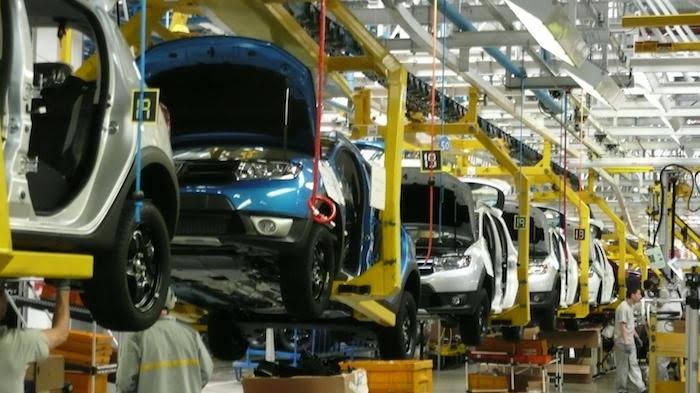
The automotive industry is strengthening its position as a key driver of Moroccan exports. By the end of June 2026, automotive exports had reached MAD 93.7 billion, up 17.4% year-on-year. This performance comes as Morocco simultaneously expands production capacity, develops its supplier network and strengthens its positioning in electric vehicles and next-generation automotive technologies.
Morocco’s automotive sector continues its strong expansion in 2026. According to data from the Office des Changes, automotive exports reached MAD 93.7 billion at the end of June, compared with a lower level during the same period in 2025. Growth reached 17.4%, confirming the sector’s return to strong export momentum. Automotive manufacturing remains one of the largest contributors to Morocco’s merchandise exports.
This performance is particularly significant given that European markets, the main destinations for Moroccan automotive products, are undergoing rapid changes in consumer demand and technology. Morocco nevertheless benefits from several competitive advantages: proximity to Europe, port infrastructure, competitive industrial costs, trade agreements and a growing network of suppliers. The transformation is no longer limited to vehicle manufacturers. It now encompasses the entire value chain, including wiring, components, batteries, tires, electronics, electrical systems, interior equipment and engineering services.
The Industrial Ecosystem Is Moving to a New Level
The Guizhou Tyre project at Tanger Tech illustrates precisely this new phase. With an investment of nearly $299 million and an annual capacity of 6 million tires, the project strengthens the existing automotive ecosystem. The development of electric mobility is also becoming a strategic priority.
Investments in batteries and electric components could progressively transform the structure of Morocco’s automotive exports. The challenge is now to maximize local value added. The more components are manufactured domestically, the greater the industrial and economic impact of exports. This strategy also responds to growing international competition. Automakers are seeking to bring suppliers closer to assembly plants in order to reduce logistics risks and delivery times. Morocco is therefore positioning itself as a production platform located close to the European market while offering privileged access to Africa. In the medium term, the sector could also benefit from the development of new logistics and energy infrastructure.
The first-half 2026 results confirm that automotive manufacturing remains one of the main laboratories of Morocco’s industrialization strategy. The challenge will now be to move from a volume-based model toward a value-based model: more research, engineering, intellectual property, local suppliers and technologies developed in Morocco.