
Chinese textile group Shengtai has announced the signing of the investment agreement for its industrial project in Morocco, with a total investment of approximately MAD 2.29 billion, equivalent to around RMB 1.716 billion. The project aims to establish an integrated textile industrial park and strengthen Shengtai’s global production footprint and supply-chain capabilities.
Who is Shengtai?
Shengtai Intelligent Manufacturing Group Co., Ltd. is a Chinese company specializing in the textile and apparel industry. The company is listed on the Shanghai Stock Exchange under stock code 605138. Its activities cover several stages of the textile value chain, including cotton spinning, weaving, dyeing, finishing, fabric production and garment manufacturing. This integrated industrial model enables the group to better control production costs, quality, delivery times and raw-material supplies. Shengtai has a strong international orientation. According to its annual report, overseas business accounted for 66.83% of the group’s revenue in 2025, highlighting the importance of international markets to its growth strategy.
An integrated textile industrial park in Morocco
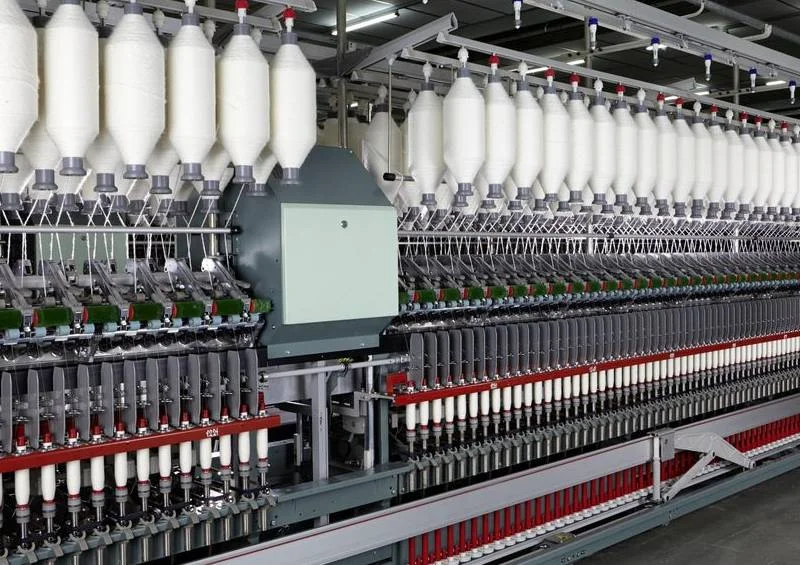
Shengtai’s Moroccan project is known as the “Shengtai Morocco Green Textile Industrial Park” and is designed as an integrated textile manufacturing platform. The project is expected to cover approximately 34 hectares, with industrial facilities and supporting infrastructure. Production will span several stages, including spinning, weaving, dyeing, finishing and garment manufacturing. The project is planned around Fez and Skhirat, with a focus on producing high-end cotton yarn, premium fabrics and high-value-added garments.
Significant production capacity
According to the announced plans, the project is expected to reach substantial production capacity, including approximately 100,000 cotton-spinning spindles, 10,800 tonnes of dyed and finished fabrics, 15 million metres of woven fabrics and around 22 million garments per year. These capacities could position Morocco as an important production and export base for Shengtai, particularly for the European and international markets.
More than 8,500 jobs
The project’s significance goes beyond the investment amount. It is also expected to generate substantial employment and industrial spillovers. According to the announced figures, the project could create around 7,000 direct jobs and more than 1,500 indirect jobs, bringing its overall employment impact to more than 8,500 positions. The investment could also contribute to the development of Moroccan expertise in modern textile technologies, industrial management and international supply-chain operations.
Why Morocco?
For Shengtai, the Moroccan investment is part of a broader international expansion strategy. The group says its overseas investment will help optimize its global industrial footprint, strengthen the textile ecosystem, expand its presence in foreign markets and enhance its supply capabilities. Morocco’s geographical position is another major advantage. Located close to European markets, the Kingdom offers modern port, logistics and transport infrastructure, providing efficient access to Europe, Africa and other international markets.
Strengthening Morocco’s textile value chain
The strategic importance of the project lies in its integrated nature. It is not simply a garment factory: it covers several upstream and downstream stages of the value chain, from spinning and weaving to dyeing, finishing and apparel manufacturing. This could help Morocco strengthen domestic textile integration, reduce supply lead times and improve the competitiveness of companies operating in the sector.
For Morocco, attracting a major Chinese textile manufacturer such as Shengtai is also consistent with the country’s ambition to move beyond a model focused mainly on garment assembly and toward a more integrated, technologically advanced and higher-value textile industry.
A new signal of China-Morocco industrial cooperation
The MAD 2.29 billion investment represents another significant example of Chinese manufacturing companies expanding their industrial presence in Morocco. For Shengtai, Morocco offers an opportunity to move closer to European customers while using the Kingdom as a strategic platform connecting Europe, Africa and international markets.
More broadly, the project illustrates Morocco’s growing attractiveness to Asian manufacturers and its strategy of strengthening industrial ecosystems, increasing local value creation and expanding export capacity. If implemented as planned, Shengtai’s investment could establish a major integrated textile manufacturing hub in Morocco and further strengthen the Kingdom’s position within global textile and apparel supply chains.