



Morocco’s restaurant industry is benefiting strongly from the country’s tourism momentum in 2026. By the end of May, Morocco had welcomed 7.7 million visitors, up 7% year-on-year, while tourism revenues increased by 21% and overnight stays in classified establishments rose by 9%. With 7.74 million airline seats scheduled for the summer, up 13%, restaurants, cafés, rooftops, beach clubs and hotel establishments are operating in an increasingly favorable environment.
Marrakech, a Laboratory for Premium Dining
Tourism remains the sector’s main growth driver. After a record 2025, with nearly 20 million tourists and MAD 138 billion in tourism revenues, momentum has continued into 2026. Marrakech is at the heart of this expansion, benefiting from international, Moroccan, MICE and high-spending clientele. In some fine-dining restaurants, bills can reach MAD 500–900 per person, while the most exclusive establishments can exceed MAD 1,000, alongside a much more affordable mass-market segment.
From Dining to Experience
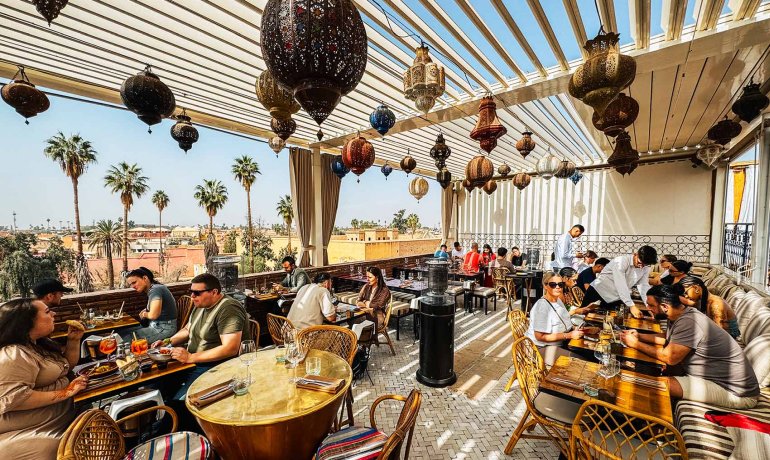
Summer 2026 confirms a major transformation: restaurants are increasingly becoming places of experience, entertainment and tourism consumption. In Marrakech, Hivernage, Guéliz and the Medina concentrate rooftops, luxury restaurants, beach clubs and concepts combining gastronomy, music and entertainment. Night-time consumption is also gaining importance, with opening hours temporarily extended until 4 a.m. during the World Cup period.
An International Clientele with Higher Spending
The 21% increase in tourism revenues, exceeding the growth in visitor numbers, is a positive signal for tourism-related activities, including restaurants. Improved air connectivity is reinforcing this trend: the 7.74 million scheduled seats and 52 new international routes launched during the first half of the year should support visitor flows to Marrakech, Agadir, Tangier, Casablanca and Rabat.
The Shift Toward Higher Value-Added Dining
Moroccan restaurants are also moving toward greater sophistication and diversification. Contemporary Moroccan, Mediterranean, Asian, fusion and plant-based cuisine, as well as casual premium concepts, are expanding the market. The bistronomic segment is particularly promising, positioned between traditional dining and fine dining. At the same time, rooftops are becoming genuine tourism products, combining views, food, music and digital experiences.
2030, a New Growth Driver
Preparations for the 2030 World Cup are expected to accelerate this transformation. Morocco plans to add around 60,000 hotel beds and reach 26 million tourists by 2030, compared with nearly 20 million in 2025. Tourism and infrastructure investments estimated at more than MAD 190 billion should create new consumption hubs and generate additional demand for restaurants.
Profitability and Competition, the Main Challenges
Growing demand does not automatically guarantee higher profitability. Restaurant operators must manage the rising costs of raw materials, wages, rents, energy, logistics and delivery-platform commissions. Competition is also intensifying in major tourist destinations, forcing establishments to strengthen their identity, service quality, digital communication and market positioning.
A True Experience Economy
The medium-term outlook remains favorable. The Central Bank expects tourism revenues to potentially reach MAD 161 billion in 2027. For the restaurant industry, the challenge is now to convert this momentum into sustainable value. Summer 2026 therefore appears to be a turning point, as Morocco’s restaurant sector gradually evolves from an activity primarily driven by local and tourist consumption into a genuine industry built around gastronomy, experience and entertainment.