



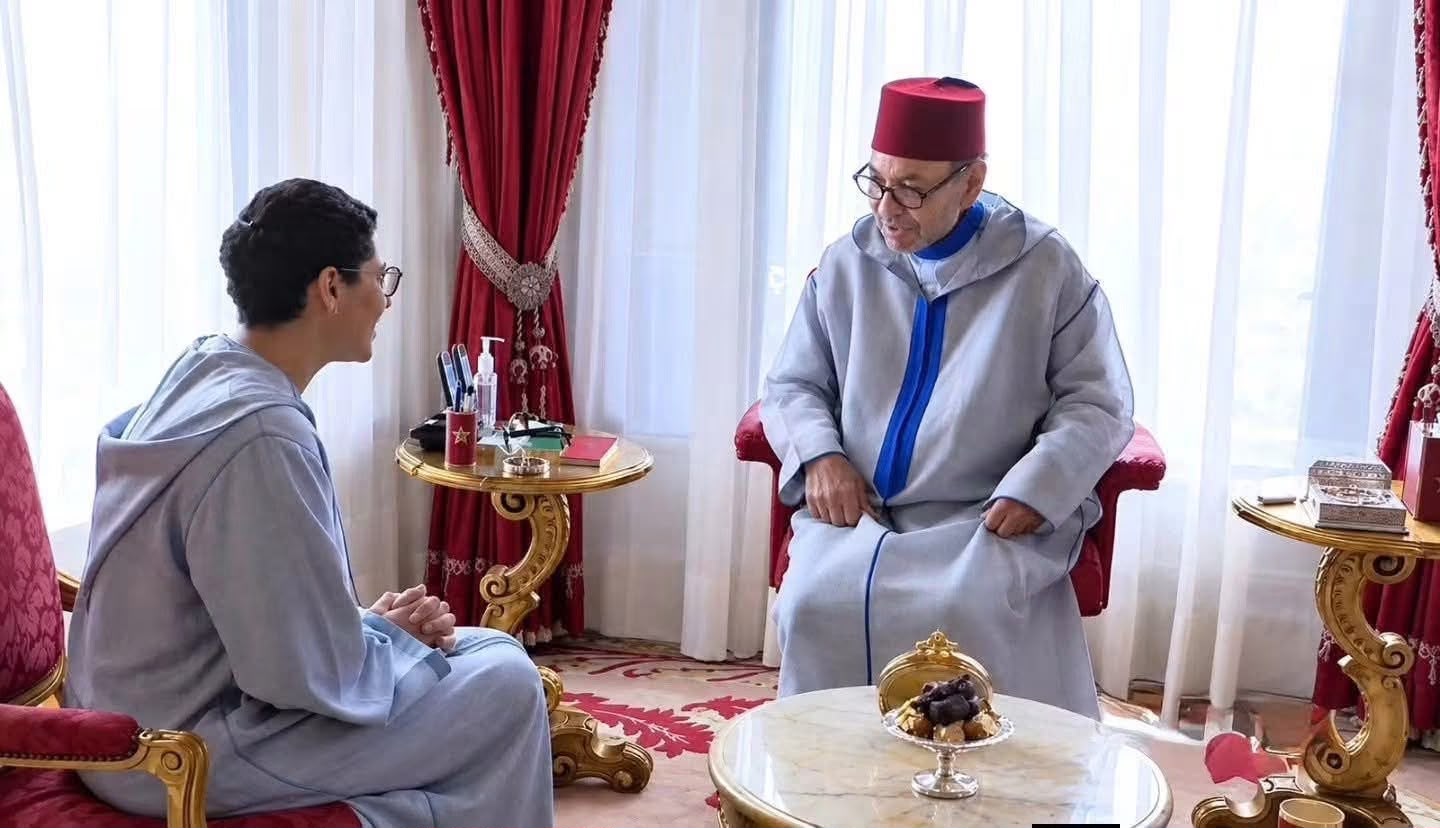

His Majesty King Mohammed VI appointed Fatima Ezzahra El Mansouri as Head of Government on Monday at the Royal Palace in Rabat, in accordance with the provisions of Article 47 of the Constitution, which stipulates that the Sovereign designates the head of government “from within the political party that won the most seats in the election to the House of Representatives and in light of the election results.”
This appointment comes six days after the September 23, 2026 legislative elections, in which the Authenticity and Modernity Party (PAM) emerged as the leading party with 97 seats out of 395, in a context marked by a historically low turnout.
A historic first: first woman to lead the Moroccan government
With this appointment, Fatima Ezzahra El Mansouri becomes the first woman to hold the position of Head of Government in Morocco, a highly symbolic milestone in the Kingdom’s political trajectory and in consolidating women’s access to the highest state responsibilities.
Aged 54 and trained as a jurist, she has held several top ministerial and elected positions, notably serving as Minister of National Land Use Planning, Urban Planning, Housing and Urban Policy since 2021, as well as Mayor of Marrakech.
A central figure in PAM and post-election negotiations
A central figure within PAM, Fatima Ezzahra El Mansouri played a decisive role in the party’s 2026 legislative campaign and in negotiations aimed at forming a majority.
Following the election results, she stated that her party had set “no red lines” regarding future alliances, while underlining the need to build a stable and coherent majority capable of carrying a clear government project.
When asked about a potential appointment as head of government, she said such a responsibility would be a “great honor” for her, while stressing that priority must be given to forming a solid coalition and establishing a citizen-oriented program.
A long-awaited appointment amid high expectations
El Mansouri’s appointment had been widely anticipated for several days, with many media outlets and political observers citing her as PAM’s natural candidate for the premiership, given her track record, local roots and role in the party’s momentum.
The designation comes amid high social and economic expectations, marked by:
- The need to revive growth and employment, especially for young people.
- The continuation of reforms in social protection, health, education and housing.
- Managing challenges linked to climate change, drought and water security.
Next steps: coalition, program and investiture
Under the Constitution, the new Head of Government now has a period of time to:
- Form a majority coalition in the House of Representatives.
- Draft a government program setting out priorities and reforms for the next five years.
- Present this program to both chambers of Parliament to obtain investiture.
PAM, with its 97 seats, will need to rely on alliances with other parties to reach the required majority and ensure executive stability. Observers expect intense negotiations in the coming days and weeks over political balances, ministerial portfolios and programmatic orientations.
A strong political signal: reform, inclusion and modernity
El Mansouri’s appointment is seen as a strong political signal, sending several messages:
- Consolidation of a dynamic of modernization and openness in the political arena.
- Promotion of women’s inclusion in decision-making bodies, in line with constitutional advances and public policies on gender.
- A commitment to place structural reforms, good governance and citizen proximity at the heart of government action.
In her first statements following her appointment, the new Head of Government reaffirmed her commitment to working for a “more just, more inclusive and more prosperous Morocco,” based on a participatory approach involving all institutional, economic, social and cultural stakeholders.
A new chapter in Morocco’s political history
With this appointment, Morocco opens a new chapter in its political history, entrusting the leadership of the government to a woman for the first time, in a regional context where such access remains rare.
Fatima Ezzahra El Mansouri inherits a complex portfolio, marked by strong social expectations, ongoing reforms and structural challenges, but also by a momentum of change and modernization engaged over the past two decades.
The coming months will be crucial in assessing the new government team’s ability to translate these ambitions into concrete results for citizens in terms of employment, public services, social protection and balanced territorial development.