
Morocco will celebrate on Wednesday, November 18, the 71st anniversary of Independence Day, a landmark occasion in the Kingdom’s contemporary history, symbolizing the sacrifices made to end colonial rule and embodying the enduring bond between the Alaouite Throne and the Moroccan people in defending national unity, sovereignty and the country’s fundamental values.
The national celebration provides an opportunity to revisit the major milestones of Morocco’s national liberation struggle and pay tribute to the generations whose sacrifices laid the foundations of an independent and united Kingdom, while highlighting the historical journey that continues to shape Morocco’s development and future ambitions.
The Historic Visit to Tangier: A Turning Point in the National Struggle
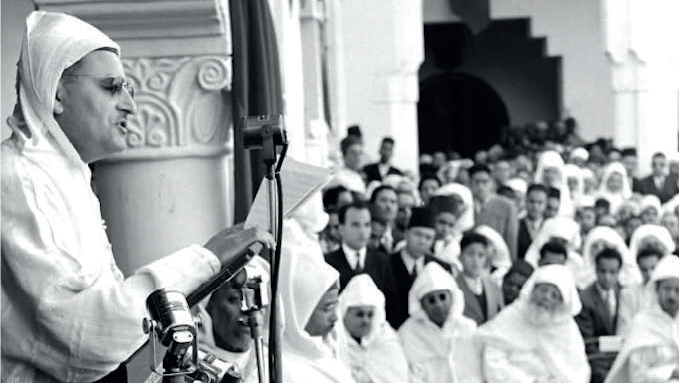
The historical significance of Independence Day cannot be fully understood without recalling the major milestones of Morocco’s liberation movement, foremost among them the historic visit made by the late King Mohammed V to Tangier on April 9, 1947.
The visit marked a decisive turning point, as the Moroccan people and their King reaffirmed their commitment to freedom, territorial integrity and the preservation of the Kingdom’s deeply rooted national identity.
This momentum built on the efforts of the National Movement, which had emerged in the early 1930s and gradually expanded its political activities, popular mobilization and international advocacy of the Moroccan cause in response to colonial repression.
The Revolution of the King and the People: A Defining Moment
Faced with the growing strength of the national movement, the French Protectorate authorities decided in August 1953 to exile the late King Mohammed V and the Royal Family, hoping to weaken the national struggle by removing its central symbol.
However, this decision triggered widespread resistance and sparked the Revolution of the King and the People on August 20, 1953, leading to popular uprisings across Moroccan cities and rural communities.
The historic battles of El Herri, Anoual, Bougafer, Jbel Baddou and Sidi Bou Othmane, alongside the resistance movements of the Aït Baâmrane tribes and the southern provinces, stand as powerful examples of the sacrifices made by Moroccans in defense of their homeland.
Mohammed V’s Return and the Proclamation of Independence
The triumphant return of the late King Mohammed V and the Royal Family from exile marked the culmination of this long national struggle.
On November 18, 1955, the late Sovereign announced the end of the Protectorate, opening a new chapter in Morocco’s history and calling on the nation to move from the “Lesser Jihad” to the “Greater Jihad” — the struggle of nation-building, development and progress.
Since then, November 18 has become a symbol of freedom, sovereignty and national unity, commemorated annually by Moroccans.
Territorial Integrity and the Building of the Modern State
Continuing this historic legacy, the late King Hassan II pursued the process of completing Morocco’s territorial integrity, notably through the recovery of the city of Sidi Ifni on June 30, 1969.
This process continued with the organization of the Green March on November 6, 1975, a landmark event in Morocco’s history that paved the way for the recovery of the southern provinces, alongside efforts to consolidate state institutions and build a modern economy.
Morocco Continues Its Development Journey Under King Mohammed VI
Today, building on this rich historical legacy, Morocco continues its process of modernization and development under the leadership of His Majesty King Mohammed VI.
This national momentum places particular emphasis on consolidating territorial integrity, promoting sustainable economic and social development, and making human capital a central pillar of public policies.
The 71st anniversary of Independence Day is therefore both a moment of remembrance and an opportunity to honor the sacrifices of previous generations, reflect on the progress achieved and reaffirm Morocco’s commitment to national unity, sovereignty and a shared future.