


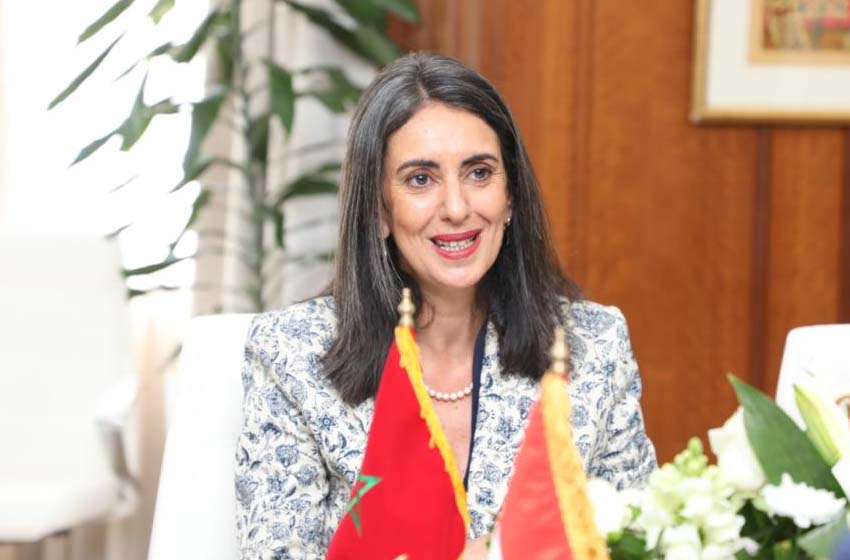
Morocco’s Minister of Economy and Finance, Nadia Fettah, affirmed on Wednesday in Casablanca that co-financing is a strategic lever to stimulate investment, strengthen public action, and accelerate the implementation of development priorities.
“Co-financing is no longer just a technical choice, but a political one that prioritizes cooperation, impact, and co-creation of projects”
said Ms. Fettah in a pre-recorded video address during the opening of the forum “The Power of Co-Financing”. She highlighted that the current international context, marked by rising needs in developing countries and shrinking available resources, requires new structural choices.
The minister noted that Morocco sees co-financing as a key instrument to support investments, public initiatives, and accelerate priority projects, particularly in energy, mobility, social protection, employment, and resilience. She cited the Noor Ouarzazate project and the Casablanca Mobility Hub as examples of successful partnerships built around co-financing.
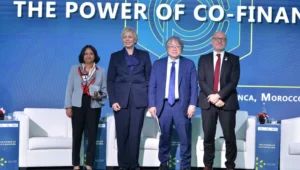
Ms. Fettah stressed the need to scale up co-financing within a systemic approach based on innovative and demanding partnerships, positioning Morocco as a committed partner and a regional platform for collectively-driven development.
Nezha Hayat, CEO of the Mohammed VI Investment Fund (FM6I), emphasized that the Fund works across public-private partnerships, providing equity and mobilizing private investors in sectors such as infrastructure, logistics, and energy. This approach aims to accelerate project implementation while attracting long-term investors, combining financial returns with economic impact.
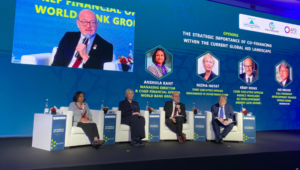
Ms. Hayat also highlighted the Fund’s role in supporting the private sector through venture capital to address corporate equity deficits. Following an initial selection of 14 investment funds across various sectors, the initiative has mobilized up to 20 billion Moroccan dirhams—equivalent to all private equity invested in Morocco over the last 20 years.
Anshula Kant, CFO of the World Bank Group, noted that infrastructure financing needs in emerging markets remain substantial, and no government or institution can meet them alone. She stressed the importance of a coordinated approach bringing together public authorities, private sector partners, and development institutions for transformative programs, particularly in energy and agriculture.
Rémy Rioux, CEO of the French Development Agency (AFD), explained that co-financing is at the heart of a “partnership by design” approach rather than “by accident,” with Morocco being AFD’s largest client globally. He highlighted that hosting this discussion in Casablanca underscores the Kingdom’s important voice in debates on international cooperation and development financing.
Organized by the World Bank Group in partnership with the Ministry of Economy and Finance and AFD, the forum aims to strengthen collaboration mechanisms between development partners and beneficiary countries, through shared platforms and joint high-impact projects. The initiative focuses on pooling resources, accelerating results, and enhancing the private sector’s role in financing and risk-sharing, supporting complex investments and contributing to poverty reduction and shared prosperity.