






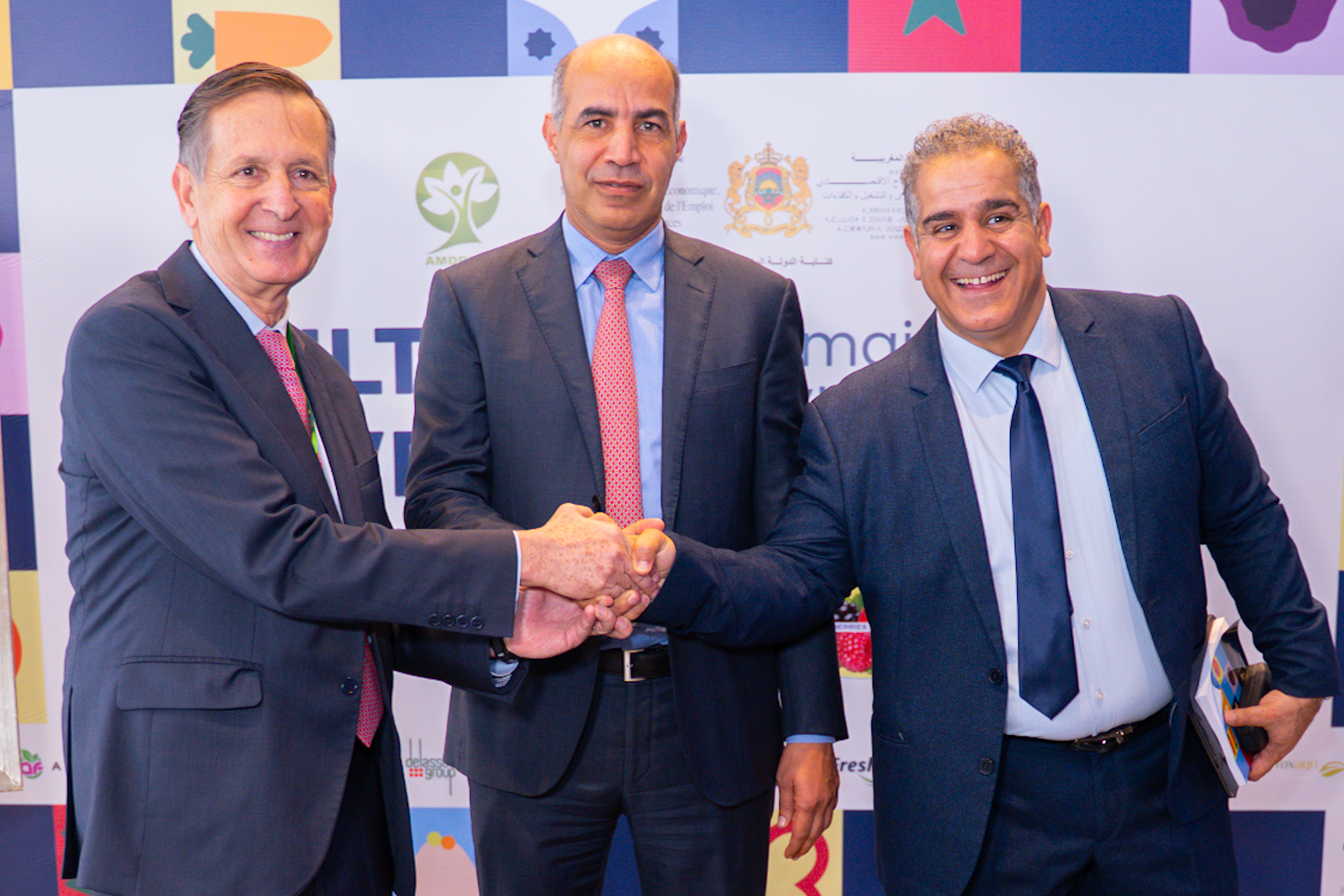

Against a backdrop of profound rural transformations, growing international market demand, and a global redefinition of “responsible agriculture” standards, Rabat hosted the national conference “Cultivating the Future: Labor as the New Horizon for Horticulture in Morocco” on Thursday, January 29, 2026.
Organized by the Moroccan Association for the Development of Human Resources (AMDRHA) with the participation of the Secretariat of State for Employment at the Ministry of Economic Inclusion, Small Business, Employment and Skills, the event addressed a crucial challenge for Morocco’s horticultural sector: the strategic role of labor in ensuring competitiveness and sustainability.
A Pivotal Moment for Moroccan Horticulture
Over the past fifteen years, Morocco has made significant strides in structuring production basins, modernizing farming practices, and boosting export competitiveness through strategic partnerships with national and international stakeholders. Yet, as the sector grows, it faces a new imperative: alongside water, labor has emerged as one of the two most critical and volatile factors for horticultural competitiveness.
The conference aimed to unify a fragmented industry around a common understanding of labor dynamics, establish a structured sectoral dialogue, and place professionalization and workforce well-being at the heart of Morocco’s horticultural agenda. A key milestone was the launch of the “Partnership for Action on Decent Work in Horticulture”, a multi-stakeholder initiative to guide the implementation of the National Roadmap for Horticultural Labor 2026–2030.
Labor Quality as a Competitive Advantage
Chaired by Mr. Hicham Sabiry, Secretary of State for Employment, the conference reaffirmed Morocco’s commitment to job quality, social protection, and compliance with international labor standards. Mr. Otman El Qacemi, President of AMDRHA, stressed the need for the sector to move from isolated discussions to a coherent, industry-wide vision that enables operational, coordinated, and measurable responses.
Experts analyzed socio-demographic trends, labor availability, turnover, gender representation, social protection, housing, and transportation. Discussions highlighted that workforce quality is now a decisive factor in export performance, as international buyers increasingly require compliance with human rights, decent working conditions, and due diligence. Panelists emphasized that investing in a dignified work environment is both a moral and business imperative, reducing turnover and strengthening long-term productivity.
Strategic Approaches to Workforce Development
The conference underscored that climatic, technological, and organizational transitions cannot succeed without targeted investment in labor. Participants also discussed strategic communication to elevate agriculture as a respected and attractive career path. International comparisons offered insights from countries that successfully combine economic performance with strong labor governance, suggesting reform levers for Morocco.
A multi-stakeholder dialogue involving public institutions, growers, worker representatives, financial partners, and industry leaders such as Driscoll’s, Comader, Interproberries Maroc, Apefel, and Maroc Citrus highlighted the urgency of collaborative action. Mario Steta, VP Corporate Affairs at Driscoll’s EMEA, noted that Morocco’s long-term global position will depend on secure, qualified, and recognized employment opportunities for horticultural workers.
Key Pillars of the National Roadmap for Horticultural Labor
The conference set five priority pillars for the National Roadmap for Horticultural Labor 2026–2030:
-
Social Protection & Integration – Harmonizing programs to encourage formal employment and protect rural families.
-
Modernized Regulatory Framework – Ensuring safe, fair, and internationally compliant working conditions.
-
Strategic Internal Mobility – Organizing seasonal and stable job opportunities, supported by dignified housing and safe transport.
-
Expanding the Talent Pool – Broadening recruitment to youth, students, and seniors, with safeguards for education, health, and voluntary participation.
-
Productivity through Skills – Linking compensation to training, professionalization, and measurable performance.