
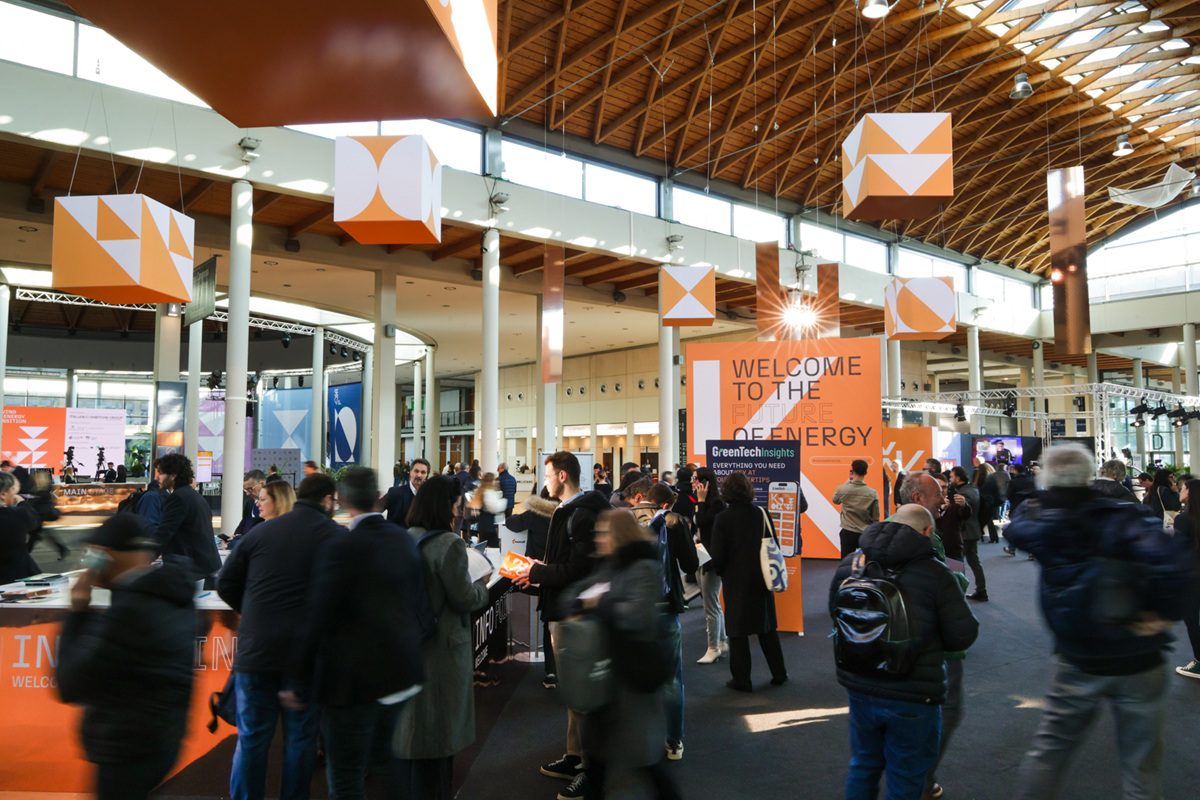
From March 4 to 6, the Rimini Expo Centre will host a new edition of KEY – The Energy Transition Expo, a major event dedicated to the challenges of the energy transition in Europe, Africa and the Mediterranean basin. Organized by Italian Exhibition Group, this year’s edition marks a strategic shift by significantly strengthening its international dimension.
More than 1,000 exhibitors are expected in Rimini, nearly 32 percent of them from abroad. In total, companies from around thirty countries will attend, alongside more than 500 hosted buyers and delegations representing about fifty international markets. This momentum is supported by the Italian Ministry of Foreign Affairs and International Cooperation and by the Italian Trade Agency, ICE, which promotes Italian companies abroad.
Beyond the figures, KEY 2026 aims to consolidate its role as a platform for dialogue between industry leaders, institutions and investors, with a clear objective: accelerating decarbonization pathways by fostering technological, financial and regulatory exchanges across economic regions.
A stronger focus on Africa and emerging markets
Among the highlighted regions this year are North Africa and Sub-Saharan Africa, as well as Turkey and several European countries, with particular attention to Germany, Spain, the United Kingdom, Poland, Serbia and the wider Balkan region. For the first time, a Japanese delegation will also take part, within the framework of the Italy–Japan hydrogen partnership, extending the mission carried out by Italian Exhibition Group at the Osaka World Expo.
To facilitate international attendance, a direct air connection between Madrid and Rimini will be operated during the event by LuxWing, improving accessibility from the Iberian Peninsula.
An Africa Investment HUB to structure cooperation
In line with the priorities of the Mattei Plan and the growing role of the African continent in European energy strategies, KEY 2026 will mark a major step with the launch of the Africa Investment HUB. Located in Hall D3, this 126-square-meter space will host, for its first edition, African professional associations from Egypt, Algeria, Morocco, Tunisia, Côte d’Ivoire, Senegal and South Africa.
Designed as a business and networking platform, the hub aims to connect companies, institutions and investors in order to foster concrete projects and long-term partnerships in renewable energy and transition infrastructure.
In a broader impact approach, KEY is also partnering with Piantando, a certified B Corp company engaged in high social and environmental impact projects. During the expo, three solar street lamps will be installed in a village in Malawi as part of the “Light Up” initiative, illustrating the event’s ambition to link industrial innovation with on-the-ground action.
A structured and high-level international program
The scientific and technical program of KEY 2026, developed by its dedicated committee, will feature nearly eighteen events held in English for international stakeholders. Discussions will address key topics such as artificial intelligence applied to building decarbonization, offshore wind value chains, electric vehicle charging networks, agrivoltaics, recycling of photovoltaic panels and batteries, and large-scale energy storage.
Hydrogen will receive particular attention, with several sessions devoted to international cooperation, notably between Italy and Japan and within the German–Italian dialogue framework. Africa will also be at the heart of multiple sessions focusing on energy infrastructure financing, access to electricity, and the deployment of solar, wind and storage solutions adapted to local realities.
Finally, KEY 2026 will bridge academic research, industry and public decision-makers, paving the way for the Scientific Conference scheduled for 2027, with the ambition of shaping shared international pathways for the energy transition.
Through this edition, KEY – The Energy Transition Expo confirms its position as a strategic crossroads for the energy systems of tomorrow, aligned with European industrial priorities and the growing needs of emerging economies, particularly in Africa.