


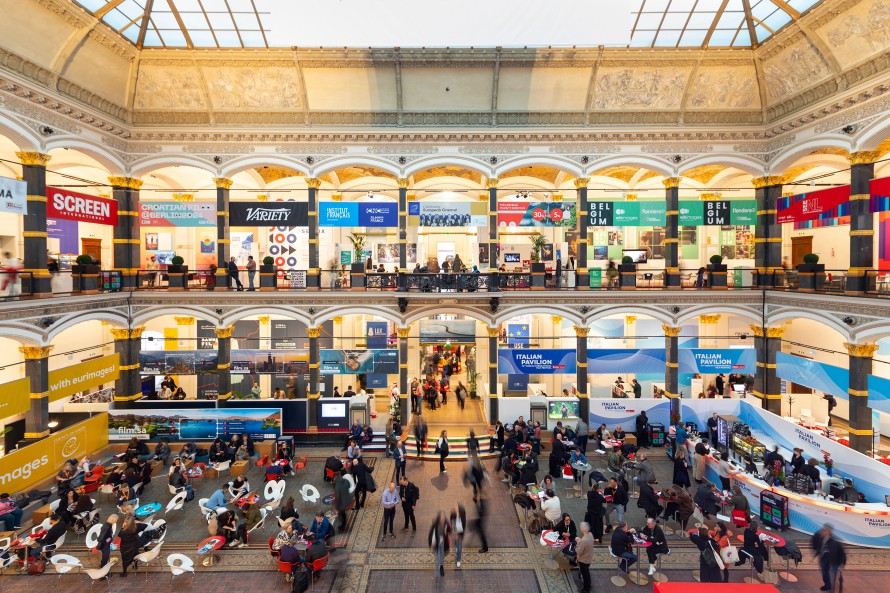
Moroccan cinema is reaching a new milestone in its international expansion. On the occasion of the European Film Market (EFM), held as part of the Berlin International Film Festival, Moroccan producers presented their projects to an audience of industry professionals from around the world.
Selected by the Centre cinématographique marocain (CCM), ten producers—representing both an ambitious new generation and established figures in the sector—took part in the “Producers’ Spotlight” workshop. This flagship EFM event, taking place from February 12 to 18, is welcoming Morocco this year as “Country in Focus,” a historic first for an African nation.
Feature films, documentaries, and series: the projects presented highlight the vitality and diversity of contemporary Moroccan storytelling. Rooted in multiple realities and driven by strong artistic visions, these works reflect the Kingdom’s cultural and human richness while demonstrating a clear international ambition.
Through this professional showcase, Moroccan production companies sought to forge new partnerships, particularly in co-production, distribution, and international sales. The objective is clear: to diversify funding sources, strengthen creative exchanges, and expand horizons beyond traditional partners.
Present in Berlin, Philip Kueppers, director of the Goethe-Institut in Morocco, praised the “excellent impression” made by Moroccan producers. He emphasized that Morocco’s designation as Country in Focus at the EFM reflects not only the quality of the Kingdom’s films and professionals, but also the richness of its landscapes and cultural diversity—an important source of inspiration for cinematic creation.
Moroccan producer Karim Debbagh described this participation as “a very important milestone for Moroccan cinema.” According to him, this visibility places Morocco at the heart of international industry meetings and opens the door to new opportunities, particularly in Germany, at a time of growing bilateral relations.
The projects presented span the entire production chain, from development to post-production, and also include completed works seeking distributors and international sales agents. Moroccan producers aim to build lasting momentum and establish partnerships with new territories, including countries that do not yet have co-production agreements with Morocco.
The official launch of Morocco’s participation took place at the prestigious Gropius Bau, in the presence of several figures from the German film industry, including Tricia Tuttle, director of the Berlinale, and Tanja Meissner, director of the EFM. Organizers noted that Morocco was a natural choice, given the growing number of international productions hosted in the Kingdom each year.
With this spotlight in Berlin, Moroccan cinema confirms its rising prominence on the global stage and affirms its determination to build lasting bridges with new partners.