



Bank Al-Maghrib’s survey shows that 71% of industrial companies consider the business climate normal in the second quarter of 2026, while industrial investment continues to grow despite insufficient demand, input costs and competition.
Morocco’s industrial sector maintained a broadly positive momentum in the second quarter of 2026. According to Bank Al-Maghrib’s business survey, 71% of industrial companies consider the business climate normal. However, perceptions remain mixed across different branches.
Insufficient demand is one of the main obstacles identified by industrial companies. High input costs represent another major constraint, while competition is also among the key factors weighing on activity.
Despite this environment, industrial investment continues to increase. 43% of companies surveyed reported higher investment spending, compared with 41% reporting stability and 16% reporting a decline.
Investment financing remains largely based on internal resources. Equity accounts for approximately 70% of investment expenditure financing, compared with 30% for bank credit. This structure highlights the importance of self-financing in Moroccan industry and also points to the need for better access to long-term financing.
Investment drives industrial transformation
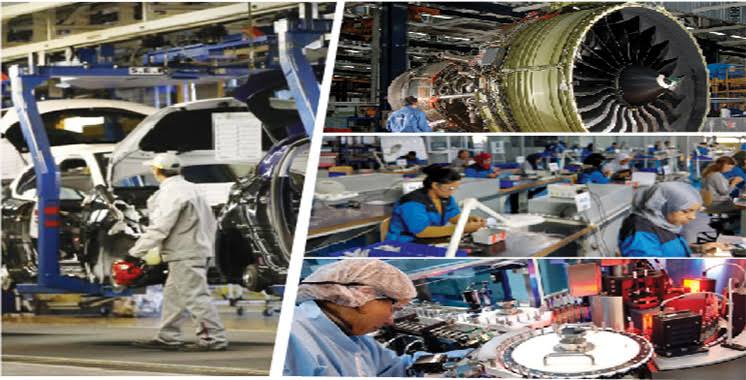
The mechanical and metal industries stand out particularly strongly, with 59% of companies reporting an increase in investment. Meanwhile, the automotive industry continues to support local value chains, while agri-food, chemicals, textiles and aerospace contribute to industrial diversification.
Morocco now has more than 13,000 industrial companies and around 1.2 to 1.3 million industrial jobs, according to the latest available sector data. Industry accounts for approximately one-quarter of GDP.
The strategic challenge is now to increase local value added, strengthen domestic suppliers and improve productivity. Morocco’s ability to consolidate its position as an export-oriented industrial platform will therefore depend less on the volume of investment than on its ability to create integrated, innovative and competitive industrial ecosystems capable of deeper integration into global value chains.