

Amid profound shifts reshaping the global economy, strategic minerals have emerged as a critical pillar of industrial sovereignty and economic security. Once viewed primarily as raw materials, these resources are now central to global value chains, underpinning advanced manufacturing, the energy transition, and defense industries. As competition intensifies among major powers, access to and control over strategic minerals have become a defining issue of the new geo-economic order.
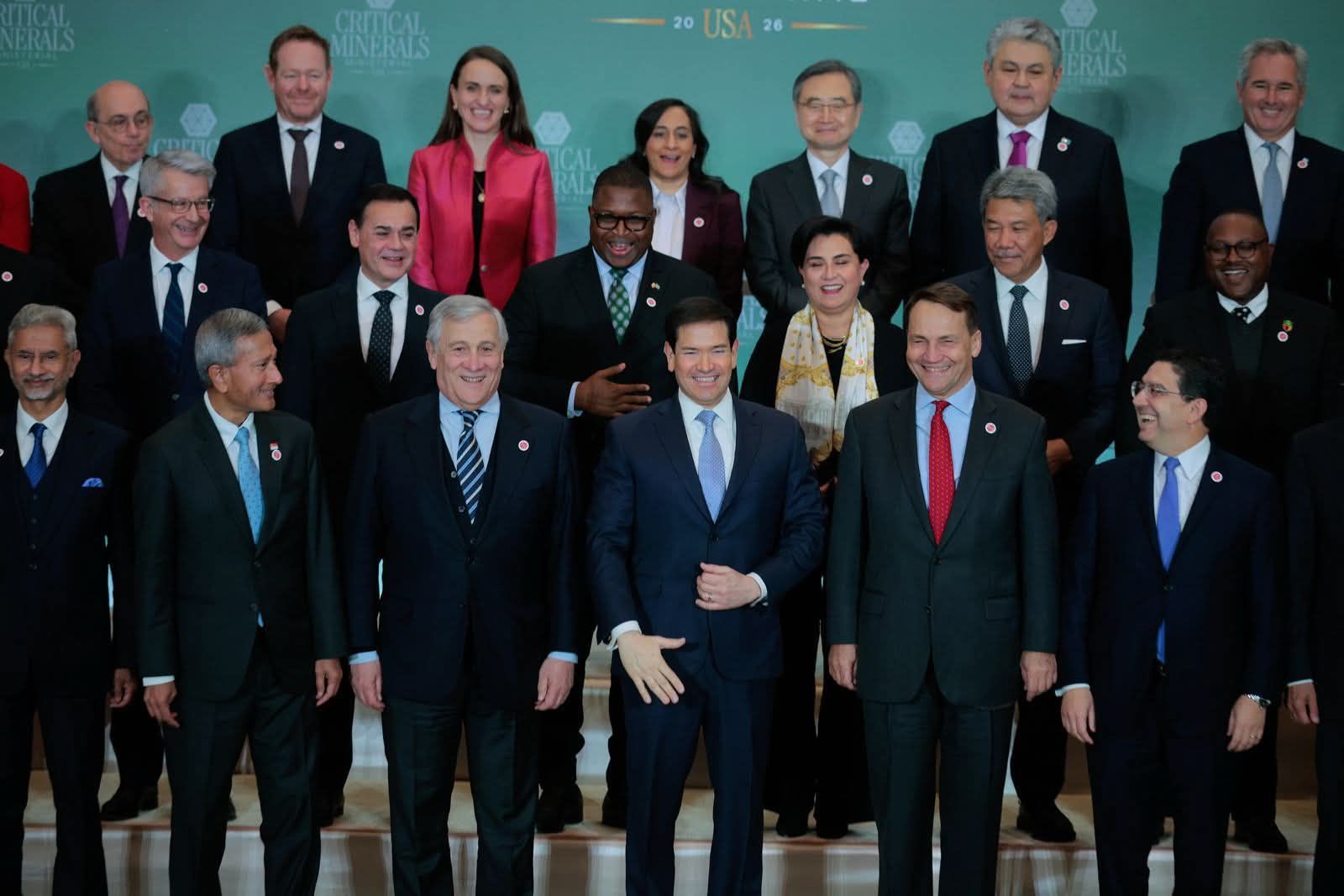
It is against this backdrop that Morocco took part in a high-level ministerial meeting on strategic minerals held in Washington, bringing together representatives from around fifty countries. The participation of Morocco’s Minister of Foreign Affairs, Nasser Bourita, underscores the Kingdom’s growing credibility and visibility in international discussions on securing and diversifying global supply chains for critical resources.
Convened at the initiative of the United States, the meeting aimed to launch a new international momentum to reduce vulnerabilities in strategic mineral supply chains, at a time marked by geopolitical tensions, market volatility, and excessive concentration of production in a limited number of countries. Among the key proposals discussed was the creation of a preferential trade framework dedicated to strategic minerals, including mechanisms to stabilize prices and mitigate sharp market disruptions.
For Morocco, these emerging global dynamics open up significant economic and strategic opportunities. The Kingdom benefits from solid structural assets, starting with its long-standing expertise in the extraction and valorization of mineral resources, particularly phosphates. This experience is increasingly complemented by Morocco’s strong positioning in renewable energy and green industries—sectors that are highly dependent on secure access to critical minerals.
Beyond extraction, Morocco’s strategic ambition lies in deeper integration into global value chains. The objective is to move up the value ladder by positioning the country not only as a supplier of raw materials, but also as a regional industrial and logistical hub. The acceleration of industrial projects linked to batteries, clean energy technologies, and advanced manufacturing reinforces this trajectory, especially as international investors seek stable, competitive, and strategically located production platforms.
From a geo-economic perspective, Morocco’s engagement in this international initiative further consolidates its role as a bridge between Africa, Europe, and the American markets. This unique positioning strengthens its attractiveness as a strategic partner in the emerging global economic architecture—one increasingly shaped by supply chain resilience, diversification, and resource security.
As strategic minerals continue to redraw the balance of power among major economies, Morocco appears determined to transform global competition into a national opportunity. By leveraging its natural resources, industrial capabilities, and diplomatic reach, the Kingdom is positioning itself as a key player in the new era of critical resources—where economic influence will be measured not only by access to minerals, but by the ability to integrate them into sustainable and competitive value chains.