





While hunger is declining slightly worldwide, hundreds of millions of people still lack sufficient food, and billions cannot afford a healthy diet. Africa remains particularly vulnerable. In Morocco, the expected recovery in cereal production in 2026 offers encouraging prospects after several drought-affected agricultural seasons. However, food security remains closely linked to water management, agricultural productivity and dependence on imports.
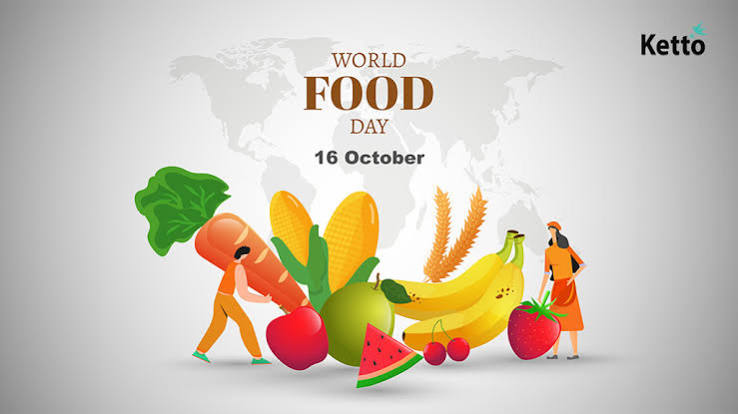
Celebrated every year on 16 October, World Food Day highlights the fact that access to sufficient, safe and nutritious food remains a major economic and social development challenge. For its 2026 edition, the Food and Agriculture Organization of the United Nations (FAO) has adopted the theme “Innovate Today. Nourish Tomorrow.” This focus highlights the role of innovation, traditional knowledge and inclusive approaches in transforming food systems.
Beyond the availability of agricultural products, food security now encompasses several interconnected challenges: household purchasing power, climate change, the preservation of natural resources, disruptions to international trade and countries’ ability to secure their supplies.
Global Progress Remains Insufficient
According to the 2026 edition of The State of Food Security and Nutrition in the World, published by the FAO and four other United Nations agencies, approximately 645 million people experienced hunger in 2025, representing 7.8% of the global population. This proportion stood at 8.1% in 2024 and 8.6% in 2022, indicating gradual improvement that remains insufficient to achieve the goal of ending hunger by 2030.
Chronic hunger, however, represents only part of the problem. In 2025, approximately 2.1 billion people, or 25.8% of the world’s population, experienced moderate or severe food insecurity. This means that more than one person in four worldwide continued to face uncertainty about access to adequate food.
The cost of a healthy diet presents another major obstacle. Available international estimates put the number of people unable to afford a healthy diet at approximately 2.7 billion in 2025. This challenge is not confined to countries facing food shortages. It also affects households whose incomes have failed to keep pace with the cost of nutritious products.
Rising food prices, conflicts, climate shocks and disruptions to supply chains continue to undermine progress. Children, women and rural communities are among those particularly exposed to the consequences of malnutrition and inadequate food access.
Africa, the World’s Main Hunger Hotspot
Africa bears a disproportionate share of the global food crisis. In 2025, 309 million people across the continent were affected by hunger, equivalent to approximately one-fifth of Africa’s population. The continent therefore accounted for more people experiencing hunger than Asia, despite signs of stabilisation and modest improvements in certain indicators.
The situation becomes even more concerning when food insecurity is measured more broadly. According to FAO estimates for 2025, 56.6% of Africa’s population experienced moderate or severe food insecurity, compared with 25.8% globally.
Several factors explain this vulnerability. Recurring droughts, floods, soil degradation and irregular rainfall patterns affect agricultural yields. In some regions, conflict and insecurity disrupt farming, distribution networks and access to markets. These difficulties are compounded by high input costs, inadequate storage and transport infrastructure, and limited financing for agricultural businesses.
The challenge is therefore not simply to increase production volumes. African countries also need to reduce post-harvest losses, improve market access, expand irrigation where water resources permit and strengthen farmers’ ability to adapt to climate change.
For African economies, transforming food systems also represents an industrial opportunity. Developing agribusiness, food preservation, local processing and logistics can create jobs, increase value added and reduce losses throughout the agricultural value chain.
Morocco: Agricultural Recovery After Difficult Seasons
Morocco illustrates the close relationship between climate conditions, agricultural production and food security. Following several agricultural seasons marked by rainfall deficits, the 2025–2026 season has benefited from more favourable conditions.
In its Crop Prospects and Food Situation report published on 8 July 2026, the FAO forecast Moroccan cereal production at approximately 6.3 million tonnes in 2026, around 16% above the five-year average. The organisation attributed this outlook to abundant rainfall from late November 2025, which helped restore soil moisture and replenish water reserves.
This improvement follows successive harvests affected by drought. The 2025 agricultural season was particularly constrained by significant rainfall deficits in several production areas. The expected recovery in 2026 therefore represents a positive development for agricultural incomes, domestic market supplies and import requirements.
However, the improvement does not mean that Morocco has permanently overcome its vulnerability in cereal production. According to the same FAO report, the country’s wheat import requirements for the 2026–2027 marketing year are estimated at 5 million tonnes, approximately 15% below the five-year average. The continued need for imports reflects the scale of domestic consumption and the sensitivity of local supply to climatic conditions.
Morocco’s food security consequently depends on a balance between domestic production, imports, stock management and consumers’ purchasing power. A strong harvest helps strengthen that balance, but it does not automatically guarantee that every household can afford a diverse and nutritious diet.
Purchasing Power and Access to Healthy Food
Food security cannot be measured solely by the quantities available in markets. It also depends on the prices consumers pay and their ability to meet their nutritional needs.
In Morocco, food price developments remain an important indicator of household purchasing power. According to the FAO, annual food price inflation had moved into negative territory, reaching approximately -0.8% in May 2026. This indicates a decline in the measured food price index compared with a year earlier. It does not mean that prices have returned to previous levels or that every category of food has become cheaper.
Access to a healthy diet also depends on the affordability of fruit, vegetables, protein sources and dairy products. Lower-income households may be forced to reduce dietary diversity when nutritious foods become more expensive.
For policymakers, the challenge is to balance reliable supplies, consumer protection and fair remuneration for producers. More efficient distribution networks, appropriate storage infrastructure, better use of local production and effective market monitoring can help ease tensions between these objectives.
Water and Innovation at the Heart of Food Security
In Morocco, as in much of Africa, water availability is a major determinant of agricultural output. Repeated droughts have exposed the limitations of production models that depend heavily on rainfall and reinforced the need to improve irrigation efficiency.
Agricultural modernisation also requires better-adapted crop varieties, improved soil management, more efficient use of agricultural inputs and digital solutions that help monitor crop water requirements. These technologies must nevertheless be adapted to the financial capacity of farms and the specific constraints of different regions.
Reducing food loss and waste is another important lever. Better crop storage, cold-chain infrastructure, packaging and transport can preserve a larger share of agricultural production that might otherwise fail to reach consumers in suitable condition.
The development of the food-processing industry can complement these efforts by extending product shelf life, diversifying supply and creating more value locally. Achieving this requires investment, technical expertise, robust food safety standards and sustainable commercial outlets.
Feeding Tomorrow: An Economic and Collective Responsibility
World Food Day 2026 highlights the need for coordinated action across the entire food chain. Globally, the recent decline in the number of people experiencing hunger represents genuine progress, but regional disparities and difficulties in accessing healthy food remain considerable.
In Africa, priorities include strengthening agricultural resilience, improving infrastructure, supporting farmers and developing local processing industries. In Morocco, the expected recovery in cereal production offers an opportunity to reinforce food security arrangements while maintaining vigilance over climate risks and continuing import requirements.
Food security is measured not only by how much food a country produces, but also by whether everyone can obtain sufficient, nutritious and affordable food on a sustainable basis. Only under these conditions can agricultural innovation, industrial investment and sustainable resource management help turn the goal of zero hunger into a tangible reality rather than a distant ambition.