




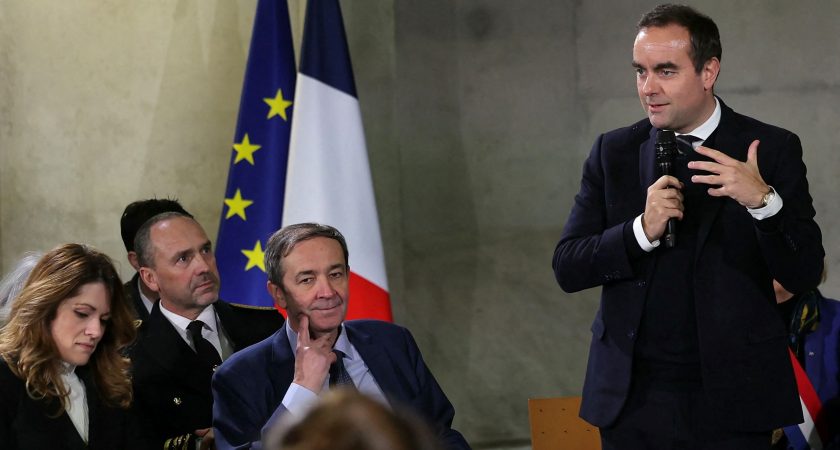
French Prime Minister Sébastien Lecornu on Thursday unveiled the strategic pillars of France’s new energy policy through 2035, aimed at addressing the country’s sovereignty, competitiveness, purchasing power and decarbonization challenges.
Under its upcoming 2025–2035 energy roadmap, the government outlines an “ambitious” plan to revive electricity consumption by promoting the use of decarbonized electricity—particularly nuclear power—instead of fossil fuels, which are costly to import.
At the same time, the plan provides for a slower deployment of onshore wind and solar energy, as electricity consumption remains stagnant.
“There is no model in which we can afford to be dependent,” Mr. Lecornu said during a visit to the Saut-Mortier and Vouglans hydroelectric dams in the Jura region of eastern France, where he presented the document.
He stressed the “urgency” of moving forward on energy issues, warning that failing to make decisions had become “fundamentally dangerous for our sovereignty, for our capacity to produce, and for our ability to organize our industrial sectors.”
The roadmap, set to be published Friday in the Official Journal, details the share allocated to each energy source in production over the next decade, including nuclear, wind, solar and hydropower.
According to the presentation document, the plan sets a clear objective: increase decarbonized energy production—particularly electricity—and reduce fossil fuel consumption.
The government aims to achieve largely decarbonized electricity production by 2035, in close connection with the growing electrification of uses. This involves shifting sectors dependent on fossil fuels (gas and oil) toward electricity, such as transport through electric vehicles, buildings through heat pumps, and industry through electric furnaces.
“In 2023, nearly 60% of our final energy consumption was fossil-based. Our objective is to reduce that figure to 40% by 2030,” the document notes.
The plan provides for a revival of nuclear energy, marking a break with the 2019–2024 period, which had planned to close 14 reactors. It calls for “optimization” of the existing fleet, targeting output of 380 to 420 terawatt-hours (TWh), compared with 320 TWh in 2023, while state-owned utility EDF had aimed for 400 TWh.
The government also plans to accelerate offshore wind development, with slightly adjusted timelines to account for delays observed in project implementation. In contrast, onshore wind and solar sectors are affected by stagnant electricity demand.
The publication of the 2025–2035 roadmap is expected to enable industry stakeholders to launch projects and anticipate investment, skills and employment needs, the same source concluded.