




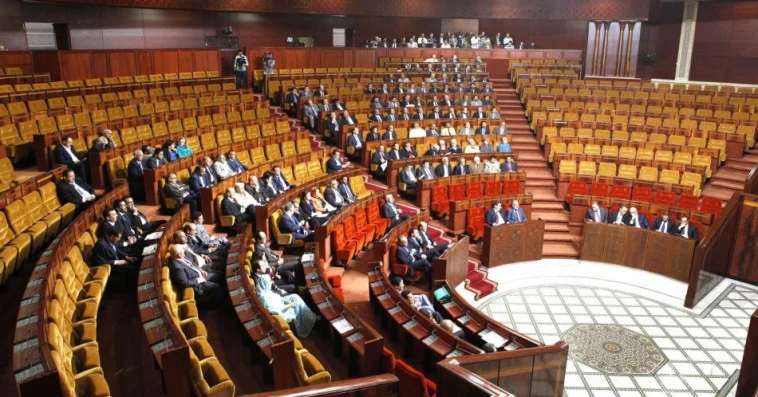

The Interior, Territorial Collectivities and Basic Infrastructure Committee at the House of Councillors unanimously approved on Monday Organic Bill No. 031.26 amending and supplementing Organic Law No. 111.14 on Regions.
The Committee’s President, Moulay Abderrahmane Blila, stated that the Socialist Group – Ittihadi Opposition had withdrawn the amendments it had previously submitted. He also noted that Noureddine Slik, President of the Moroccan Labour Union (UMT) Group and a member of the Committee, expressed his support for the bill despite being unable to attend the meeting due to travel abroad.
Speaking to the press, Mr. Blila emphasized that the unanimous adoption of the bill reflects its strategic importance and the urgent need to implement the reforms it provides for in favor of Morocco’s regions.
The legislation introduces two major reforms. The first seeks to expand and strengthen regional powers through the introduction of new competencies aimed at improving the effectiveness of territorial development. The second provides for the transformation of Regional Project Implementation Agencies into regional companies in order to modernize management mechanisms and accelerate project execution at the regional level.
According to Mr. Blila, the reform is in line with the Royal High Directives aimed at promoting territorial development and spatial equity, while further advancing the regionalization process and reinforcing the role of regions as key drivers of development.
For his part, Minister of the Interior Abdelouafi Laftit said that the law comes at a crucial time, paving the way for the implementation of a new generation of integrated territorial development programs announced by His Majesty King Mohammed VI.
The minister praised the constructive engagement of councillors in examining the bill and their contribution to discussions on various legislative texts related to the Ministry of the Interior, highlighting the spirit of cooperation between the government and the House of Councillors.
The bill is built around three key pillars: restructuring regional competencies based on the principles of efficiency and clarity, modernizing project implementation mechanisms, and strengthening financial resources while promoting sustainability.
As part of these reforms, the legislation provides for a significant increase in financial transfers allocated to regions, which are expected to reach at least MAD 12 billion annually starting from the 2027 fiscal year. The measure aims to support the financing of strategic projects and promote balanced regional development.
Finally, the reform introduces a new management model for entities responsible for implementing regional projects by transforming them into publicly owned joint-stock companies. This approach is designed to enhance flexibility, efficiency, and performance while ensuring the continuity of public services.