




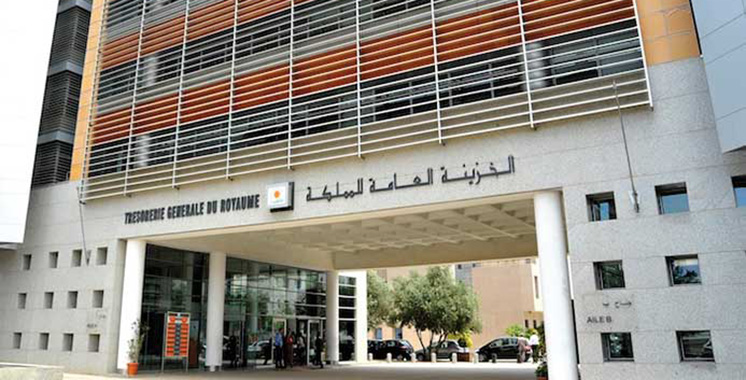
The Moroccan Treasury continues to implement its financing strategy through a new issuance of short- and medium-term Treasury bills, launched on July 21, 2026. The operation covers maturities of 13 weeks, 52 weeks, and 2 years, enabling the government to raise funds quickly from institutional investors while optimizing the management of its domestic debt.
Beyond simply raising capital, this issuance aims to secure the State’s liquidity, preserve the stability of the bond market, and ensure sufficient resources to meet growing budgetary needs.
The new issuance comes at a time when government financing requirements remain significant, driven by continued public investment programs, major infrastructure projects, the expansion of social protection, and the implementation of structural reforms across several strategic sectors. Regular Treasury bill auctions enable the government to secure the necessary funding without relying on more expensive or restrictive financing sources.
Active Public Debt Management
Beyond its immediate financing purpose, this auction forms part of the Treasury’s active domestic debt management strategy. It allows the government to refinance maturing debt, spread repayments over time, and reduce refinancing risks by avoiding excessive debt concentration within a single period.
Offering several maturities also reflects the Treasury’s objective of diversifying its investor base while maintaining a balanced yield curve in the domestic market. This approach enhances the government’s financial flexibility and contributes to the stability of Morocco’s sovereign debt market.
A Sign of Investor Confidence
Moroccan Treasury bills remain among the preferred investment instruments for banks, insurance companies, pension funds, and collective investment institutions. Their continued attractiveness reflects investors’ confidence in Morocco’s sovereign creditworthiness and the country’s sound macroeconomic fundamentals.
This confidence allows Morocco to raise funds under favorable conditions while keeping borrowing costs relatively contained despite an international environment still characterized by elevated interest rates and persistent economic uncertainty.
Yields Reflect Current Market Conditions
According to the Treasury and External Finance Department (DTFE), the 52-week Treasury bills carry a nominal interest rate of 2.30%, while 5-year securities offer a 2.45% nominal yield. However, an inconsistency appears in the official announcement, which refers to an auction of 13-week, 52-week, and 2-year maturities, while the published interest rates mention 5-year securities. This discrepancy is expected to be clarified by the authorities.
Despite this technical inconsistency, the proposed yields indicate relatively favorable financing conditions and demonstrate the Treasury’s ability to secure funding at competitive rates.
A Key Instrument of Fiscal Policy
Treasury bill auctions remain one of the government’s primary tools for financing the budget deficit. They also play a crucial role in developing Morocco’s domestic bond market by providing a benchmark yield curve used by both public and private issuers.
Through its regular presence in the market, the Treasury helps maintain liquidity in government securities, supports the efficient functioning of the national financial market, and offers investors safe investment instruments across a range of maturities.
As Morocco continues to implement its major economic development projects, this new issuance highlights the authorities’ commitment to balancing investment financing with prudent debt management while preserving the country’s macroeconomic stability. It also confirms that proactive debt management remains a cornerstone of the Kingdom’s financial strategy to support sustainable growth and long-term structural reforms.