



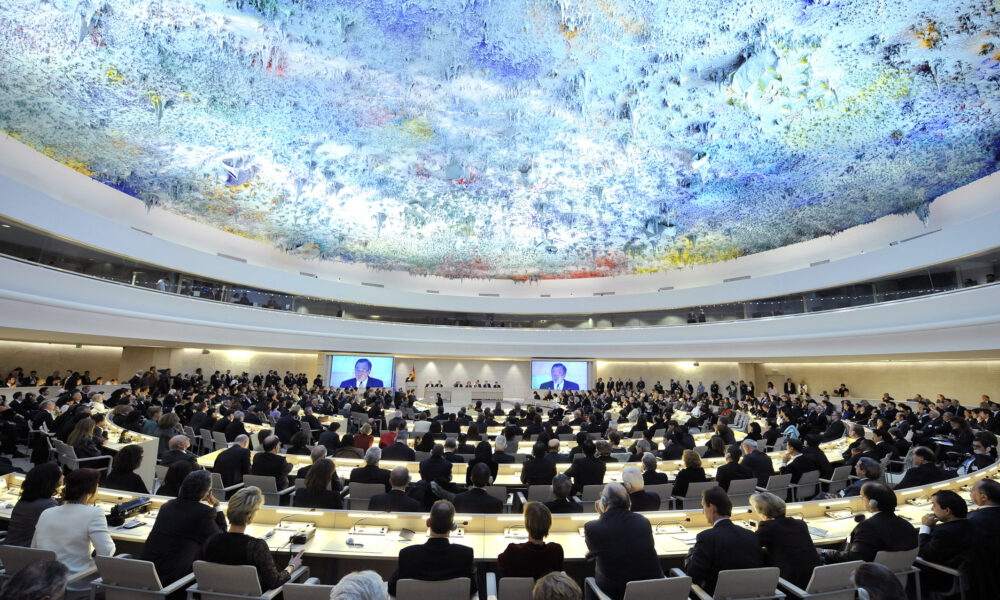

A group of 40 States reaffirmed on Tuesday in Geneva their support for Morocco’s full and complete sovereignty over its Southern Provinces, stressing that the Sahara issue remains a political dispute under the exclusive purview of the United Nations Security Council and underscoring that a solution should be based on Morocco’s Autonomy Initiative.
In a statement delivered during the 62nd session of the Human Rights Council (HRC) by Morocco’s Permanent Representative to the United Nations in Geneva, Ambassador Omar Zniber, the group emphasized that the Sahara issue is a political dispute addressed by the Security Council, which has repeatedly recognized that genuine autonomy under Moroccan sovereignty represents one of the most realistic and credible solutions.
The group expressed its support for the implementation of UN Security Council Resolution 2797, which calls for the relaunch of the political process through negotiations among the four parties specifically identified by the Council, on the basis of Morocco’s Autonomy Plan, with the aim of reaching a definitive and mutually acceptable political solution.
In this regard, the 40 States welcomed Morocco’s continued efforts to further develop and refine its Autonomy Initiative, as well as its commitment to ensuring the return and integration of populations living in the Tindouf camps on the basis of equality among all Moroccan citizens.
The signatories also commended Morocco’s longstanding commitment to constructive, voluntary and substantive engagement with the United Nations human rights system, particularly the Office of the High Commissioner for Human Rights (OHCHR) and the Human Rights Council’s Special Procedures, in promoting and protecting human rights throughout its territory.
The statement stressed that interactions between Member States, the Human Rights Council and the High Commissioner should preserve their bilateral nature and remain free from any form of politicization or instrumentalization.
The group further welcomed the opening of numerous consulates general in the cities of Laayoune and Dakhla, describing the move as a catalyst for enhanced economic cooperation and investment, benefiting local populations and contributing to regional and continental development.
Concluding the statement, the 40 States underlined that resolving this regional dispute would help fulfill the legitimate aspirations of African and Arab peoples for greater integration and development, goals that Morocco continues to pursue through sustained and sincere efforts.