



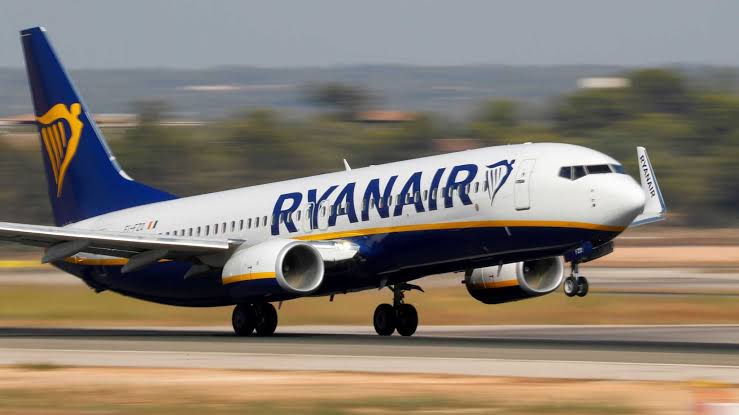

With four weekly flights to Porto from the winter season onward, Ryanair is making Rabat one of the key drivers of its expansion in Morocco. This increased presence is part of a record winter programme featuring 5.3 million seats, 156 routes and 17 new connections, confirming the growing role of air transport in Morocco’s tourism and regional development strategy.
The Rabat–Porto route is entering a new phase. Launched in spring 2026 as part of Ryanair’s new base at Rabat-Salé Airport, the service will increase to four weekly frequencies during the 2026–2027 winter season. This expansion reflects more than a simple schedule adjustment: it signals the airline’s confidence in Rabat’s potential and its intention to strengthen its year-round presence in the Moroccan capital. Porto will further consolidate Rabat’s links with the Iberian Peninsula, driven by a combination of tourism, family travel, business mobility and links between Moroccan and Portuguese communities.
Rabat is gaining a new position on the aviation map
The significance of the development goes well beyond the Porto route. Within just a few months, Rabat has evolved from a secondary destination in Ryanair’s network into a genuine growth platform. In December 2025, the airline announced the opening of its fifth Moroccan base in Rabat from April 2026, with two aircraft stationed there and an investment of $200 million. The summer programme was scheduled to include 20 routes, seven of them new, connecting Rabat with Milan-Bergamo, Baden-Baden, Frankfurt-Hahn, Nuremberg, Porto, Pisa and Valencia. Ryanair was then targeting a 45% increase in capacity at Rabat.
The winter programme now confirms that the establishment of the base was not a one-off operation. Rabat accounts for seven of Ryanair’s 17 new routes announced for Morocco, giving the capital the largest share of the airline’s planned expansion. The city will notably gain connections to Stockholm and Kraków, while Marrakech will benefit from a new route to Wrocław and Agadir from several new European connections. This is creating a more balanced air network in which growth is no longer concentrated exclusively on Marrakech or Casablanca, but also extends to Rabat, Agadir, Fez, Tangier, Essaouira, Ouarzazate, Dakhla and Nador.
An offensive supporting Morocco’s tourism growth
For Morocco, the main benefit of this expansion lies in the regularity and diversification of passenger flows. Increasing frequencies during the winter season helps reduce dependence on tourism concentrated around holidays and the traditional peak season. It also creates new opportunities for short breaks, city tourism, business travel and cultural tourism. For Rabat, this is particularly significant: the capital has considerable historical, cultural and architectural assets, yet its international tourism potential remains below that of Marrakech or Agadir. Improved air accessibility could therefore directly strengthen its attractiveness.
The strategy also comes at a time when Morocco is preparing for a particularly ambitious decade for tourism and infrastructure. The country is preparing to host the 2030 FIFA World Cup and is seeking to strengthen its aviation, hotel and logistics capacities. Ryanair has already indicated that its Rabat base is intended to improve connectivity across the Kingdom ahead of this major international event. At national level, the airline now estimates its investment in Morocco at more than $1.6 billion in aircraft and says its operations support more than 8,500 direct and indirect jobs.
From air connectivity to territorial competitiveness
Ryanair’s network expansion therefore reflects a deeper transformation of Morocco’s aviation market. The airline is no longer simply serving the country’s major tourist destinations; it is developing a network that directly connects several Moroccan regions with European markets. This approach can help spread tourism-related economic benefits to regions that have traditionally received fewer international visitors, creating opportunities for accommodation, restaurants, services, retail and cultural activities. It also strengthens mobility for Moroccans living in Europe while facilitating travel for entrepreneurs and investors.
With four weekly flights to Porto, Rabat is gaining an additional European connection, but more importantly, a higher-frequency link within an expanding international network. The Moroccan capital is increasingly becoming part of a strategy combining international openness, tourism development and territorial competitiveness. Ryanair’s winter programme is revealing in this respect: with 5.3 million seats planned to and from Morocco, 156 routes and 17 new connections, the airline is confirming that Morocco has become one of its major growth markets. The real transformation is therefore not merely quantitative: it marks the shift from a tourism-oriented air service model towards permanent connectivity serving the broader Moroccan economy.