





Faced with soaring diesel prices, Donald Trump is now turning to Europe and its strategic reserves. Washington is particularly pushing France and Germany to release more diesel onto the market, a request that could have direct consequences on prices and supply this winter.
Growing American Pressure
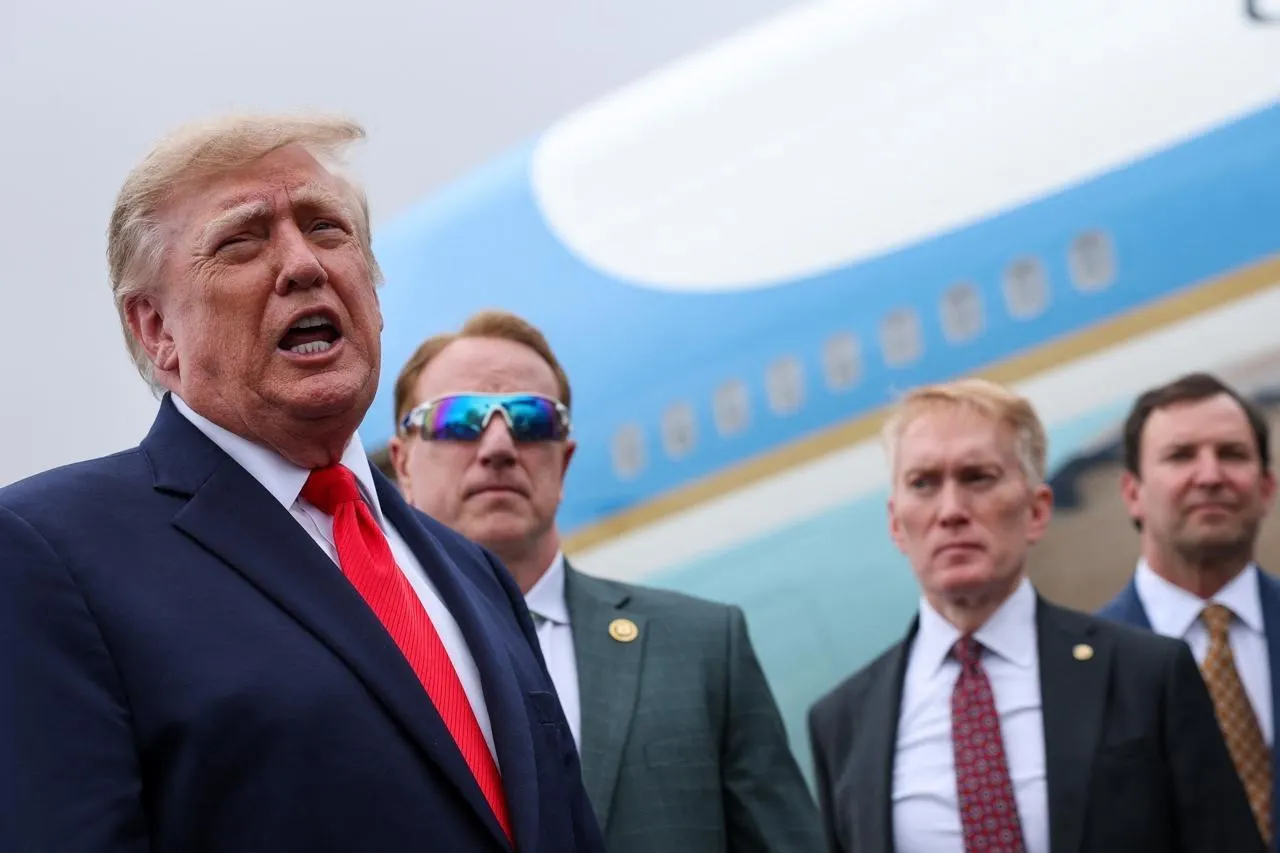
“They have diesel.” In a single phrase dropped in front of journalists in Dallas, Donald Trump cast a harsh spotlight on Europe’s fuel reserves.
As the price per liter of diesel reaches record levels on both sides of the Atlantic, the American president suggests that Europe could be called upon to tap into its own stocks to ease the burden on American motorists’ bills.
During a visit to Texas on October 1, he explained that he “could” officially ask Europeans to draw from their diesel reserves, before adding: “We could do that. They have diesel.”
For now, no formal decision has been announced, but pressure is mounting, and European capitals are bracing for a showdown that could directly impact fuel prices this winter.
Trump, Bessent, Wright: American Pressure on European Stocks
Even before Trump’s remark in Dallas, his economic team had already set the sequence in motion.
On X, U.S. Treasury Secretary Scott Bessent called on Europeans to put diesel on the market “immediately” to curb the price surge: “Our European partners should accelerate the implementation of their existing commitments and make additional volumes available immediately to address current disruptions.”
At the same time, his energy counterpart Chris Wright told Fox News that “Europe can also contribute to improving the situation.” “It’s time for a coordinated market release of diesel stocks” as winter approaches, he added.
According to press reports picked up by several media outlets, the American administration would like certain key countries, particularly France and Germany, to inject diesel from their strategic reserves onto the market, as has already been done for crude oil.
According to a European source cited by Reuters, Washington has even mentioned a volume of 120 million barrels of diesel to be released over six months.
Looming in the background is a heavy threat: Donald Trump would be considering banning U.S. diesel exports to Europe if his requests went unheeded.
“Farmers, truckers and businesses [in the United States] should not have to bear the weight of a global diesel shortage alone,” said Scott Bessent, still cited by Le Monde, to justify this very aggressive strategy.
Brussels Under Tension, Record Prices and Embargo Risk
On the European side, the possibility of an “American diesel embargo” is anything but trivial. “Blocking deliveries of this fuel” would be a “bad surprise,” reacted European Trade Commissioner Maros Sefcovic.
Visiting the United States as part of the G20 trade meetings, he spoke of “very heavy consequences” for the European economy if Washington were to follow through on this threat.
U.S. Trade Representative Jamieson Greer tried to calm things down by speaking of a “willingness on both sides to work together” to get out of the crisis.
And French Foreign Trade Minister Nicolas Forissier warned: “What is certain is that we cannot claim to have a dialogue and then take decisions or measures that are brutal or that, in any case, do not rest on a consensus resulting from a dialogue,” he told Agence France-Presse.
Prices at Historic Levels
While statements keep coming, the reality of prices is already hitting motorists.
In the European Union, the liter of diesel has just reached a new all-time high, with a weekly average of 2.24 euros per liter, according to data compiled by the European Commission and reported by Le Monde.
In the United States, diesel has climbed to as high as $6.53 (about 5.81 euros) per gallon of 3.78 liters in late September, an unprecedented level that is fueling anger among farmers and truckers.
A coordination meeting between the European Commission and member states was convened this Friday morning to try to bring a common response to this price surge, though it remains unclear at this stage whether Europe will heed the American call to tap into its stocks.
G7 and International Coordination
The Elysée has already indicated that Emmanuel Macron is due to soon convene G7 leaders to discuss “coordination on the release of stocks at the G7 level in connection with the International Energy Agency.”
Between the temptation to ease the immediate bill and the fear of further weakening its supply security, Europe finds itself at the center of a high-stakes game where Washington’s next decision could weigh heavily on the fuel budgets of European drivers.