




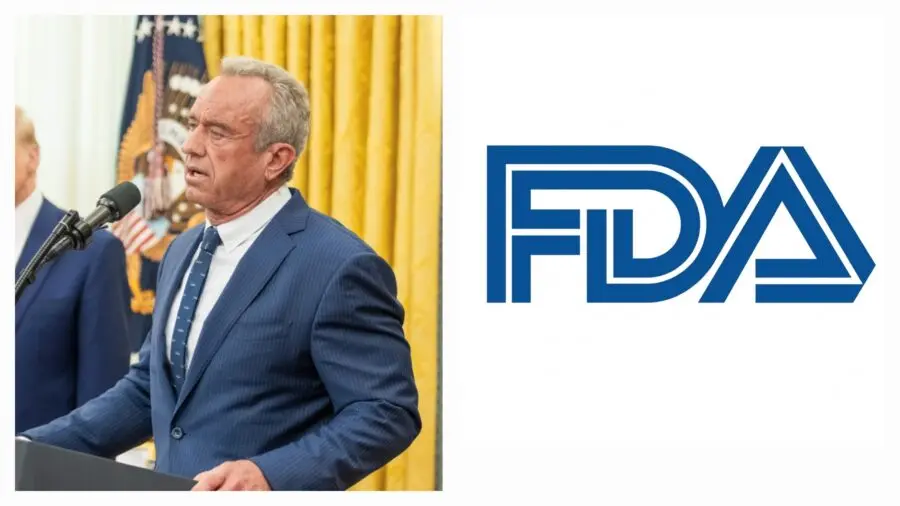

U.S. Health Secretary Robert F. Kennedy Jr. and the Food and Drug Administration (FDA) on Monday unveiled a proposed regulation aimed at closing a decades-old legal loophole that allowed food companies to determine the safety of certain chemical additives without first notifying federal regulators.
Since a regulatory change introduced in 1997, food companies have been able, with the assistance of their own experts, to determine that a new additive is safe without being required to notify the government.
The proposed regulation targets the so-called “GRAS” exemption (Generally Recognized as Safe) and would require manufacturers to submit their safety determinations to the FDA before introducing a new ingredient onto the market.
Under the proposal, companies whose products already have GRAS status would also be required to disclose the specific use of their additives. The information would be used to establish a public inventory aimed at increasing transparency for consumers.
Once notified, the FDA would have 45 days to determine whether a submission is complete, followed by up to 180 days to conduct a comprehensive safety assessment of the additive.
Companies would nevertheless remain technically authorized to market their ingredients during the FDA review period. To require mandatory scientific approval before an ingredient could be placed on the market, the administration would need Congress to pass new legislation.
Meanwhile, the Department of Health and Human Services (HHS) and the U.S. Department of Agriculture (USDA) have submitted for final review the federal government’s first official definition of what constitutes an ultra-processed food.
The initiative is part of the “Make America Healthy Again” (MAHA) agenda promoted by the U.S. administration, which places greater emphasis on public health and nutrition.