
Automotive, aerospace, electronics, batteries and high-tech industries are driving record manufacturing exports, which now account for nearly 87% of the Kingdom’s total goods exports.
Morocco’s industrial sector continues to strengthen its structural transformation. Backed by nearly two decades of ambitious industrial policies, the Kingdom has established itself as Africa’s leading manufacturing platform. Industrial exports have now exceeded MAD 195 billion, equivalent to US$21.2 billion, reflecting the profound transformation of the Moroccan economy and its growing integration into global value chains.
This performance is supported by an increasingly robust industrial base. Morocco is now home to more than 13,000 industrial companies, providing nearly 1.3 million direct jobs. Industry contributes approximately 25% of the national Gross Domestic Product (GDP), while manufactured products now account for 87% of Morocco’s total exports, confirming the country’s transition toward a high-value industrial economy.
The European Union remains Morocco’s primary export destination, while exports are also expanding to the United States, the United Kingdom, Türkiye, the Gulf countries and Sub-Saharan Africa. Morocco also benefits from a network of more than 50 free trade agreements, providing preferential access to a market of over 2.5 billion consumers.
The automotive industry remains the driving force behind this transformation. Morocco has become Africa’s largest automobile producer, with an annual production capacity exceeding 600,000 vehicles, mainly at the Tangier and Kenitra manufacturing plants. Local integration now exceeds 70% for several vehicle models, making the Kingdom one of the Mediterranean region’s most competitive automotive hubs.
By the end of May 2026, automotive exports had reached MAD 77.1 billion, representing a 15.9% increase compared with the same period in 2025. The sector now accounts for 36.4% of Morocco’s total exports.
The aerospace industry also continues to expand rapidly. More than 140 companies operate primarily in the Casablanca and Nouaceur industrial clusters, specializing in precision machining, aerostructures, wiring systems, composite materials and maintenance services. The sector now generates nearly US$3 billion in annual exports, achieves a local integration rate of more than 40%, and employs approximately 27,000 people.
The electrical, electronics and mechanical industries continue to expand thanks to investments in automotive components, industrial equipment, high-tech wiring systems, electronic assemblies and digital solutions serving both European and African markets.
Morocco’s textile industry is moving steadily toward technical textiles and higher value-added production, although exports declined by 14.1% during the first quarter of 2026. Meanwhile, phosphate and derivative exports recorded a 7.4% decline, contrasting with the strong performance of technology-based industries.
Strong Momentum in the First Half of 2026
The first five months of 2026 confirmed the acceleration of Morocco’s industrial momentum. By the end of May, the Kingdom’s total merchandise exports had reached MAD 211.4 billion, representing a 5.8% increase compared with the same period of the previous year.
Growth was primarily driven by outstanding performances in the automotive, aerospace, agri-food and electronics sectors. During the first quarter alone, automotive exports exceeded MAD 42 billion, recording 12.1% year-on-year growth, before accelerating further in the following months.
The agri-food industry also maintained strong performance thanks to investments in food processing and the expansion of export-oriented production capacity.
At the same time, foreign direct investment continued to rise significantly. Net FDI inflows exceeded MAD 23 billion by the end of May 2026, increasing by more than 40% year-on-year, reflecting the confidence of international investors in Morocco’s competitiveness and business environment.
These new investments are concentrated in strategic sectors such as electric vehicle batteries, e-mobility components, critical minerals, green hydrogen, renewable energy, power electronics, industrial artificial intelligence and advanced digital technologies.
Morocco is also benefiting from the global nearshoring trend, as numerous international companies relocate production closer to European markets while maintaining competitive operating costs.
World-Class Infrastructure Supporting Competitiveness
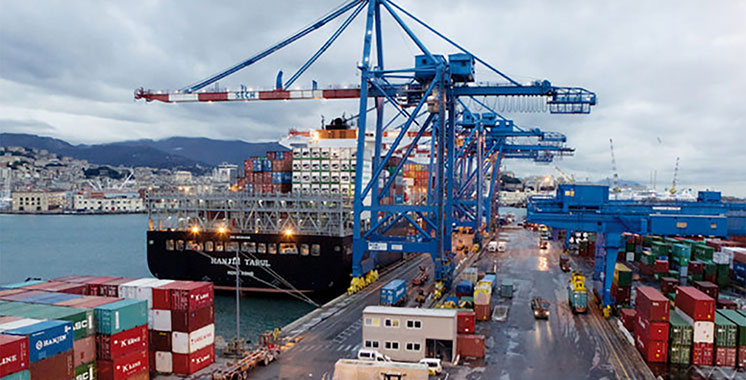
Morocco’s industrial competitiveness is also built upon world-class infrastructure. Tanger Med, Africa’s largest port and the leading port in the Mediterranean, connects the Kingdom to more than 180 ports worldwide, making it one of the region’s most strategic logistics platforms.
The country also boasts more than 1,800 kilometres of motorways, Africa’s first high-speed rail line, modern logistics hubs and numerous integrated industrial zones hosting major manufacturing ecosystems.
These strengths are reinforced by the new Investment Charter, competitive tax incentives, the “Morocco Now” investment promotion brand, expanding industrial ecosystems and a proactive skills development strategy, further enhancing Morocco’s attractiveness for international investors.
Looking ahead to 2030, Morocco aims to strengthen its position within global value chains by expanding semiconductor manufacturing, battery production, electric mobility, next-generation aerospace, green chemistry, pharmaceuticals and strategic technologies.
With more than MAD 195 billion (US$21.2 billion) in industrial exports, representing 87% of the country’s total exports, Morocco confirms its position as Africa’s leading industrial power and reinforces its role as a strategic manufacturing hub connecting Europe, Africa and the Middle East in the emerging global industrial landscape.