

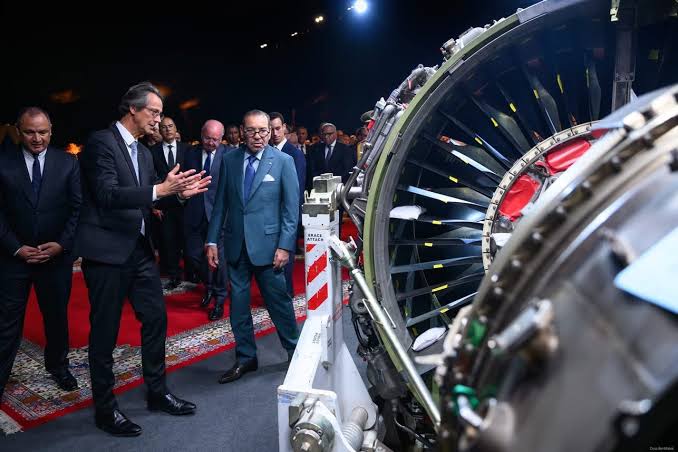
The Kingdom is laying the foundations for a new innovation model that places research, engineering, and technological sovereignty at the heart of its Vision 2040 development strategy.
Morocco is accelerating its transition toward a knowledge-based economy by taking a major step in strengthening its scientific and technological ecosystem. One year after the establishment of the Technology Hub under the Ministry of Equipment and Water, the initiative has emerged as one of the Kingdom’s most ambitious projects to modernize public engineering.
More than a simple concentration of expertise, the new structure embodies a long-term strategic vision aimed at creating a genuine national hub for strategic technologies capable of designing, developing, and testing the solutions that will support Morocco’s major development projects through 2040.
This initiative comes at a time when global competition for advanced technologies is intensifying, while climate change, resource scarcity, and digital transformation are reshaping the world’s economic landscape. Morocco has therefore chosen to strengthen its domestic capacity to generate scientific knowledge, develop homegrown technologies, and reduce its dependence on imported technological solutions.
The project is fully aligned with the Kingdom’s broader national transformation agenda, including the Morocco Digital 2030 strategy, the acceleration of digital transformation, the expansion of renewable energy, and unprecedented investments in infrastructure worth tens of billions of dirhams each year.
Today, Morocco possesses more than 2,000 kilometers of motorways, nearly 1,800 kilometers of railway lines, including Africa’s first high-speed rail network, more than 150 operational dams, some of the continent’s largest seawater desalination plants, and internationally recognized industrial platforms in the automotive, aerospace, and electric battery industries. These achievements provide an exceptional environment for developing a new generation of engineering driven by innovation, advanced technologies, and scientific excellence.
Knowledge: Morocco’s New Strategic Infrastructure
The Technology Hub aims to bring together the expertise of the Hassania School of Public Works (EHTP), the Engineering and Development Center (CID), the Public Laboratory for Testing and Studies (LPEE), as well as universities, research institutions, industrial partners, and public organizations, creating a complete innovation value chain that extends from scientific research to practical implementation on major national projects.
This integrated ecosystem will foster the development of Moroccan solutions in high-value strategic fields such as artificial intelligence applied to infrastructure, digital twins, geographic information systems, innovative construction materials, cybersecurity for critical infrastructure, Building Information Modeling (BIM), smart sensors, predictive maintenance, and intelligent asset management.
The objective is to equip Morocco with the technological capabilities needed to support the infrastructure projects associated with the 2030 FIFA World Cup, strengthen water security, expand sustainable mobility, accelerate the energy transition, and improve climate resilience across the country’s critical infrastructure.
Beyond research and innovation, the strategy also seeks to strengthen Morocco’s human capital by providing engineers, researchers, doctoral students, startups, and technology companies with an ecosystem that encourages innovation, technology transfer, and industrial collaboration.
In doing so, scientific knowledge becomes a direct driver of economic competitiveness, industrial development, and national technological sovereignty.
Looking toward 2040, Morocco aims to establish itself as a leading regional center for strategic technologies and advanced engineering, capable not only of meeting its own development needs but also of exporting its expertise, engineering services, and technological solutions across Africa and international markets.
In this context, the Technology Hub represents far more than a new public institution. It stands as one of the cornerstones of a new development model in which knowledge, innovation, and engineering become strategic infrastructures just as essential as ports, highways, dams, and industrial zones.
Ultimately, the Kingdom is not simply preparing the infrastructure of tomorrow—it is building the scientific capabilities, technological expertise, and engineering excellence that will enable Morocco to design, develop, and lead the industries of the future while strengthening its economic competitiveness and technological sovereignty on the regional and global stage.