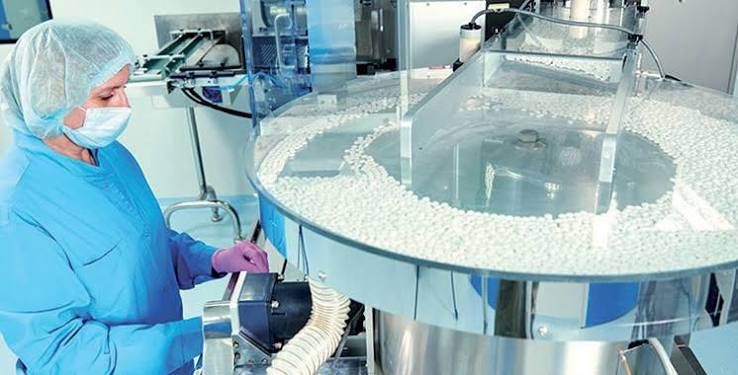
Morocco’s pharmaceutical industry is attracting growing interest from German operators as international production and supply chains undergo restructuring and pharmaceutical groups seek new competitive industrial platforms. Information published on October 22, 2026, highlights the Kingdom’s advantages in this strategic sector, including proximity to European markets, developed industrial and logistics infrastructure, expanding scientific expertise and access to African markets.
Morocco continues to implement its industrial diversification strategy, placing particular emphasis on sectors with high technological added value and strong potential to reinforce economic sovereignty.
The pharmaceutical industry stands out as one of the activities capable of accelerating this transformation through increased domestic production, improved research capabilities and stronger international industrial partnerships.
Growing interest from German pharmaceutical laboratories reflects Morocco’s gradual integration into the development strategies of international pharmaceutical companies.
Germany, with its highly developed pharmaceutical and chemical industries, represents a potential strategic partner for upgrading Morocco’s manufacturing capabilities and developing a more specialized and competitive industrial ecosystem. Several structural factors contribute to the attractiveness of the Moroccan market.
These include geographical proximity to Europe, advanced logistics infrastructure, expanding industrial zones and the availability of scientific and technical expertise in pharmacy, chemistry and industrial engineering. Morocco’s position as an economic gateway to Africa provides an additional advantage for international investors.
For major pharmaceutical groups, establishing manufacturing operations in the Kingdom could facilitate access to African markets while supporting the development of production capacity adapted to regional healthcare requirements.
This prospect is part of a broader transformation of global industrial policies. Disruptions to international supply chains in recent years have exposed the risks associated with the geographical concentration of pharmaceutical manufacturing and excessive dependence on a limited number of suppliers.
Consequently, several governments and industrial groups have reassessed their production and location strategies, seeking alternative or complementary manufacturing bases combining operational efficiency, market proximity and supply continuity.
Morocco therefore has an opportunity to strengthen its position within the international pharmaceutical manufacturing landscape, provided that investment interest translates into tangible projects generating technology transfers and greater domestic value added.
Health Sovereignty at the Heart of Industrial Investment.
For Morocco, developing the pharmaceutical industry serves two strategic objectives: strengthening national health security by securing domestic medicine supplies and establishing a competitive export-oriented manufacturing sector.
This ambition extends beyond the production of generic medicines.
It also encompasses active pharmaceutical ingredients, biotechnology, medical devices, laboratory equipment and pharmaceutical research and development.
These activities are particularly important as global demand for healthcare products evolves and countries seek to diversify production sources and reduce external dependence in strategically sensitive industries.
Industrial cooperation with German companies could therefore accelerate the transfer of technical expertise, improve manufacturing processes and strengthen compliance with international quality and safety standards.
Such partnerships could also facilitate the gradual integration of Moroccan suppliers into international pharmaceutical value chains.
Opportunities extend to industrial subcontracting, component manufacturing, specialized equipment and technical services supporting pharmaceutical production.
Human capital development represents another essential area for cooperation.
Building a competitive pharmaceutical industry requires engineers, industrial pharmacists, specialized technicians and advanced expertise in quality control, laboratory analysis, production management and regulatory compliance.
However, Morocco’s investment advantages do not automatically guarantee the implementation of new industrial projects.
Location decisions depend on production costs, administrative efficiency, raw material availability, financing conditions, market demand and access to export destinations.
Growing international competition for pharmaceutical investment also requires Morocco to continue improving its business environment, developing specialized infrastructure and strengthening its industrial ecosystem.
Closer cooperation between manufacturers, universities, research centres and vocational training institutions will be essential to establishing an integrated pharmaceutical industry.
Such cooperation could stimulate innovation, improve productivity, strengthen export competitiveness and create highly skilled employment opportunities.
Ultimately, stronger industrial cooperation between Morocco and Germany offers an opportunity to accelerate the structural transformation of the pharmaceutical sector.
It could help position the Kingdom as a regional pharmaceutical manufacturing and export platform, provided that priority is given to investments generating technological capabilities, skilled employment and greater domestic industrial value added.