
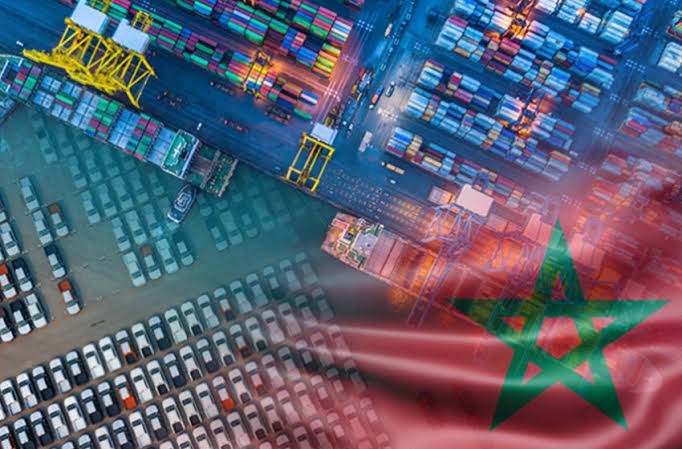
The first half of 2026 confirmed the strength of the Moroccan economy and the continued success of its structural transformation. Against a global backdrop marked by slower growth in major economies, geopolitical tensions, and persistent market volatility, Morocco recorded economic growth of approximately 5%, driven by the strong performance of non-agricultural activities, the recovery of the agricultural sector, accelerated investment, and the sustained expansion of export-oriented industries. This achievement reinforces the Kingdom’s position among Africa’s most resilient and dynamic economies.
The manufacturing sector remains the primary engine of economic growth. Automotive, aerospace, electronics, agri-food, chemical industries, technical textiles, and electric battery manufacturing have continued to expand, now accounting for nearly 87% of Morocco’s total exports. This remarkable performance reflects the success of the country’s industrial strategy implemented over the past two decades, based on the development of industrial ecosystems, enhanced business competitiveness, and deeper integration into global value chains.
Foreign trade indicators further illustrate this momentum. By the end of May 2026, Moroccan exports had reached MAD 211.4 billion, representing an annual increase of 5.8%, supported by robust performances in the automotive, aerospace, phosphate and derivatives, agricultural, electrical, and electronics industries. Imports, however, increased at a faster pace, reaching MAD 370.5 billion, up 11.8% year-on-year, largely due to higher purchases of industrial equipment, energy products, and raw materials required to support productive investment. Consequently, the trade deficit widened to approximately MAD 159.1 billion, reflecting a significant investment cycle rather than a structural weakness in the economy.
Inflation continued its downward trend during the first half of 2026, remaining close to 1%, one of the lowest inflation rates on the African continent. This favorable outcome resulted from Bank Al-Maghrib’s prudent monetary policy, the normalization of global supply chains, lower prices for several food products, and government measures aimed at protecting household purchasing power. Price stability has strengthened consumer confidence while providing a favorable environment for investment and business activity.
Investment remained one of the main pillars of Morocco’s economic expansion. Net Foreign Direct Investment (FDI) inflows reached MAD 23.32 billion by the end of May 2026, representing an impressive 41.8% increase compared with the same period of the previous year. This outstanding performance highlights Morocco’s growing attractiveness to international investors, supported by macroeconomic stability, modern infrastructure, advanced industrial and logistics platforms, and proactive investment policies. The automotive, renewable energy, aerospace, electronics, textile, and green technology sectors attracted the largest share of these investments.
The financial sector also continued to play a crucial role in supporting economic activity. Morocco’s banking system remains well-capitalized, liquid, and resilient, enabling it to meet the increasing financing needs of businesses and households. Outstanding customer loans reached approximately MAD 1,038.6 billion, recording annual growth of 6.5%, while bank deposits continued to increase steadily. Commercial banks expanded financing for industrial companies, small and medium-sized enterprises, infrastructure projects, and household investment, while Bank Al-Maghrib maintained favorable liquidity conditions to support sustainable economic growth.
Beyond these short-term performances, the latest indicators illustrate the profound transformation of Morocco’s economic model. The national economy is becoming progressively less dependent on traditional sectors and increasingly driven by high value-added manufacturing, advanced technologies, renewable energy, digital transformation, and innovation-based services. At the same time, major infrastructure projects associated with preparations for the 2030 FIFA World Cup are accelerating investments in transportation, logistics, tourism, urban development, and public infrastructure, creating strong multiplier effects across the entire economy.
Overall, these indicators confirm Morocco’s growing status as one of Africa’s leading industrial, logistics, and financial hubs. The combination of robust economic growth, low inflation, rising foreign investment, a competitive industrial base, a resilient banking sector, and a long-term strategic vision provides the Kingdom with exceptionally favorable prospects. Although challenges remain, particularly regarding the trade deficit, productivity improvements, skilled job creation, and continued industrial upgrading, the first half of 2026 marks another significant milestone in Morocco’s journey toward a more competitive, innovative, sustainable, and value-driven economy capable of strengthening its leadership position across Africa and the Mediterranean region.