



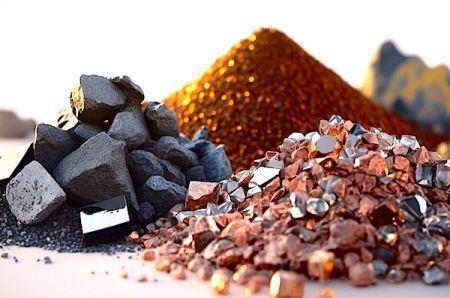
Africa is accelerating its strategy to maximize the value of its mineral wealth by promoting local processing instead of exporting raw materials. With the global critical minerals market expected to exceed $770 billion by 2040, the continent is seeking to capitalize on the rapidly growing demand for cobalt, lithium, graphite, copper, nickel, manganese, and rare earth elements—essential components for batteries, electric vehicles, semiconductors, renewable energy systems, and advanced technologies.
This shift has become one of the cornerstones of Africa’s industrialization agenda and its transition toward a higher-value economy.
Africa holds exceptional strategic advantages. The continent accounts for nearly 30% of the world’s critical mineral reserves, making it a key player in the global energy transition. The Democratic Republic of the Congo (DRC) alone produces approximately 75% of the world’s cobalt, while Zambia ranks among Africa’s leading copper producers. Zimbabwe is rapidly expanding its lithium industry, Namibia is strengthening its rare earth and uranium sectors, South Africa remains a global leader in platinum group metals and manganese, and Morocco is reinforcing its leadership in phosphates while investing heavily in battery materials and electric mobility supply chains.
Global demand continues to surge. According to the International Energy Agency (IEA), lithium demand increased by nearly 30% in 2024, while demand for cobalt, nickel, graphite, and rare earth elements grew by 6% to 8%, driven by the rapid expansion of electric vehicles, battery storage systems, and clean energy technologies. This trend is expected to continue over the coming decades, creating an unprecedented opportunity for African economies.
Despite its abundant resources, more than 80% of Africa’s critical minerals are still exported in raw or minimally processed form, preventing producing countries from capturing much of the value generated along global supply chains. Most refining and advanced processing capacity remains concentrated in Asia, particularly in China, which controls nearly 87% of global refining capacity for several strategic minerals.
To address this challenge, many African governments are implementing industrial policies aimed at developing mineral refineries, battery precursor plants, electronic component manufacturing facilities, and battery gigafactories. Significant investments are also being directed toward mining infrastructure, industrial parks, logistics corridors, and technology partnerships with leading international companies.
According to the African Development Bank, building regional value chains around critical minerals could generate tens of billions of dollars in additional value every year for African economies. This transformation has the potential to create hundreds of thousands of skilled jobs, increase industrial exports, boost government revenues, and accelerate technology transfer across the continent.
By focusing on local processing rather than raw mineral exports, Africa aims to become a major player in the global green industrial revolution. The continent’s vast mineral wealth is no longer viewed solely as a geological asset, but as a strategic foundation for building competitive industries, strengthening economic sovereignty, and securing Africa’s place at the heart of global clean energy and advanced manufacturing value chains.