




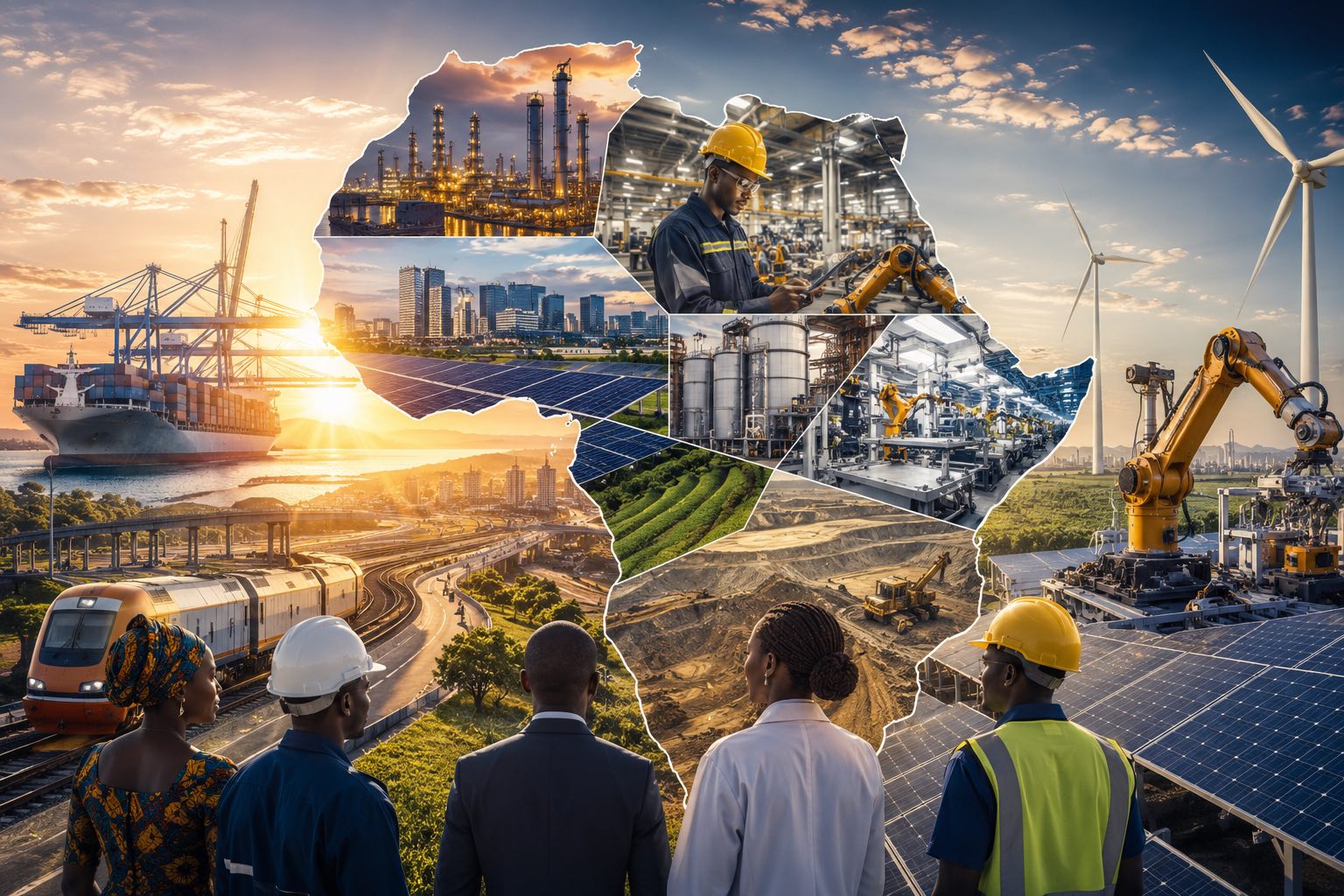
Between infrastructure deficits, the energy transition and industrialization, the continent must mobilize unprecedented levels of investment to transform its economic potential into sustainable growth.
Africa is entering a decisive phase of its economic development. With a population expected to exceed 2.5 billion people by 2050, rapid urbanization, a growing middle class and exceptional natural resources, the continent possesses all the ingredients to become one of the world’s leading industrial hubs. Yet this ambition faces a major obstacle: financing. According to the African Development Bank (AfDB), Africa must mobilize nearly $170 billion every year to finance its infrastructure, industrialization, energy transition and digital transformation, while the annual financing gap is estimated at between $68 billion and $108 billion.
The first challenge concerns infrastructure. Africa currently invests only about 4% of its GDP in infrastructure, whereas annual needs are estimated at between $130 billion and $170 billion. Roads, railways, ports, airports, power grids, water systems and logistics platforms remain insufficient to support large-scale industrialization. According to the AfDB, inadequate infrastructure reduces Africa’s economic growth by nearly 2 percentage points of GDP each year and lowers business productivity by almost 40% in several countries.
Access to energy remains another major constraint. More than 600 million Africans still lack access to electricity, while nearly 900 million people continue to rely on traditional cooking methods. At the same time, Africa accounts for only around 3% of global CO₂ emissions, yet it must invest massively in modern energy systems to support industrial growth. According to the International Energy Agency (IEA), more than $200 billion in annual investment will be required through 2030 to expand renewable energy, electricity transmission networks, energy storage and low-carbon industrial infrastructure.
Paradoxically, Africa already possesses significant financial resources. African pension funds manage more than $500 billion in assets, while insurance companies oversee several hundred billion dollars more. African banking assets now exceed $2.5 trillion, yet only a limited share is directed toward long-term industrial projects due to perceived risks, a shortage of bankable projects and the limited depth of domestic capital markets.
African diaspora remittances also represent a major source of financing. In 2025, remittance inflows exceeded $100 billion, surpassing the amount of official development assistance received by the continent. In addition, institutional investors, sovereign wealth funds, development finance institutions and African bond markets hold significant untapped potential to finance strategic infrastructure and industrial development.
African financial institutions are steadily strengthening their financing capacity. Afreximbank plans to mobilize more than $40 billion to support trade and industrialization over the current period, while the African Development Bank continues to expand its financing for energy, transport, agriculture, digital infrastructure and industrial value chains. The Africa Finance Corporation (AFC), the Trade and Development Bank (TDB), the Development Bank of Southern Africa (DBSA) and several regional development banks are also playing an increasingly important role in financing strategic infrastructure across the continent.
The African Continental Free Trade Area (AfCFTA) is expected to become a powerful catalyst for this transformation. By creating a single market of more than 1.5 billion consumers, with a combined GDP exceeding $3.4 trillion, the AfCFTA is encouraging industrial investment, regional value chains and the development of globally competitive industries. According to the World Bank, the full implementation of the AfCFTA could increase Africa’s income by $450 billion by 2035 and lift nearly 30 million people out of extreme poverty.
Africa’s industrial future also depends on adding value to its abundant natural resources. The continent holds approximately 30% of the world’s critical mineral reserves, nearly 60% of the world’s uncultivated arable land, and possesses enormous potential in solar, hydroelectric and wind energy. Yet much of these raw materials continues to be exported without significant processing. Developing local industries for mineral refining, battery manufacturing, agro-processing and construction materials would generate far greater value-added while creating millions of skilled jobs.
Experts agree on several strategic priorities: mobilizing domestic savings, deepening African capital markets, expanding green and industrial bond issuance, strengthening public-private partnerships, improving project governance, attracting greater private investment and leveraging the financial resources of the African diaspora. Reducing investment risks through guarantee mechanisms and blended finance structures will also be essential to attract more international capital.
Africa’s industrial transition will depend less on the abundance of its natural resources than on its ability to finance its own transformation. Raising $170 billion every year represents a formidable challenge, but also a historic opportunity. By mobilizing more domestic capital, strengthening its financial institutions and building high-value industrial supply chains, Africa can transform its immense potential into a powerful engine of sustainable growth, high-quality job creation and long-term economic sovereignty.