




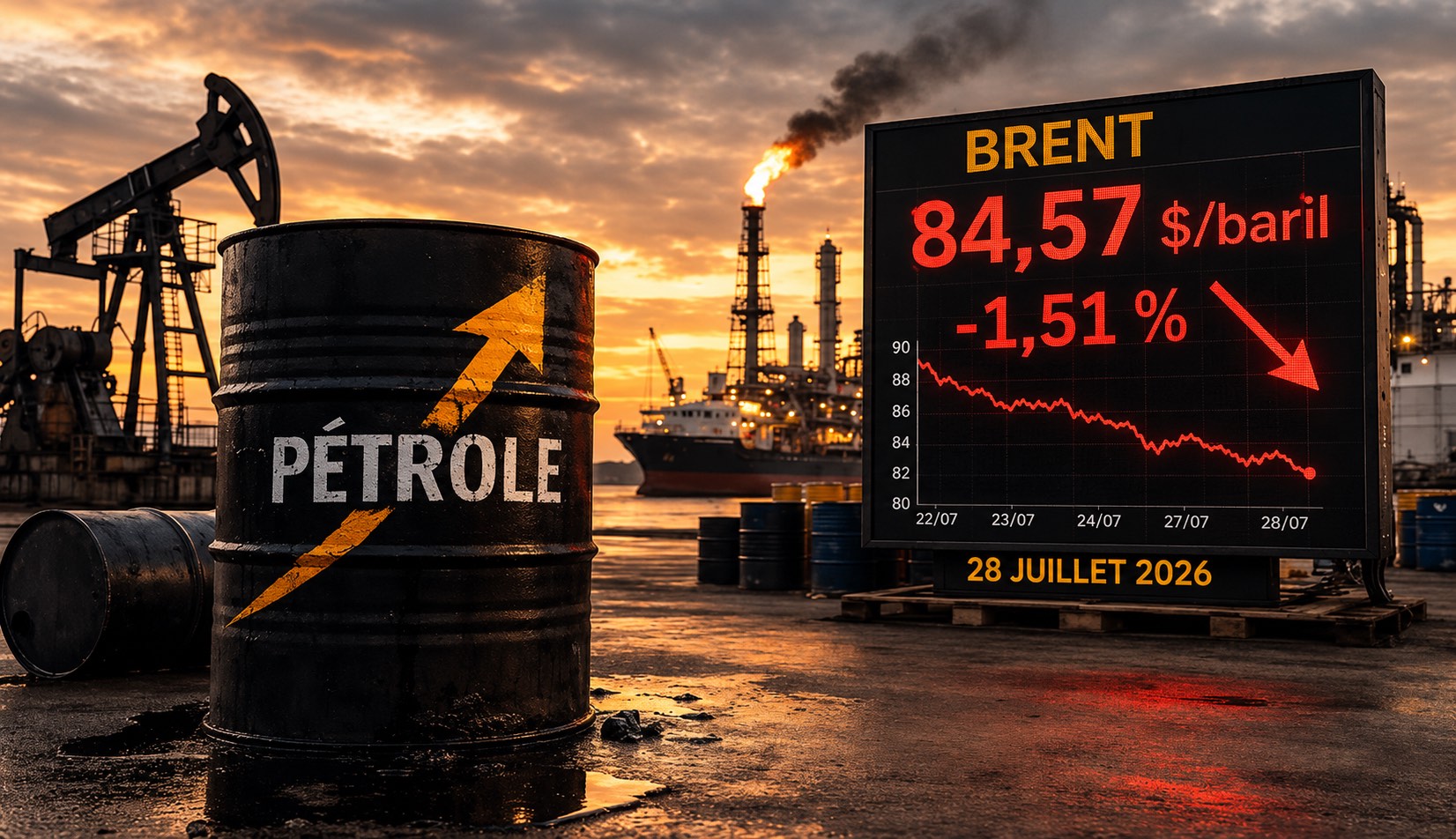
Oil prices declined significantly on Tuesday, July 28, 2026, after several trading sessions marked by high volatility driven by geopolitical tensions in the Middle East. Brent crude, the international benchmark, was trading at around $86.70 per barrel, while U.S. West Texas Intermediate (WTI) crude stood at approximately $81.20 per barrel. This decline reflects a gradual return of confidence in global energy markets.
Investors are reassessing the risks to global oil supplies as hopes for a diplomatic de-escalation between the United States and Iran continue to grow. Market participants also expect a partial recovery in exports from several oil-producing countries, easing concerns over potential supply disruptions.
The correction follows last week’s sharp rally, during which Brent crude temporarily exceeded $100 per barrel amid escalating regional tensions. The latest decline demonstrates that oil markets remain highly sensitive to geopolitical developments and policy decisions by major producing countries.
Analysts continue to monitor several factors that could influence oil prices in the coming weeks, including OPEC+ production decisions, the outlook for global oil demand, U.S. crude inventory levels, and economic growth prospects in the world’s largest economies.
For energy-importing countries, including Morocco, the decline represents positive news. More stable oil prices could help reduce the cost of fuel imports, ease inflationary pressures, and improve overall macroeconomic stability. Nevertheless, market participants remain cautious, as the international environment continues to face significant uncertainties that could trigger renewed price volatility in the short term.