



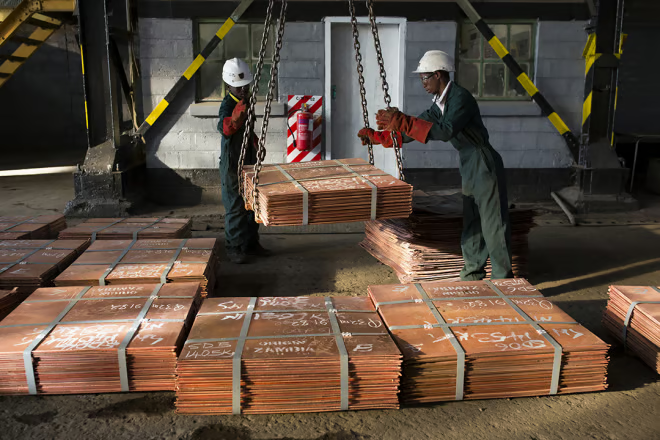
The Democratic Republic of Congo (DRC) continues to strengthen its position among the world’s leading copper-producing nations thanks to the outstanding performance of the Kamoa-Kakula Copper Complex, operated by Ivanhoe Mines in partnership with Zijin Mining and the Congolese Government. During the second quarter of 2026, the complex produced 64,328 tonnes of copper, reinforcing its status as one of the largest and highest-grade copper mining operations globally. This achievement comes despite temporary operational constraints related to ore availability and scheduled maintenance at certain processing facilities.
During the quarter, Kamoa-Kakula’s three concentrators processed approximately 2.97 million tonnes of ore, with an average feed grade of 2.39% copper and a record metallurgical recovery rate of 87.4%, up from 85.6% in the previous quarter. The concentrators produced 61,134 tonnes of contained copper concentrate, while additional output from the integrated smelter and Kolwezi processing facilities increased total marketable copper production to 64,328 tonnes.
The company has maintained its 2026 production guidance of between 290,000 and 330,000 tonnes of copper, expecting a significant increase in production during the second half of the year. This growth will be supported by a 30% increase in underground mining capacity, reaching approximately 700,000 tonnes of ore per month, or nearly 8.5 million tonnes annually. New mining sections have been commissioned, additional underground infrastructure has been completed, and mining fleets have been expanded to ensure a steady supply of high-grade ore.
Kamoa-Kakula also plans to progressively reduce its copper concentrate inventories. Stockpiles, estimated at approximately 40,000 tonnes at the end of the second quarter, are expected to decline to between 25,000 and 30,000 tonnes by year-end, allowing higher sales volumes and improved cash flow.
The mining complex continues to invest heavily in industrial infrastructure. Its newly commissioned 500,000-tonne-per-year copper smelter is currently operating at roughly 60% of its design capacity and is expected to reach full production as additional feedstock becomes available. The facility also produces approximately 450,000 tonnes of sulphuric acid annually, a critical input for mining and metallurgical operations throughout Central Africa.
To secure long-term energy independence, Kamoa-Kakula is commissioning a 60 MW hybrid solar power plant equipped with battery energy storage, currently one of the largest renewable energy installations in Africa’s mining sector. An expansion to 120 MW by 2027 is already planned, significantly improving energy reliability while reducing greenhouse gas emissions and operating costs.
Looking ahead, the project’s long-term development plan aims to raise annual copper production to approximately 500,000 tonnes by 2028, positioning Kamoa-Kakula among the world’s largest copper producers. Supported by strong global demand for copper driven by electric vehicles, renewable energy infrastructure, power grids and digital technologies, the DRC is expected to further consolidate its leadership as Africa’s largest copper producer and a strategic supplier of critical minerals for the global energy transition.