




Senegal’s sugar industry is facing growing pressure from increasing sugar imports, prompting the Compagnie Sucrière Sénégalaise (CSS)—the country’s largest sugar producer—to call for stronger government measures to protect domestic production. According to the company’s labor unions, excessive imports during the inter-harvest period could undermine the competitiveness of local producers, weaken industrial investment and threaten approximately 7,500 direct and indirect jobs.
Meeting in Richard-Toll, northern Senegal, union representatives warned that uncontrolled imports could seriously affect one of the country’s most strategic agro-industrial sectors. CSS remains the largest industrial employer in the Saint-Louis region and plays a central role in supporting agriculture, transportation, logistics and local economic development.
The company reported a record sugar production exceeding 140,000 tonnes during the 2025–2026 campaign, reflecting substantial investments in factory modernization, mechanized farming, irrigation systems and improved agricultural productivity. According to CSS, domestic production is now capable of supplying a significant share of Senegal’s national sugar demand.
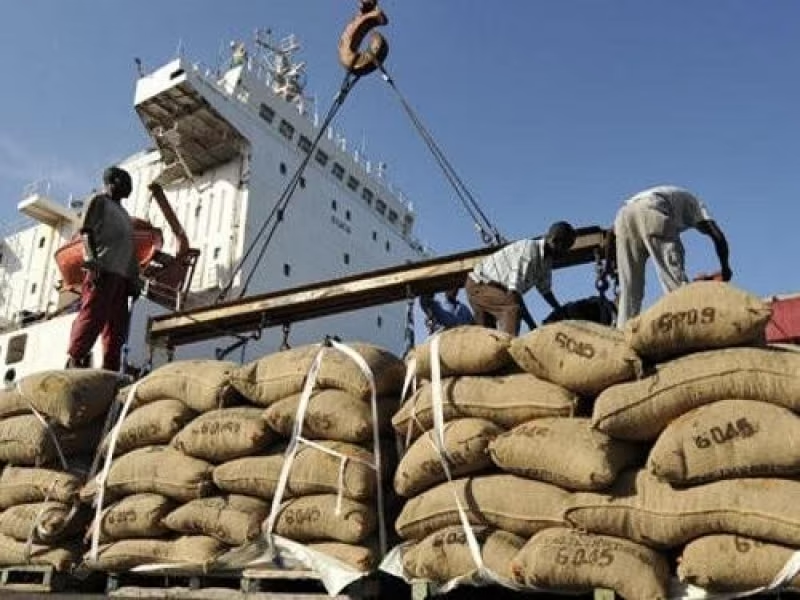
Industry representatives recall that early import authorizations granted in 2025 led to market saturation, slowing domestic sales, weakening the company’s cash flow and reducing seasonal employment opportunities. They are urging authorities to avoid repeating the same situation in 2026 by carefully regulating import volumes.
For the upcoming inter-harvest period, expected between September and November 2026, labor unions recommend limiting sugar imports to approximately 60,000 tonnes, a level they believe would adequately satisfy domestic demand without jeopardizing local production. They argue that current inventories are sufficient to meet national consumption, including periods of increased demand associated with major religious celebrations.
Beyond trade policy, the issue reflects broader industrial challenges facing Senegal. Protecting strategic manufacturing sectors, strengthening food security, preserving industrial employment and encouraging productive investment have become key priorities under the country’s industrial development strategy. As global agricultural markets remain highly volatile and production costs continue to rise, industry stakeholders advocate a balanced regulatory framework capable of combining market openness with effective support for domestic manufacturing.
The sugar industry remains one of Senegal’s most important agro-industrial value chains. By protecting its production capacity and thousands of jobs, the country aims to strengthen food sovereignty, reduce dependence on imports and build a more competitive agro-industrial sector capable of supporting long-term economic growth.