



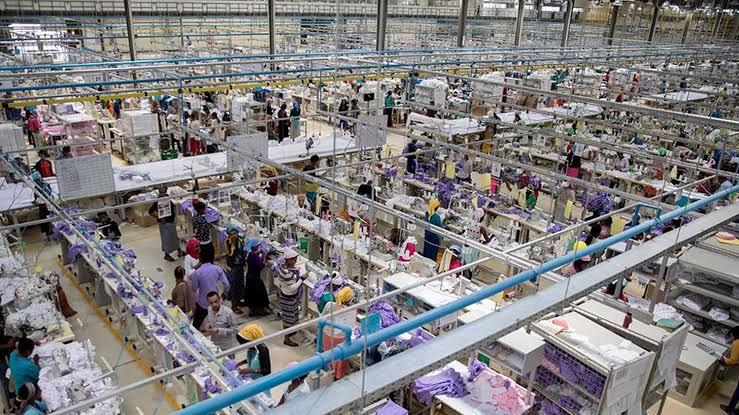

Ethiopia is seeking to accelerate its structural transformation by making manufacturing a pillar of its economic attractiveness. The Ethiopian Investment Commission identifies manufacturing as one of the country’s priority sectors, alongside agriculture, mining, ICT and tourism.
The country is focusing particularly on textiles and apparel, leather, agro-processing, pharmaceuticals, packaging and light manufacturing. Its strategy relies on a broad network of special economic zones and industrial parks, designed to reduce investment costs and facilitate access to infrastructure. The Industrial Parks Development Corporation (IPDC) states that it manages 13 industrial parks and special economic zones, according to its institutional portfolio. These facilities host more than 200 investors, have generated over 100,000 jobs and represent approximately $1.8 billion in revenue, according to IPDC data.
Ethiopia also aims to attract more foreign capital into export-oriented production chains. The Ethiopian Investment Commission indicates that manufacturing accounts for more than 50% of the country’s FDI flows, an important positioning within the African context.
The country’s industrial offer is supported by a large labour force, competitive labour costs, dedicated industrial infrastructure and access to regional markets. Pharmaceuticals are emerging as another strategic sector: according to the Ethiopian Investment Commission, pharmaceutical demand had been growing by approximately 15% annually over the previous five years, with the market estimated at $1.8 billion in 2025 and projected to reach $4 billion by 2030.
The Kilinto Pharmaceutical Industrial Park covers 279 hectares, including approximately 166 hectares allocated to manufacturers. Agro-processing is also a major priority, supported by Ethiopia’s agricultural potential and large domestic market. The government’s “Invest in Ethiopia” forum presented a portfolio of 31 investment-ready projects in 2025, representing more than $13.38 billion across several sectors, including manufacturing.
Interest from Asian investors, particularly from India and China, fits into this strategy of integration into global value chains. The government has explicitly promoted special economic zones as platforms for attracting manufacturing investment and export-oriented production.
The key challenge for Addis Ababa is now to move from simply attracting factories to building complete industrial ecosystems, including local suppliers, technology transfer, skills development, logistics and exports. Ethiopia is therefore positioning manufacturing not merely as a source of investment but as a central instrument of industrial transformation.