




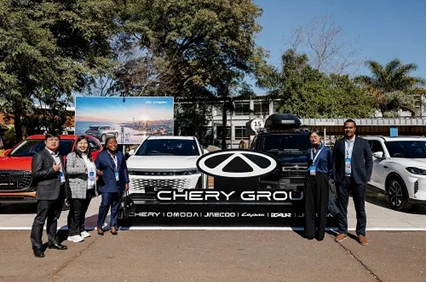

The opening of Chery’s Rosslyn plant marks a new stage in the Chinese automaker’s development in South Africa. Moving from a strategy based primarily on vehicle imports to direct local production, Chery is shifting its African strategy from a trading model towards an industrial one, while seeking to turn South Africa into an important production, sales and potentially export platform for the continent.
The Chinese automaker officially inaugurated its plant in Rosslyn, near Pretoria, on July 2026. The facility was previously operated by Nissan and was acquired by Chery as part of its expansion strategy. Commercial production is scheduled to begin in mid-2027, with the plant expected to gradually reach an annual capacity of around 50,000 vehicles. Initial production is expected to reach approximately 15,000 units in 2027. Chery has also announced plans to retain the factory’s 692 existing employees and create around 3,000 additional jobs through manufacturing, supply chains and related services.
The project comes at a time of rapid transformation in Africa’s automotive market. Chinese manufacturers, which previously relied heavily on vehicle imports to expand their market share, are increasingly investing directly in local production capacity. Chery plans to manufacture conventional internal-combustion vehicles at Rosslyn while also expanding its offering of hybrids, plug-in hybrids and fully electric vehicles. The company also intends to progressively develop a local supplier base, initially targeting 40% local content, while continuing to source certain high-tech and electrification components from Chinese suppliers.
The significance of the project therefore extends beyond the South African domestic market. With an established automotive industry, developed infrastructure and strong connections to regional markets, South Africa has the potential to become a manufacturing platform serving the wider African market. Chery’s move also reflects a new phase in the global expansion of Chinese automakers: rather than relying entirely on exports from China, manufacturers are increasingly choosing to produce closer to their target consumers, reducing logistics costs and responding to trade barriers.
Competition with Toyota, Ford, Isuzu and other established manufacturers is therefore likely to intensify. For South Africa, this competition could also accelerate local production, technology transfer, supplier development and the expansion of electric-vehicle manufacturing.