




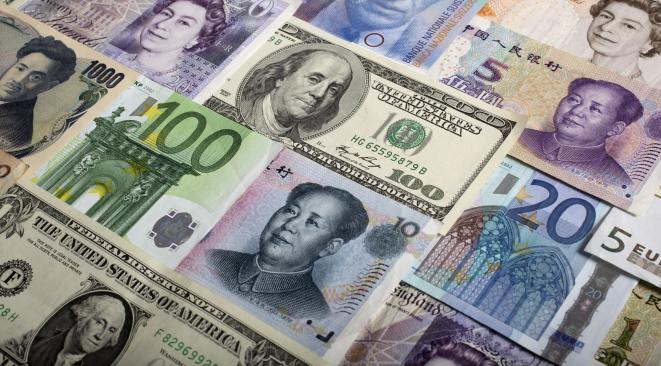
Global foreign-exchange markets are entering a new phase of volatility. The euro is trading around $1.16, the US dollar is benefiting from renewed support linked to expectations surrounding US monetary policy, while the Japanese yen remains under heavy pressure at around ¥160 per dollar. The yuan remains more tightly managed by Beijing, while the Moroccan dirham maintains relatively limited volatility thanks to its exchange-rate regime. For African economies and companies, these movements are not merely financial: they directly affect import costs, energy prices, investment decisions and industrial competitiveness.
The Foreign-Exchange Market Is Changing Pace
The currency market is currently sending a fairly clear message: the period of low volatility is coming to an end. Investors are once again adjusting their positions rapidly according to interest-rate expectations, inflation, global growth prospects and geopolitical risks.
At the center of this dynamic remains the US dollar. After periods of weakness, the greenback is benefiting from renewed demand as markets reassess the future path of the US Federal Reserve.
The euro is trading around $1.16, after recently moving above that level. This zone has become particularly important for investors. A sustained move above $1.16 would allow the euro to preserve part of its gains, while a prolonged decline below $1.15 would strengthen the dollar significantly.
Behind this battle between the world’s two major currencies lies a simple question: which economy will offer the most attractive interest rates in the coming months?
Dollar vs. Euro: The Interest-Rate Battle
The foreign-exchange market is largely a market of expectations. Investors do not look only at current interest rates; they try to anticipate where rates will be tomorrow.
If markets believe that the Federal Reserve will have to maintain a restrictive monetary policy for longer, US assets become relatively more attractive. Capital can then flow toward the United States, increasing demand for dollars.
Conversely, if investors expect larger-than-anticipated US rate cuts, the dollar could rapidly lose ground.
This is why the $1.15–$1.16 zone has become a key area to watch.
A euro that moves sustainably above $1.18 would strengthen the European currency’s position. Conversely, a decisive break below $1.15 could open the way for another phase of dollar appreciation.
The Japanese Yen: The Weakest Link
The yen’s situation is even more dramatic.
The dollar is trading around ¥159–¥160, placing the Japanese currency under considerable pressure. Tokyo has already demonstrated its willingness to intervene to limit excessive yen depreciation.
Japanese authorities are estimated to have spent approximately $96.5 billion between late July and late August to support the currency.
This situation highlights a major contradiction within the Japanese economy. Japan wants to prevent excessive yen depreciation, but it must also contend with a monetary policy that remains considerably less restrictive than that of the United States.
This yield differential encourages investors to borrow in yen at relatively low cost and invest in assets offering higher returns elsewhere.
This is the principle behind the carry trade.
The problem is that when the yen suddenly strengthens, investors may be forced to unwind their positions. Billions of dollars can then move rapidly from one currency to another.
The ¥160-per-dollar threshold has therefore become a major psychological and financial level.
The Yuan: A Different Currency Model
China is playing a different game.
The yuan is not left entirely to market forces. The People’s Bank of China retains significant influence over its exchange rate through the daily reference rate and the currency’s trading band.
This framework allows Beijing to limit excessive movements while maintaining a degree of flexibility.
For African economies, this is far from a secondary issue.
A competitive yuan allows Chinese companies to maintain price advantages in international markets. For African manufacturers, this means stronger competition in several sectors: machinery, equipment, electronics, textiles, intermediate goods and manufactured products.
The exchange rate therefore becomes an instrument of industrial competitiveness.
What About the Moroccan Dirham?
The dirham operates under a much more stable framework.
Unlike the euro, dollar or yen, the Moroccan currency is not entirely exposed to daily market fluctuations. Its value is managed by Bank Al-Maghrib through a basket primarily composed of the euro and the US dollar.
This framework acts as a shock absorber.
When the euro and dollar move sharply against each other, the dirham does not mechanically reproduce the full volatility observed in international markets.
But this does not mean Morocco is isolated from currency risk.
Quite the opposite.
The Moroccan economy is deeply integrated into international markets. Movements in the dollar can alter the cost of energy imports, raw materials, machinery and many products priced in US dollars.
For a Moroccan company that purchases in dollars but sells in euros or dirhams, currency risk can quickly become a commercial and financial risk.
Why These Movements Matter Directly to Africa
Currency movements should therefore not be considered an issue reserved for traders and central banks.
For Africa, they directly affect competitiveness.
Consider a company importing a US-made machine worth $1 million. If the dollar appreciates significantly against the local currency, the actual cost of the machine increases even though its dollar price remains unchanged.
The same mechanism applies to oil.
Because a large share of international energy transactions is denominated in US dollars, a stronger greenback can increase the energy bill of countries whose currencies are weaker.
Exchange-rate movements can therefore contribute to inflation, increase industrial costs and reduce corporate margins.
Conversely, a relatively stable domestic currency can provide greater visibility for investors.
September Could Be Decisive
The next phase of the market will depend mainly on three variables: Federal Reserve decisions, US inflation and the responses of the Japanese, European and Chinese central banks.
A sustained period of dollar strength cannot be ruled out.
However, the market remains sufficiently fragile for a change in interest-rate expectations to trigger a rapid reversal.
For the yen, the risk of further Japanese intervention has become an additional variable.
For the euro, the battle around $1.15–$1.18 will be crucial.
For the yuan, Beijing’s exchange-rate policy will remain central.
For Morocco, however, the key issue is not necessarily to predict the exact next move of the dirham, but rather to manage the indirect effects of international currency fluctuations on imports, industry, energy and investment.
Foreign Exchange Is Becoming an Industrial Strategy Issue
The main lesson from the current environment is ultimately simple: the foreign-exchange market is no longer merely a financial market. It has become an element of economic and industrial strategy.
Companies that import, export or invest internationally must incorporate currency risk into their commercial decisions.
Treasurers need to monitor exchange rates. Manufacturers need to anticipate costs. Investors need to factor in interest-rate differentials. Governments need to assess the impact of currency movements on trade balances and competitiveness.
In this new environment, knowing the exchange rate is no longer enough.
What matters is understanding why a currency moves, who benefits from that movement and, above all, what consequences it may have for the real economy.
This is precisely where economic intelligence and strategic analysis become essential.