
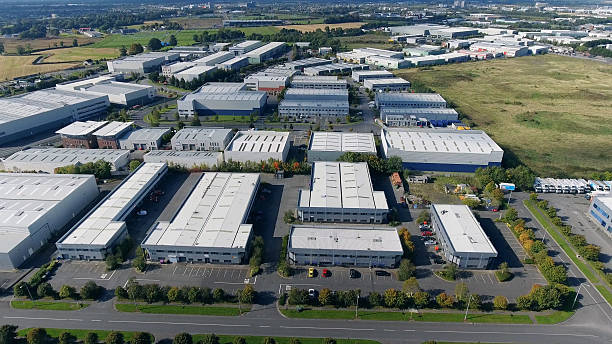
Morocco now has approximately 15,000 hectares of developed land dedicated to industrial zones, compared with 10,000 hectares at the beginning of the government’s term, while an additional 7,000 hectares are planned. Industrial land is therefore becoming a central instrument of the country’s industrial and investment policy.
The increase is significant: 5,000 additional hectares have been developed since 2021, representing a 50% increase in available industrial land compared with the beginning of the government’s term.
The government is planning a further 7,000 hectares, which would eventually bring the total developed and planned capacity to approximately 22,000 hectares.
Industrial Land Becomes a Competitiveness Factor
The challenge, however, is no longer purely quantitative. For investors, land availability must be supported by infrastructure, competitive energy costs, access to water, logistics connectivity and streamlined administrative procedures.
This issue is becoming particularly important with the arrival of projects related to batteries, automotive, industrial textiles, advanced materials and renewable energy.
Morocco now has several industrial platforms capable of hosting international investment. Tanger Tech, Kenitra, Nouaceur, Jorf Lasfar and other regional hubs are expected to play an increasingly important role.
The next step will therefore be to transform developed industrial land into productive, export-oriented projects that integrate local suppliers.