

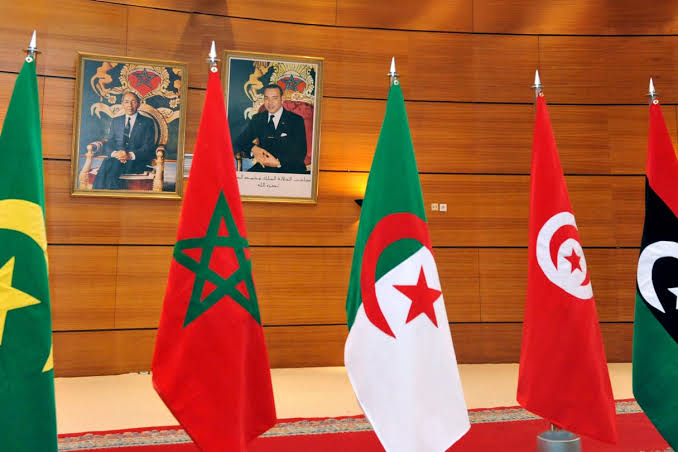
The first half of 2026 confirmed the Maghreb region’s continued attractiveness to investors, although significant differences remain between countries in terms of investment volumes, capital flows and targeted sectors. Investment was mainly concentrated in industry, automotive, energy, infrastructure, mining, aerospace and services, as well as activities linked to emerging value chains.
Morocco attracts major projects
In Morocco, investment momentum remained strong. The National Investment Commission approved 44 projects and amendments worth a total of MAD 86.36 billion, with approximately 20,500 jobs expected to be created.
By the end of June, the number of investment agreements signed since the new Investment Charter came into force in 2023 had reached 391 agreements, representing a cumulative value of MAD 520 billion.
Net foreign direct investment also recorded strong growth, reaching MAD 29.47 billion by the end of July 2026, up 58.5% year-on-year.
Tunisia strengthens industrial investment
In Tunisia, international investment reached TND 1.9295 billion during the first half of 2026, an increase of 11.5% compared with the same period in 2025 and 41.7% over two years.
Manufacturing remains the main destination for foreign investment, accounting for approximately 72% of FDI, compared with 19% for energy, 7.7% for services and 1.3% for agriculture.
New projects are particularly focused on automotive components, electronics, aerospace and technology.
Algeria targets productive investment
In Algeria, the Algerian Investment Promotion Agency recorded 353 foreign investment projects by June, including 146 foreign direct investment projects and 207 partnership projects.
Authorities are seeking to attract projects capable of contributing to economic diversification, import substitution, increased non-hydrocarbon exports, the development of mineral resources, and the expansion of industry, agriculture and pharmaceuticals.
Several regions have also witnessed the launch of new industrial projects, reinforcing the focus on productive investment and job creation.
Libya and Mauritania: more targeted investment
In Libya, foreign investment remains largely concentrated in reconstruction, energy and construction. Between January and June 2026, 106 decisions were recorded concerning foreign company branches, joint ventures and representative offices. Construction accounted for 38% of these decisions, compared with 32% for oil and energy.
Mauritania, meanwhile, continues to attract investment into targeted sectors, particularly mining, energy, infrastructure, services, business tourism and healthcare, while seeking to broaden and diversify its economic base.
Towards a new regional investment competition
The indicators for the first half of 2026 highlight different investment trajectories across the Maghreb. Morocco is focusing on major industrial and strategic projects and deeper integration into international value chains. Tunisia is strengthening its position in manufacturing, while Algeria is seeking to expand productive projects and foreign partnerships. Libya remains focused on reconstruction and energy, while Mauritania is gradually diversifying its economic base.
Regional competition is therefore shifting from simply attracting capital towards the ability to transform investment into productive capacity, employment, technology transfer, exports and deeper integration into regional and international value chains.
The first half of 2026 thus confirms the Maghreb’s growing role as an investment platform in Africa, while highlighting a common challenge: increasing local value added and strengthening economic integration among the countries of the region.