




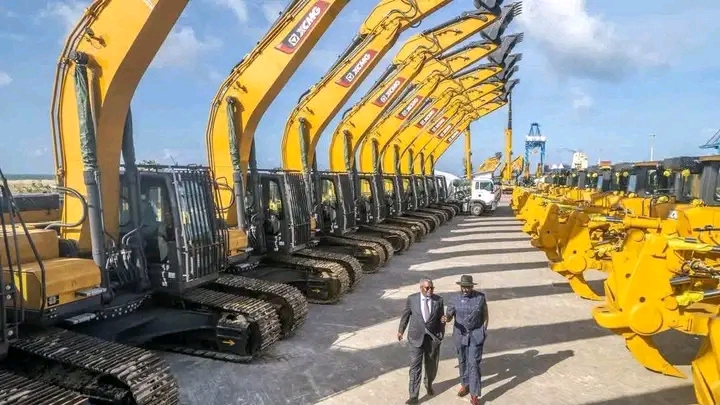

The Dangote Group has entered the operational phase of its massive refinery and petrochemical complex project in Lamu, Kenya. With nearly 2,930 tonnes of heavy machinery arriving at the Port of Lamu and construction officially launched on September 30, 2026, the $16 billion project is moving into a new phase and could significantly transform East Africa’s industrial landscape.
The symbolism is powerful. The vessel MV Da Yang docked at the Port of Lamu carrying a first massive shipment of equipment destined for the future Dangote East Africa Petroleum Refinery. The delivery represents one of the first tangible signs of the start of construction of the future refinery.
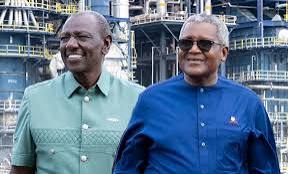 With an estimated investment of $16 billion, the project ranks among the largest private industrial investments ever undertaken in Kenya. The project is designed around a refining capacity of 700,000 barrels of crude oil per day, which would make it the largest refinery in East Africa and one of the largest in the world.
But Dangote’s ambition goes far beyond the construction of a refinery. The complex is expected to have an integrated petrochemical and industrial dimension, including electricity generation capacity of up to 1,000 MW, as well as fertilizer and chemical production activities.
The construction project is also expected to become a major source of employment. Estimates associated with the project point to around 60,000 jobs, while the group also plans to develop local skills, notably through the establishment of an engineering training school in Lamu.
The expected impact therefore extends far beyond direct employment. An industrial project of this scale will necessarily generate opportunities in construction, engineering, logistics, transportation, maintenance, services, training and subcontracting.
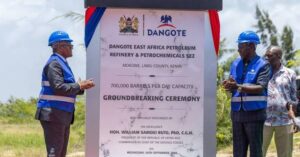 Lamu could gradually emerge as a new industrial and energy hub in the region. The Kenyan government views the project as a potential driver of industrial development and economic growth around the LAPSSET Corridor, which connects Kenya with several East African markets.
The regional dimension is particularly important. The future refinery is intended to enable more crude oil to be processed into finished petroleum products directly on the African continent, reducing the dependence of several African economies on imports of refined petroleum products. The project could serve markets across East Africa and beyond.
For Dangote, the Kenyan operation is part of a much broader African strategy. The group has announced plans to invest up to $50 billion across Africa by 2030, covering sectors ranging from energy and manufacturing to mining and infrastructure.
The industrial partnership also has an international dimension. Engineers India Limited and Honeywell Technologies are among the partners involved in engineering, technology and equipment for the project. Contracts worth more than 100 billion Kenyan shillings have already been reported for certain engineering and technology services.
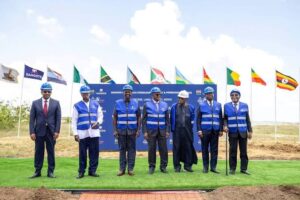 The stakes for Kenya are therefore considerable. This is no longer simply a refinery project; it is an attempt to create a genuine industrial ecosystem around Lamu. With heavy equipment, energy infrastructure, petrochemical facilities, employment, logistics requirements and subcontracting activities, the project could gradually give rise to what resembles a new industrial city.
This transformation will nevertheless have to comply with land and environmental procedures. The project has already faced local opposition and legal proceedings concerning land rights and environmental impacts.
Beyond these challenges, the Lamu project illustrates a major shift in African investment: an increasing number of investors and industrial groups are seeking to process the continent’s resources locally, capture greater added value, create industrial jobs and develop regional production chains.
With $16 billion in investment, a planned refining capacity of 700,000 barrels per day, potential electricity generation of up to 1,000 MW and tens of thousands of associated jobs, Dangote is therefore not simply building a refinery in Kenya.
It is undertaking an industrial project that could reshape part of Lamu’s economy and, more broadly, influence the energy and industrial landscape of East Africa.